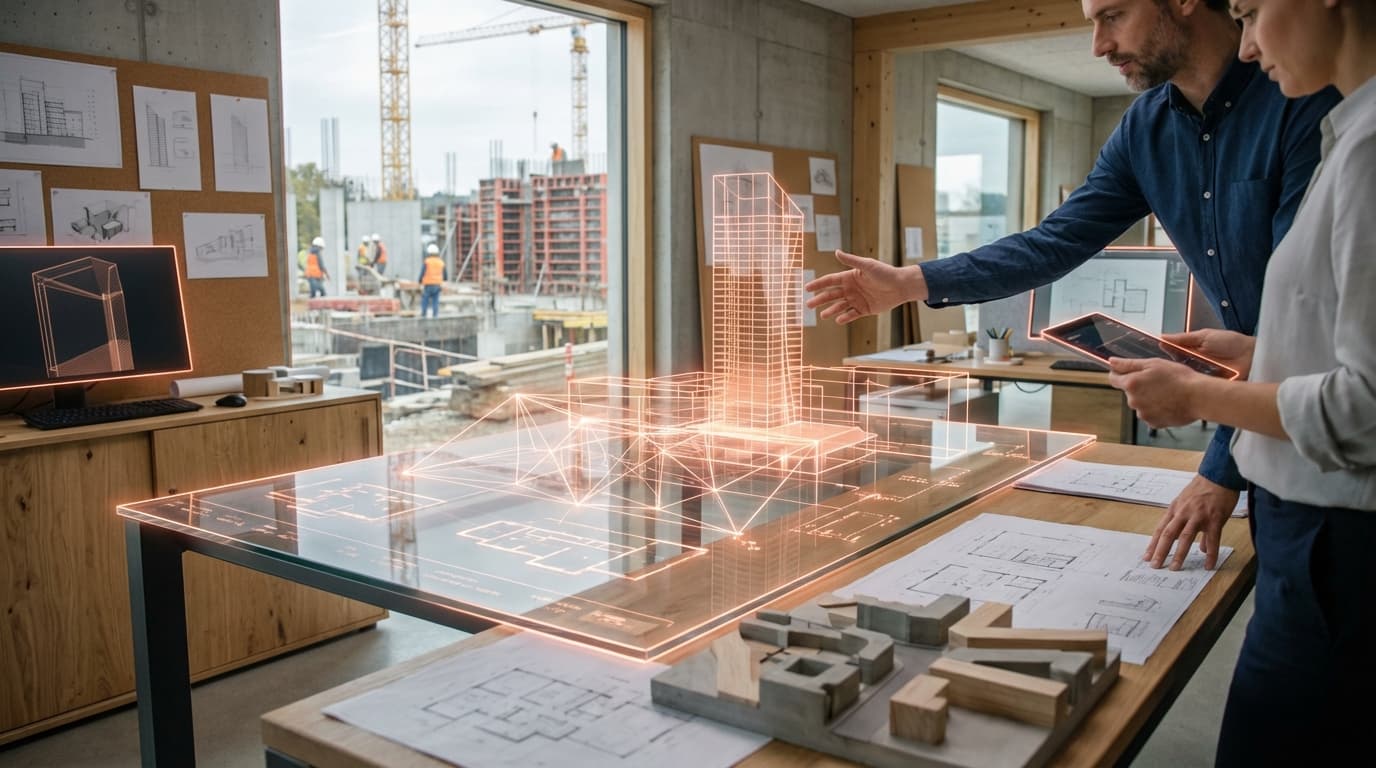
Generative Design Algorithms
Generative design algorithms represent a fundamental shift in architectural practice, leveraging artificial intelligence and computational power to explore vast design solution spaces that would be impossible for human designers to navigate manually. These systems work by accepting a set of constraints and objectives—such as structural load requirements, material availability, budget limitations, site topography, solar orientation, and energy efficiency targets—and then autonomously generating, evaluating, and refining thousands or even millions of potential design solutions. The underlying technology combines parametric modeling, evolutionary algorithms, and machine learning to iteratively test variations, learning from each iteration which design characteristics best satisfy the specified criteria. Unlike traditional computer-aided design tools that simply execute human instructions, generative design algorithms function as collaborative partners, proposing solutions that often challenge conventional architectural thinking and reveal possibilities that might never emerge from traditional design processes.
The construction industry faces mounting pressure to deliver buildings that are simultaneously more sustainable, cost-effective, structurally efficient, and responsive to increasingly complex regulatory requirements. Traditional design approaches, which rely heavily on architect intuition and experience, struggle to optimize across multiple competing objectives simultaneously—a building might be structurally sound but wasteful of materials, or aesthetically striking but energy-inefficient. Generative design algorithms address this challenge by treating design as a multi-objective optimization problem, capable of balancing competing demands in ways that human designers find difficult to achieve through conventional methods. This technology enables architects to explore radical structural forms that minimize material usage while maintaining strength, discover configurations that maximize natural lighting while reducing thermal loads, and identify cost-saving opportunities that emerge from non-intuitive design choices. The result is a design process that can deliver buildings with demonstrably superior performance metrics across sustainability, efficiency, and functionality dimensions.
Early adoption of generative design in construction has primarily occurred in high-profile projects where innovation budgets allow for experimentation, as well as in specialized applications like optimizing structural components for prefabrication and modular construction. Architecture firms are increasingly incorporating these tools into their workflows, particularly for complex projects where the potential efficiency gains justify the learning curve and computational resources required. The technology has proven especially valuable in designing structural elements like building frames, where algorithms can identify lattice patterns and geometries that use significantly less material than conventional designs while meeting all safety requirements. As computational power becomes more accessible and the software interfaces become more intuitive, generative design is poised to move from a specialized tool for flagship projects to a standard component of architectural practice. This trajectory aligns with broader industry trends toward digital transformation, data-driven decision-making, and the integration of sustainability metrics into every phase of the building lifecycle, suggesting that generative design will play an increasingly central role in shaping how we conceive and construct the built environment.
Related Organizations

Owner of the Arnold renderer, which integrates AI denoising to optimize high-end VFX workflows for film and TV.

A cloud platform for generating building designs using open standards and community-contributed generative functions.

Provides real-time generative design software for building feasibility, solving site plans for mixed-use, industrial, and residential developments instantly.


AI-powered construction simulation and scheduling platform.

An AI platform that assesses land plots for development potential and checks designs against local planning rules instantly.

A generative design tool originally from Sidewalk Labs (now Google) that optimizes master plans for multiple outcomes.

A tool that uses algorithms to generate floor plans and optimize building footprints within Revit/Rhino.
Cove.tool
United States · Startup
Automated building performance analysis platform that optimizes design for energy, daylight, and cost.

An AI-powered web-based design tool that generates building configurations based on sustainability targets and site data.
Supporting Evidence
Research this in Signals
Signals turns a topic into a sourced research record you can inspect and rerun. Your first scan is free, and this one starts with Generative Design Algorithms already loaded, so edit it or scan as is.