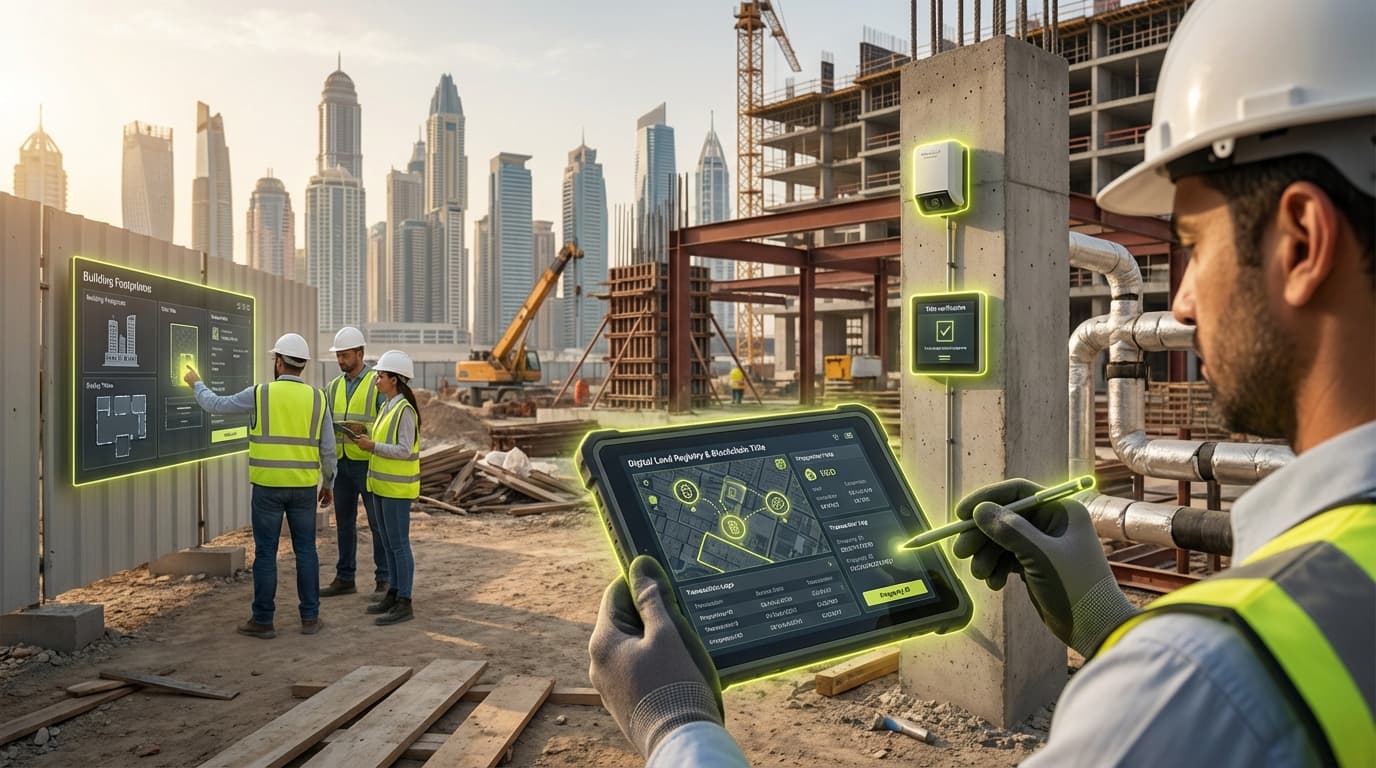
Digital Land Registry & Blockchain Title
Property ownership systems across the Gulf face a fundamental challenge: establishing trust in title authenticity while enabling the rapid transaction speeds demanded by international capital flows. Traditional paper-based registries, even when digitized into conventional databases, remain vulnerable to manipulation, require extensive verification processes, and create friction in cross-border investments. For markets like Dubai and Riyadh positioning themselves as global real estate hubs, these inefficiencies translate into delayed closings, elevated due diligence costs, and persistent concerns about title clarity—particularly problematic when attracting institutional investors unfamiliar with local legal systems. Blockchain-based land registries address this friction by creating cryptographically secured, distributed ledgers where property ownership records become mathematically verifiable and effectively impossible to alter retroactively.
Early implementations reveal both the technology's potential and its integration complexities. Dubai Land Department's blockchain registry, operational since 2018, demonstrates how distributed ledger technology can compress title verification from days to minutes while creating an auditable chain of custody for every registered property. The system generates unique digital certificates for each transaction, with cryptographic hashing ensuring that any attempt to modify historical records would be immediately detectable. Similar pilots have emerged in Abu Dhabi and Saudi Arabia's planned megaprojects, where blockchain registries serve dual purposes: establishing clean title for newly developed land parcels while creating infrastructure for more sophisticated ownership models. Industry observers note that these systems work best when deployed for new developments or greenfield projects, where legacy data migration challenges are minimal. The technology's immutability creates particular value in jurisdictions where property disputes have historically been common, as the blockchain record provides a neutral, tamper-evident source of truth. However, adoption patterns suggest that blockchain registries function most effectively as complements to—rather than replacements for—existing legal frameworks, with the distributed ledger serving as a verification layer rather than the sole legal record.
The strategic implications extend beyond administrative efficiency to enable entirely new market structures. Immutable ownership records create the foundation for tokenized real estate, where properties can be divided into tradeable digital shares, potentially democratizing access to Gulf property markets while maintaining clear ownership chains. For governments, blockchain registries offer enhanced tax collection capabilities through automated transaction recording and reduced opportunities for off-book transfers. Monitoring should focus on cross-border recognition frameworks—whether blockchain titles registered in Dubai gain legal standing in other jurisdictions—and on accessibility provisions ensuring that technology requirements don't exclude smaller investors or local populations. The critical threshold to watch is whether GCC states move beyond pilot programs to mandate blockchain registration for all property transactions, a shift that would signal confidence in the technology's legal robustness and operational reliability at scale.
Related Organizations

The government office leading Dubai's blockchain strategy, including the migration of land registry and title deeds to blockchain infrastructure.

Real estate transaction platform using blockchain to automate closing and title recording.

A relational blockchain platform used to build land registry solutions; partnered with land departments in various jurisdictions to pilot blockchain titles.

Uses blockchain and other technologies to support land administration and titling.

The Saudi ministry responsible for the 'Sakani' program, which has fundamentally rebranded government housing from welfare to a lifestyle choice.
Offers a blockchain-secured platform for real estate recordkeeping and title abstraction.
A leading Ethereum software company that has worked with Dubai government entities on blockchain implementation strategies.

Provides watsonx.governance for managing AI risk and compliance.

Provides a blockchain-based platform for managing documents and contracts in real estate to prevent fraud.

A blockchain real estate company focused on land trust and registry in Africa, demonstrating the leapfrog potential of the tech.