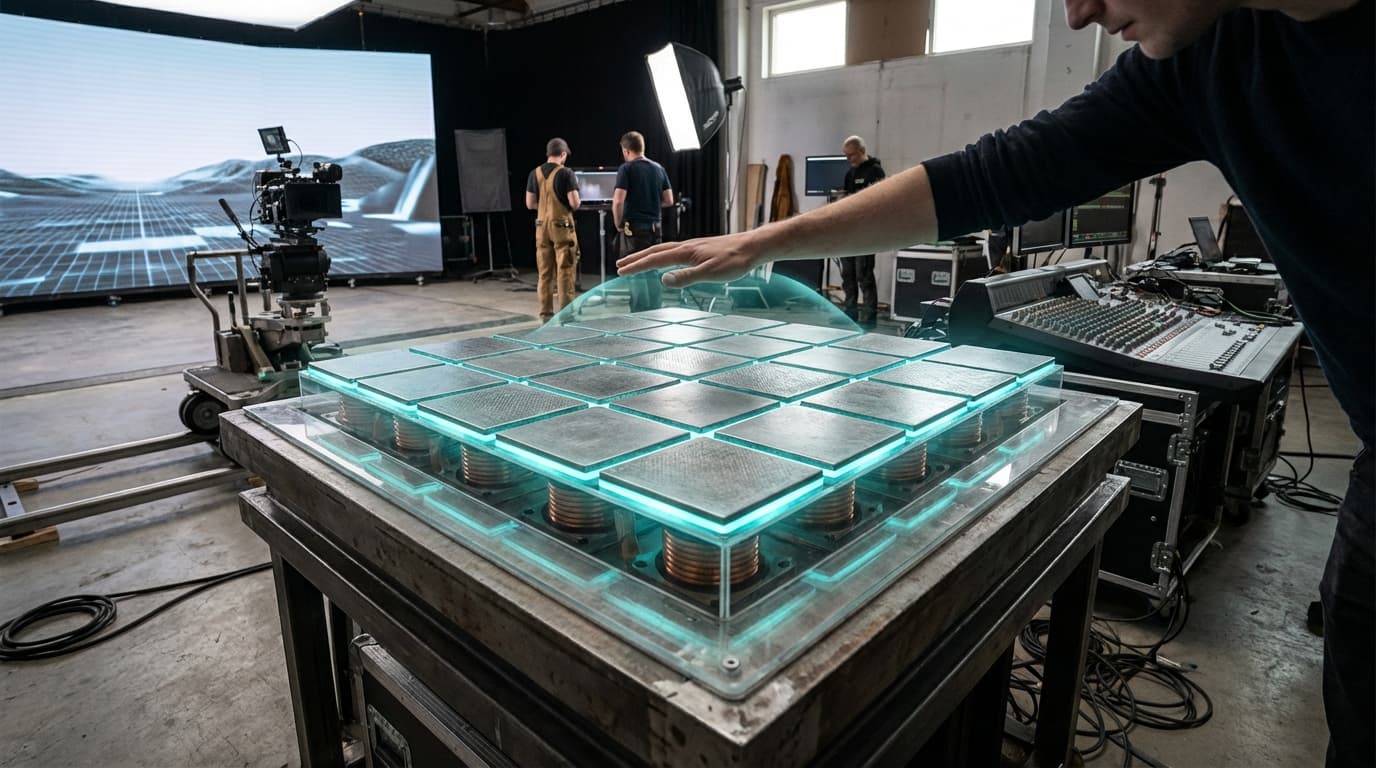
Electromagnetic Haptic Arrays
Electromagnetic haptic arrays tile coils and permanent magnets beneath thin surfaces, modulating Lorentz forces so users feel localized bumps, ripples, or impact pulses as they hover their hands over the panel. Unlike vibrotactile motors, the arrays can shape force vectors dynamically, creating sensations of flowing water, virtual knobs, or keyboard clicks projected through glass. When paired with optical or capacitive tracking, the system knows finger position and can trigger responsive textures as the user skims across the surface.
Museums and experiential retail deploy these arrays in kiosks that morph from maps to musical instruments; esports studios use them to give casters tactile cues without headphones; and telepresence pods integrate them with video walls so remote participants can “tap” shared documents. Automotive interiors experiment with haptic glass dashboards that provide eyes-free feedback, while broadcast control rooms embed them into desks to cut down on button clutter.
Engineering hurdles revolve around power draw, thermal management, and EMI compliance near sensitive audio gear. Nevertheless TRL 5 prototypes from companies like Tanvas, Hap2U, and UltraSense are maturing, and standards like OpenXR and WebHaptics are beginning to expose abstractions for programmable surface textures. As supply chains deliver thinner coils and better driver ICs, electromagnetic haptic tiles will become a common layer for spatial interfaces that need tactile richness without wearables.
Related Organizations
United States · University
Academic lab known for prototyping novel haptic arrays, including electromagnetic and acoustic actuation methods.

Investigates soft robotics for safe human-robot interaction and expressive animatronics.

Develops advanced Linear Resonant Actuators (LRA) and magnetic haptic motors for smartphones and consoles.

Developing 'Apple Intelligence', a personal intelligence system integrated into iOS/macOS that uses on-device context to mediate tasks and information.
United States · Company
Manufacturer of the C-2 Tactor, a linear actuator used in military and research haptic arrays.

The primary IP holder and licensor for haptic technologies globally.

Consumer electronics company making haptic vests and straps using oscillating frame actuators (Osci).
United States · Company
Gaming hardware company utilizing HyperSense haptics (based on Lofelt technology).
Supporting Evidence
Research this in Signals
Signals turns a topic into a sourced research record you can inspect and rerun. Your first scan is free, and this one starts with Electromagnetic Haptic Arrays already loaded, so edit it or scan as is.