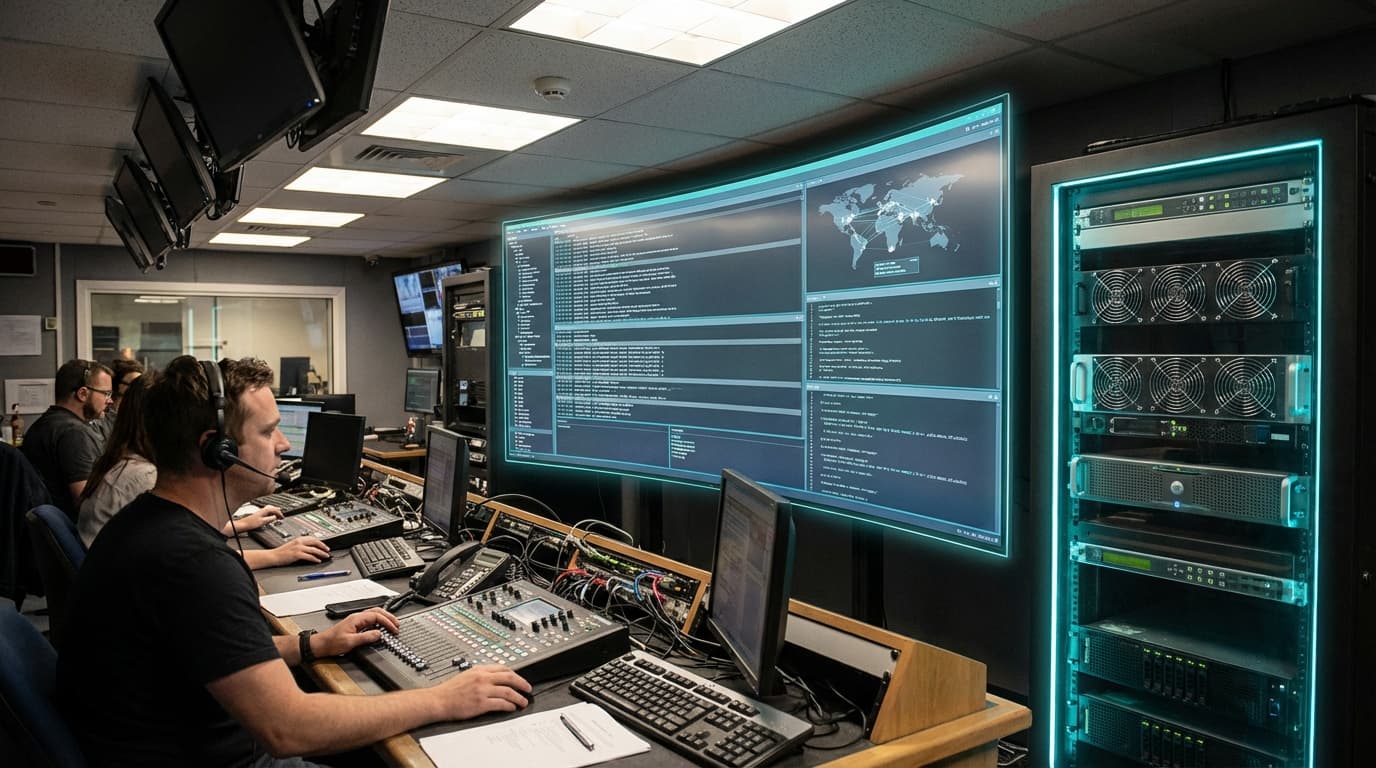
Transformer-based LLMs
Transformer-based LLMs use attention mechanisms, massive token corpora, and reinforcement learning from human feedback to generate context-aware text, code, and multimodal descriptions. Fine-tuning and retrieval augmentation tailor them to domains ranging from screenwriting to compliance documentation. Tooling layers add guardrails, prompt management, and integration hooks into CMS, productivity suites, or creative software.
Media companies embed LLMs inside writers’ rooms as brainstorming partners, summarization assistants, or localization engines. Customer-support avatars use them to stay on-brand, and interactive fiction platforms let fans converse with characters. Because they understand instructions, LLMs orchestrate other AI services—handing off to image models, scheduling engines, or analytics dashboards.
At TRL 9, attention shifts to governance: watermarking outputs, auditing bias, and tracking training data provenance. Regulatory regimes (EU AI Act, US executive orders) push for transparency and optionality. The market trends toward specialized, smaller models fine-tuned for latency-sensitive workflows, while open-source alternatives give studios more control. LLMs are now a permanent layer in the media stack, akin to databases or render farms, requiring ongoing stewardship rather than one-off deployment.
Related Organizations

Developers of the Gemini family of models, which are trained from the start to be multimodal across text, images, video, and audio.

OpenAI
United States · Company
Creator of GPT-4o, a natively multimodal model capable of reasoning across audio, vision, and text in real-time.

An AI safety and research company developing Constitutional AI to align models with human values.

The global hub for open-source AI models and datasets. Founded by French entrepreneurs with a major office in Paris.


Enterprise AI platform focusing on secure and aligned language models.

A non-profit AI research lab that maintains the LM Evaluation Harness, a standard benchmark suite for LLMs.
France · Startup
Paris-based champion of open-weight models (Mistral 7B, Mixtral 8x7B) challenging US dominance.
China · Startup
Founded by Kai-Fu Lee, developing the Yi series of open-source models, including Yi-VL (Vision Language).
Israel · Startup
Israeli company developing the Jurassic series of foundation models.


Abu Dhabi-based research center behind the Falcon series of open-source LLMs.
South Korean tech giant developing HyperCLOVA, a massive Korean-centric LLM.
Supporting Evidence
Research this in Signals
Signals turns a topic into a sourced research record you can inspect and rerun. Your first scan is free, and this one starts with Transformer-based LLMs already loaded, so edit it or scan as is.