Resilient Civic Mesh Networks
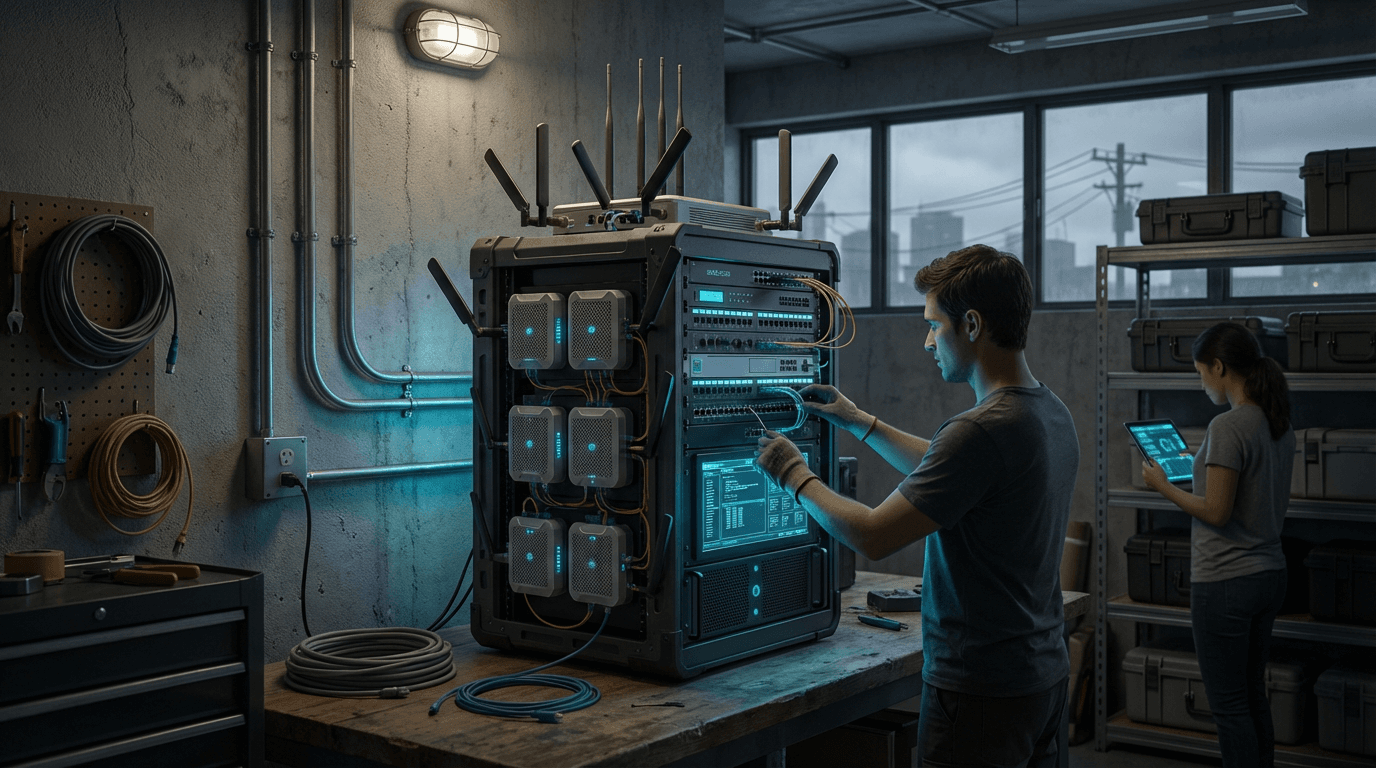
Resilient civic mesh networks represent a fundamental shift in how communities approach telecommunications infrastructure, particularly in the face of growing climate-related disasters and infrastructure vulnerabilities. Unlike traditional cellular or broadband networks that rely on centralized towers and data centers, mesh networks operate through a distributed architecture where each node—whether a router, access point, or edge computing device—can relay data to neighboring nodes, creating a self-healing web of connectivity. This decentralized topology means that if one or several nodes fail, data packets can automatically reroute through alternative pathways, maintaining network functionality even when portions of the infrastructure are compromised. The technology typically combines wireless protocols like Wi-Fi, LoRa, or other radio frequencies with lightweight edge computing capabilities, allowing nodes to process and cache critical information locally rather than depending on distant servers or cloud infrastructure.
The primary challenge these networks address is the brittleness of conventional telecommunications infrastructure during emergencies. When hurricanes, earthquakes, wildfires, or even cyberattacks disable cell towers or sever fiber optic cables, entire communities can lose access to emergency services, coordination tools, and vital information precisely when they need them most. Traditional infrastructure also tends to prioritize economically advantageous areas, leaving rural communities, low-income neighborhoods, and geographically isolated regions underserved or entirely disconnected. Resilient civic mesh networks solve these problems by enabling communities to build and maintain their own communication infrastructure with relatively modest investment. Because the networks are community-operated, local residents develop technical capacity and ownership over their connectivity, reducing dependence on commercial providers who may have limited incentive to serve certain populations or maintain redundancy for disaster scenarios.
Early deployments have demonstrated the viability of this approach across diverse contexts. Following Hurricane Maria in Puerto Rico, community groups established mesh networks that provided connectivity when commercial infrastructure remained offline for months. Similar initiatives have emerged in rural Appalachia, Native American reservations, and urban neighborhoods seeking alternatives to expensive or unreliable commercial service. These networks typically maintain essential services such as emergency messaging, community bulletin boards, offline Wikipedia access, and coordination platforms for disaster response. As climate change intensifies the frequency and severity of infrastructure-disrupting events, and as edge computing hardware becomes more affordable and energy-efficient, resilient civic mesh networks are positioned to become a standard component of community preparedness strategies. This bottom-up approach to telecommunications infrastructure represents a broader trend toward distributed, community-controlled systems that complement rather than replace centralized services, creating redundancy and resilience in an increasingly uncertain future.
Related Organizations

A non-commercial initiative for free wireless networks across Germany.

A bottom-up, citizenship-driven technological, social and economic project to create a free, open and neutral telecommunications network.

A community-owned network in New York City providing resilient, neutral internet access via rooftop mesh nodes.

An open-source project providing off-grid mesh communication using LoRa radios, increasingly used for decentralized data relay.

Develops hardware and software for incentivized mesh networks where routers pay each other for bandwidth.

Project OWL
United States · Startup
Develops the 'DuckLink' mesh network for rapid deployment in disaster zones to restore connectivity.

Facilitates community-owned GSM/LTE cellular networks in rural areas of Latin America.

Develops mobile mesh networking hardware and protocols that enable off-grid communication and transaction relaying.

International network of organizations supporting community networks and internet rights.

Global non-profit that actively funds and trains community network operators.
Supporting Evidence
Research this in Signals
Signals turns a topic into a sourced research record you can inspect and rerun. Your first scan is free, and this one starts with Resilient Civic Mesh Networks already loaded, so edit it or scan as is.