Decentralized Citizen Sensing
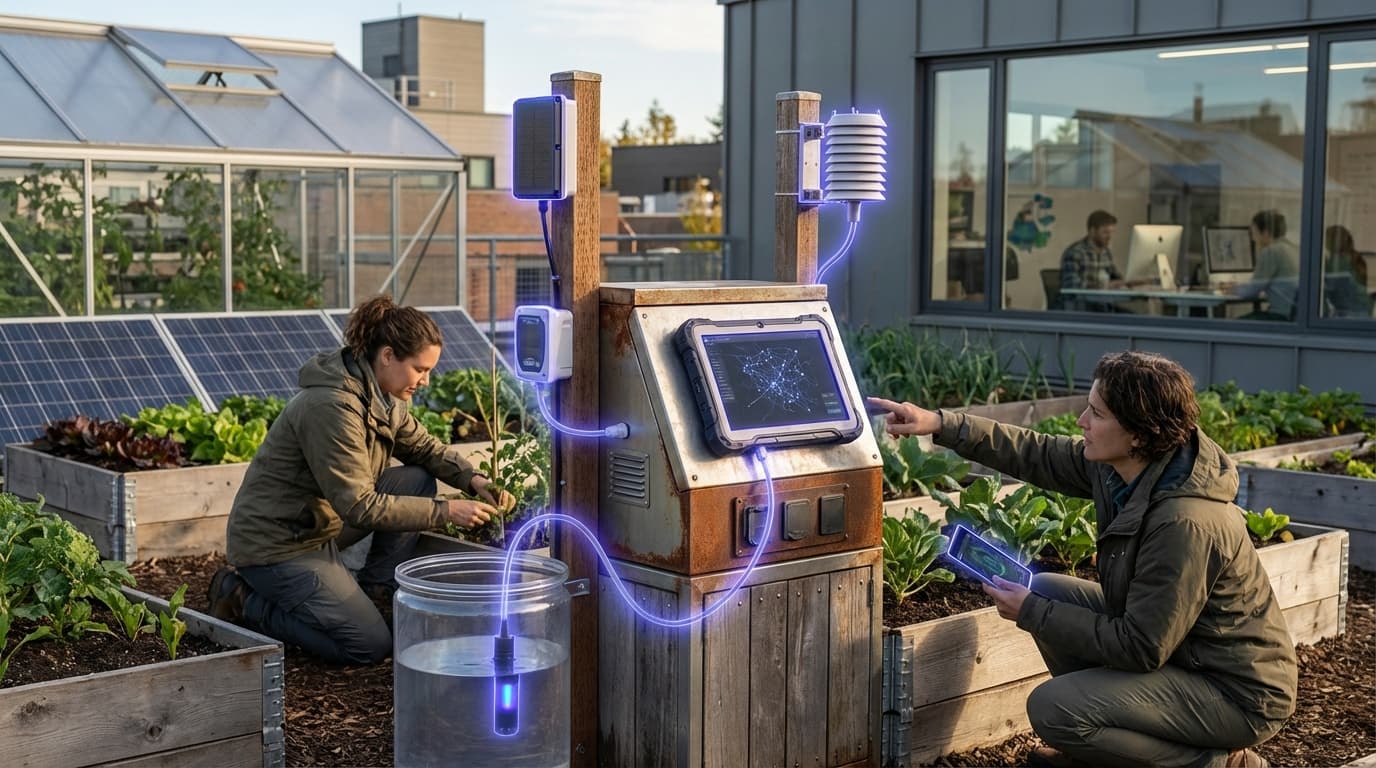
Decentralized citizen sensing represents a fundamental shift in how environmental data is collected and governed, moving away from centralized, government-operated monitoring systems toward distributed networks owned and operated by community members themselves. These networks typically consist of low-cost Internet of Things (IoT) devices—such as air quality sensors, noise monitors, traffic counters, and weather stations—that residents install on their homes, balconies, or community spaces. The sensors continuously collect hyperlocal environmental data and transmit it to open platforms where it can be aggregated, visualised, and analysed. Unlike traditional monitoring infrastructure, which often provides sparse coverage limited to official stations, citizen sensing networks create dense meshes of data points that capture the environmental variations between neighborhoods, streets, and even individual blocks. The technical architecture usually combines affordable sensor hardware with open-source software platforms and wireless connectivity protocols like LoRaWAN or Wi-Fi, enabling communities to deploy comprehensive monitoring systems at a fraction of the cost of institutional alternatives.
The primary challenge this approach addresses is the information asymmetry between citizens and authorities regarding local environmental conditions. Traditional monitoring networks, while scientifically rigorous, often lack the spatial resolution needed to capture pollution hotspots, noise violations, or traffic patterns that disproportionately affect specific communities. This data gap has historically made it difficult for residents to substantiate complaints about environmental quality or to challenge official assessments that may not reflect their lived experiences. Decentralized citizen sensing democratises environmental monitoring by placing data collection tools directly in the hands of those most affected by environmental issues. This creates an independent evidence base that communities can use to advocate for policy changes, hold polluters accountable, and verify whether authorities are meeting their regulatory obligations. Furthermore, the participatory nature of these networks fosters environmental literacy and civic engagement, transforming residents from passive recipients of environmental policy into active participants in environmental governance.
Early deployments of citizen sensing networks have emerged in cities across Europe, North America, and Asia, often initiated by environmental advocacy groups, neighbourhood associations, or civic technology organisations. These projects have demonstrated the potential for community-generated data to influence urban policy, from identifying previously unrecognised air pollution sources to documenting noise violations that prompted enforcement actions. Research suggests that when citizen-collected data is presented alongside traditional monitoring information, it can strengthen the evidence base for environmental interventions and increase public trust in decision-making processes. As sensor technology becomes more affordable and data platforms more accessible, the model is expanding beyond environmental monitoring to include other urban phenomena such as urban heat islands, flooding patterns, and biodiversity indicators. This trajectory points toward a future where environmental governance becomes more participatory and responsive, with communities maintaining permanent infrastructure for monitoring the conditions that affect their health and quality of life, fundamentally reshaping the relationship between citizens and the institutions responsible for environmental stewardship.
Related Organizations

PlanetWatch
France · Startup
Leverages the Algorand blockchain and IoT sensors to build a decentralized global air quality monitoring network.

A volunteer-driven organization created after Fukushima to collect and publish open environmental data (radiation and air quality).
A global contributor network (formerly Luftdaten.info) that builds and installs open-source air quality sensors.

Steward of the Helium Network, a decentralized wireless infrastructure.
Project born at Fab Lab Barcelona providing open-source hardware and software for citizens to capture environmental data.


A nonprofit that aggregates and harmonizes open air quality data from across the globe into a standard format.

A community developing open-source tools for environmental exploration and investigation (e.g., balloon mapping, DIY spectrometers).

Producer of low-cost air quality sensors that create a real-time community map of air pollution.

Designs and manufactures wireless sensor network hardware for IoT applications.

A decentralized mapping network that rewards contributors with crypto for collecting 4K street-level imagery via dashcams.
Supporting Evidence
Research this in Signals
Signals turns a topic into a sourced research record you can inspect and rerun. Your first scan is free, and this one starts with Decentralized Citizen Sensing already loaded, so edit it or scan as is.