Digital Twin Governance Platforms
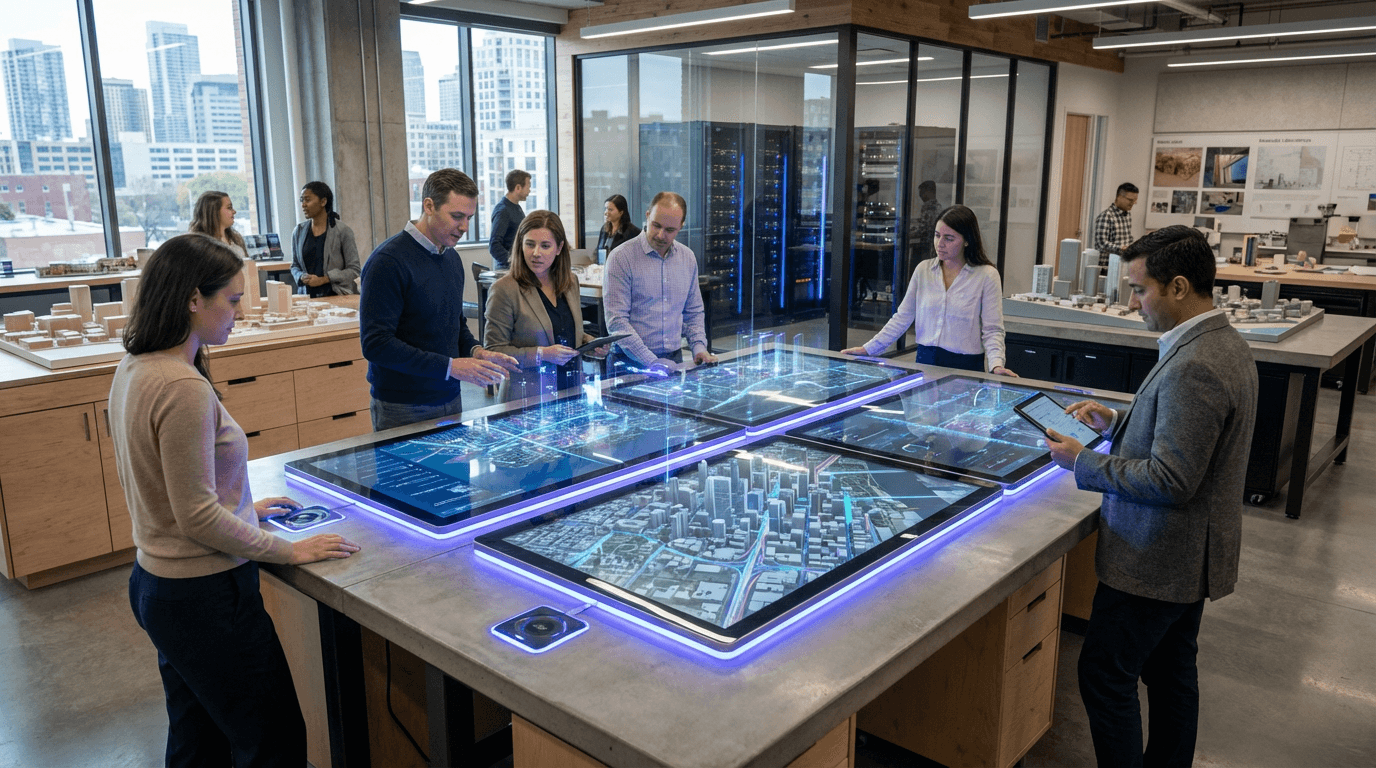
Digital twin governance platforms represent a convergence of advanced simulation technologies, real-time data integration, and policy modeling frameworks that create comprehensive virtual replicas of governmental systems and urban infrastructure. Unlike traditional digital twins that focus on individual assets or facilities, these platforms operate across multiple scales simultaneously, linking national economic models with regional demographic projections, municipal service delivery systems, and hyperlocal infrastructure performance. The technical architecture relies on continuous data streams from IoT sensors embedded in transportation networks, utility grids, and public facilities, combined with administrative datasets covering taxation, public health, education, and social services. Machine learning algorithms process this information to maintain synchronized digital representations that mirror real-world conditions, while scenario modeling engines allow policymakers to simulate the cascading effects of interventions across interconnected systems. The platforms employ agent-based modeling to represent citizen behavior, computational fluid dynamics for traffic and environmental flows, and econometric models for fiscal impacts, creating a holistic simulation environment where policy decisions can be tested against realistic constraints and feedback loops.
The fundamental challenge these platforms address is the inherent complexity and unpredictability of policy implementation in modern governance. Traditional policymaking often relies on historical precedent, expert judgment, and limited pilot programs, yet interventions frequently produce unintended consequences when deployed at scale due to the intricate interdependencies within urban and national systems. A zoning reform intended to increase housing affordability might inadvertently strain transportation infrastructure, alter neighborhood demographics, or shift tax revenues in ways that affect public service delivery elsewhere. Digital twin governance platforms enable decision-makers to explore these ripple effects before committing resources, testing variations of proposed policies against different economic scenarios, population growth projections, or climate conditions. This capability proves particularly valuable for evaluating long-term infrastructure investments, where decisions made today will shape urban form for decades. The technology also facilitates evidence-based stakeholder engagement, allowing citizens and advocacy groups to visualize policy impacts on their communities and contribute feedback that can be incorporated into refined simulations, fostering more transparent and participatory governance processes.
Early implementations have emerged in several forward-thinking jurisdictions, with national governments exploring digital twins for economic policy coordination and metropolitan regions deploying them for integrated infrastructure planning. Research initiatives at major technical universities have demonstrated the feasibility of linking policy models with physical infrastructure simulations, while pilot programs in smart city contexts have tested real-time data integration from municipal sensor networks. The platforms show particular promise for climate adaptation planning, where policymakers must coordinate interventions across energy systems, transportation networks, building codes, and emergency response capabilities. As computational capabilities continue to advance and data collection becomes more comprehensive, these platforms are evolving from experimental tools into operational decision-support systems. The trajectory points toward increasingly sophisticated simulations that can model social equity outcomes, environmental justice implications, and long-term sustainability metrics alongside traditional economic and operational performance indicators. This evolution positions digital twin governance platforms as essential infrastructure for addressing the complex, interconnected challenges facing contemporary cities and nations, enabling a shift from reactive policymaking to proactive, evidence-informed governance that can anticipate and mitigate unintended consequences while optimizing outcomes across multiple objectives.
Related Organizations

The agency that commissioned and oversees 'Virtual Singapore', the world's most advanced digital twin for city governance.

Software corporation specializing in 3D design and digital mock-ups.

Developing foundation models for robotics (Project GR00T) and vision-language models like VILA.
Cityzenith
United States · Startup
Develops the SmartWorldOS digital twin platform for cities and large building portfolios.

Australia's national science agency data arm, developers of the NSW Digital Twin and the Magda data catalog.

Global leader in GIS software (ArcGIS), providing the spatial analytics layer used by thousands of local governments for urban planning and policy.

A data platform that models the built environment and human movement patterns to help public agencies make informed decisions.


UK innovation accelerator for cities, transport, and place leadership, setting standards for digital twins and urban data.
Supporting Evidence
Research this in Signals
Signals turns a topic into a sourced research record you can inspect and rerun. Your first scan is free, and this one starts with Digital Twin Governance Platforms already loaded, so edit it or scan as is.