Hydrogen Infrastructure for Heavy Transport
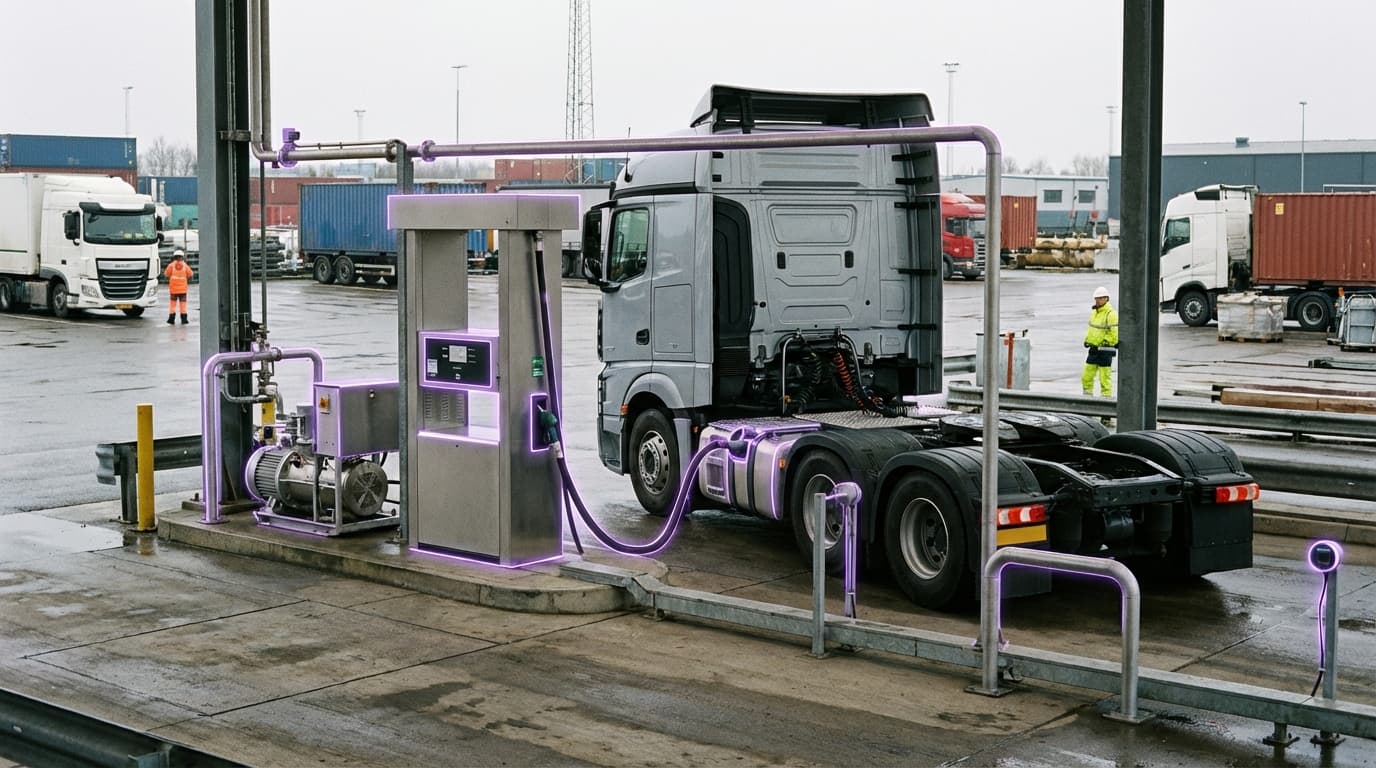
Hydrogen infrastructure for heavy transport encompasses the complete ecosystem needed to support hydrogen fuel cell vehicles, including production of low-carbon hydrogen, storage systems, distribution networks, and refueling stations designed for large vehicles like trucks, buses, trains, and ships. The infrastructure must handle the unique requirements of hydrogen: it's a gas that requires compression or liquefaction, has low energy density by volume, and requires specialized handling. For heavy transport applications, infrastructure must support high-capacity refueling, long-range vehicles, and high daily usage, requiring robust and efficient systems.
The technology addresses the challenge of decarbonizing heavy transport sectors where battery electric vehicles face limitations due to weight, range, and charging time requirements. Hydrogen fuel cells can provide the energy density and rapid refueling needed for heavy vehicles that travel long distances or operate continuously. The infrastructure includes electrolyzers for green hydrogen production, compression and liquefaction systems, pipelines or truck transport for distribution, and high-capacity refueling stations. Applications include freight trucking, public transit buses, rail transportation, shipping, and other heavy-duty applications. Companies and governments are developing hydrogen infrastructure for transport.
At TRL 6, hydrogen infrastructure for heavy transport is being deployed in pilot projects and some commercial applications, though scale and coverage remain limited. The technology faces challenges including high costs of infrastructure development, ensuring low-carbon hydrogen production, building sufficient refueling network coverage, developing standards and interoperability, and achieving cost competitiveness with diesel. However, as hydrogen production costs decrease and infrastructure scales, the economics improve. The technology could enable decarbonization of heavy transport sectors that are difficult to electrify with batteries, potentially reducing emissions from freight, transit, and other heavy-duty applications while providing the range and refueling speed needed for these use cases, though it requires significant investment and coordination to build the necessary infrastructure at scale.
Related Organizations

A 50:50 joint venture between Daimler Truck AG and the Volvo Group dedicated to developing fuel cell systems.

A global dedicated hydrogen company delivering optimal solutions to produce, store, and distribute hydrogen from renewable energy.

A provider of turnkey hydrogen solutions, including electrolyzers, fuel cells, and liquid hydrogen delivery systems.

A developer and manufacturer of proton exchange membrane fuel cell products.
Germany · Consortium
A consortium establishing a nationwide hydrogen infrastructure in Germany.


A company developing and operating the 'True Zero' network of hydrogen fueling stations.
Norway · Company
A provider of hydrogen type 4 high-pressure cylinders, battery packs, and vehicle systems integration for fuel cell electric vehicles.

Designs and manufactures electrolyzers based on proton exchange membrane (PEM) technology.
France · Company
Specialist in zero-carbon hydrogen production and distribution equipment.
Supporting Evidence
Research this in Signals
Signals turns a topic into a sourced research record you can inspect and rerun. Your first scan is free, and this one starts with Hydrogen Infrastructure for Heavy Transport already loaded, so edit it or scan as is.