Flexible Electronics
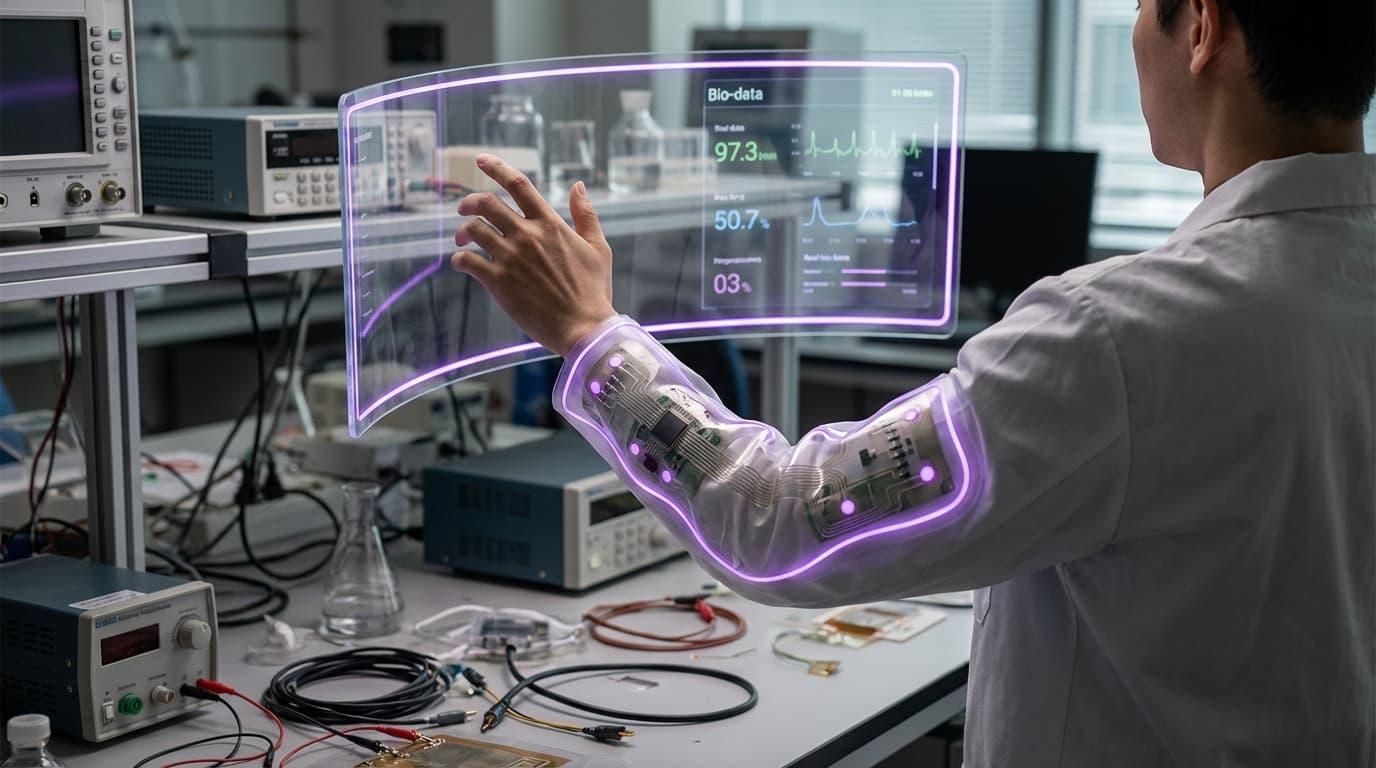
Flexible electronics utilize advanced materials and manufacturing techniques to create electronic circuits and devices on bendable, stretchable, or foldable substrates. Unlike traditional rigid silicon-based electronics, these systems use materials like organic semiconductors, graphene, or ultrathin silicon membranes that can withstand mechanical deformation without losing functionality. The technology enables electronic devices to conform to curved surfaces, integrate into textiles, or be rolled up for storage.
This innovation is transforming multiple industries by enabling new form factors and applications. Flexible displays are already commercialized in foldable smartphones and curved televisions, while flexible sensors are being integrated into wearable health monitors, smart clothing, and medical devices that conform to the body. Companies like Samsung, LG, and startups such as FlexEnable and PragmatIC are advancing flexible electronics for various applications.
At TRL 6, flexible electronics are moving from research into commercial products, though challenges remain in durability, manufacturing scalability, and performance compared to rigid alternatives. The technology is particularly significant for wearable devices, where flexibility enables comfort and seamless integration with the human body. As manufacturing processes improve and material costs decrease, flexible electronics could enable entirely new categories of products, from rollable displays to electronic skin patches that monitor health continuously.
Related Organizations

Conducts advanced research into cryogenic CMOS and quantum computing interconnects.

Manufactures ultra-low-cost, flexible integrated circuits (FlexICs) that are thinner than a human hair.

The pioneer of electrophoretic display technology, producing flexible e-paper displays for e-readers and signage.
United Kingdom · Company
Develops organic thin-film transistor (OTFT) technology for flexible displays and sensors.

Open innovation center by imec and TNO specializing in flexible electronics.
United States · Consortium
A US manufacturing institute dedicated to advancing the manufacturing ecosystem for Flexible Hybrid Electronics (FHE).
South Korea · Company
The market leader in OLED technology, mass-producing foldable and flexible display panels for smartphones.

Develops Carbon NanoBud (CNB) films for flexible touch sensors and heaters.
United States · Startup
Develops flexible, skin-like microfluidic wearables for analyzing sweat and hydration.

Royole
China · Company
Manufacturer of fully flexible displays and sensors, known for releasing the world's first foldable smartphone.

Develops materials and processes for printed and flexible electronics, including smart sensing platforms.
Supporting Evidence
Research this in Signals
Signals turns a topic into a sourced research record you can inspect and rerun. Your first scan is free, and this one starts with Flexible Electronics already loaded, so edit it or scan as is.