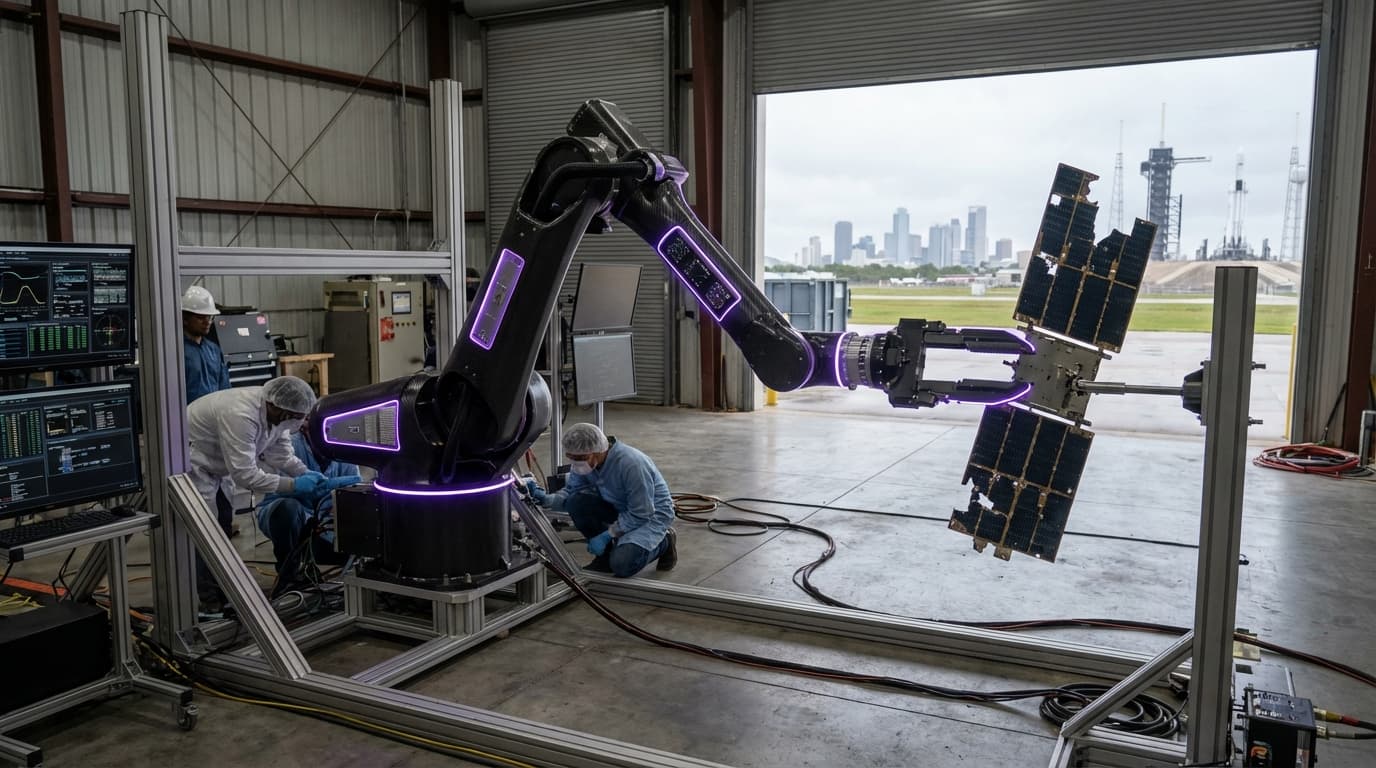
Active Debris Removal
Active debris removal involves robotic spacecraft designed to capture, de-orbit, or otherwise remove defunct satellites and space debris from orbit. These systems use various capture mechanisms including nets, harpoons, robotic arms, or tethers to secure debris objects, then either de-orbit them to burn up in the atmosphere or move them to graveyard orbits. The technology addresses the growing problem of space debris—thousands of defunct satellites and millions of smaller fragments—that threatens active satellites and creates the risk of Kessler syndrome, where collisions create more debris in a cascading effect that could make certain orbits unusable.
The technology is critical for ensuring the long-term sustainability of space activities as the number of satellites and debris objects grows rapidly. Active removal can target the largest and most dangerous debris objects, preventing collisions that would create thousands of new fragments. Various capture techniques are being developed: nets for smaller objects, harpoons for larger satellites, robotic arms for precise capture, and ion beams or lasers for pushing debris. Applications include removing defunct satellites, cleaning up collision debris, maintaining safe orbital environments, and protecting critical space infrastructure. Space agencies and companies are developing active debris removal systems.
At TRL 5, active debris removal has been demonstrated in limited tests, though operational systems for large-scale cleanup remain in development. The technology faces challenges including the cost of removal missions, developing reliable capture mechanisms for tumbling or uncooperative objects, legal and ownership issues (who is responsible for removing debris), and the scale of the problem requiring many removal missions. However, as space becomes more crowded and the debris threat grows, active removal becomes increasingly necessary. The technology could prevent Kessler syndrome and ensure sustainable use of space by actively managing the orbital environment, potentially protecting trillions of dollars in space infrastructure, though it requires international coordination, significant investment, and solving complex technical challenges to capture and remove diverse debris objects safely and effectively.
Related Organizations

Market leader in satellite servicing and long-term orbital sustainability, known for the ELSA-d demonstration mission.

Swiss startup selected by ESA for the ClearSpace-1 mission to remove a Vega payload adapter from orbit.

Leads the EAGLE-1 mission and the SAGA program to build a European quantum communication infrastructure in space.

Leading long-term research into SBSP, with plans to demonstrate power transmission from orbit by 2025.

Led the RemoveDEBRIS mission, which successfully tested net and harpoon capture technologies in orbit.

Partner in the EuroQCI initiative, working on the space segment of the European quantum communication infrastructure.

Space logistics company offering decommissioning services and developing technology to remove satellites at end-of-life.

Developing software and hardware to capture tumbling, unprepared debris objects in orbit.

Building 'Orbots' equipped with AI to inspect, characterize, and eventually service or remove space assets.

Developing 'capture bag' technology originally for asteroid mining, now applied to capturing orbital debris.
Supporting Evidence
Research this in Signals
Signals turns a topic into a sourced research record you can inspect and rerun. Your first scan is free, and this one starts with Active Debris Removal already loaded, so edit it or scan as is.