High-Tech Shrimp Aquaculture
Geography: Asia Pacific · Southeast Asia · Southeast Asia
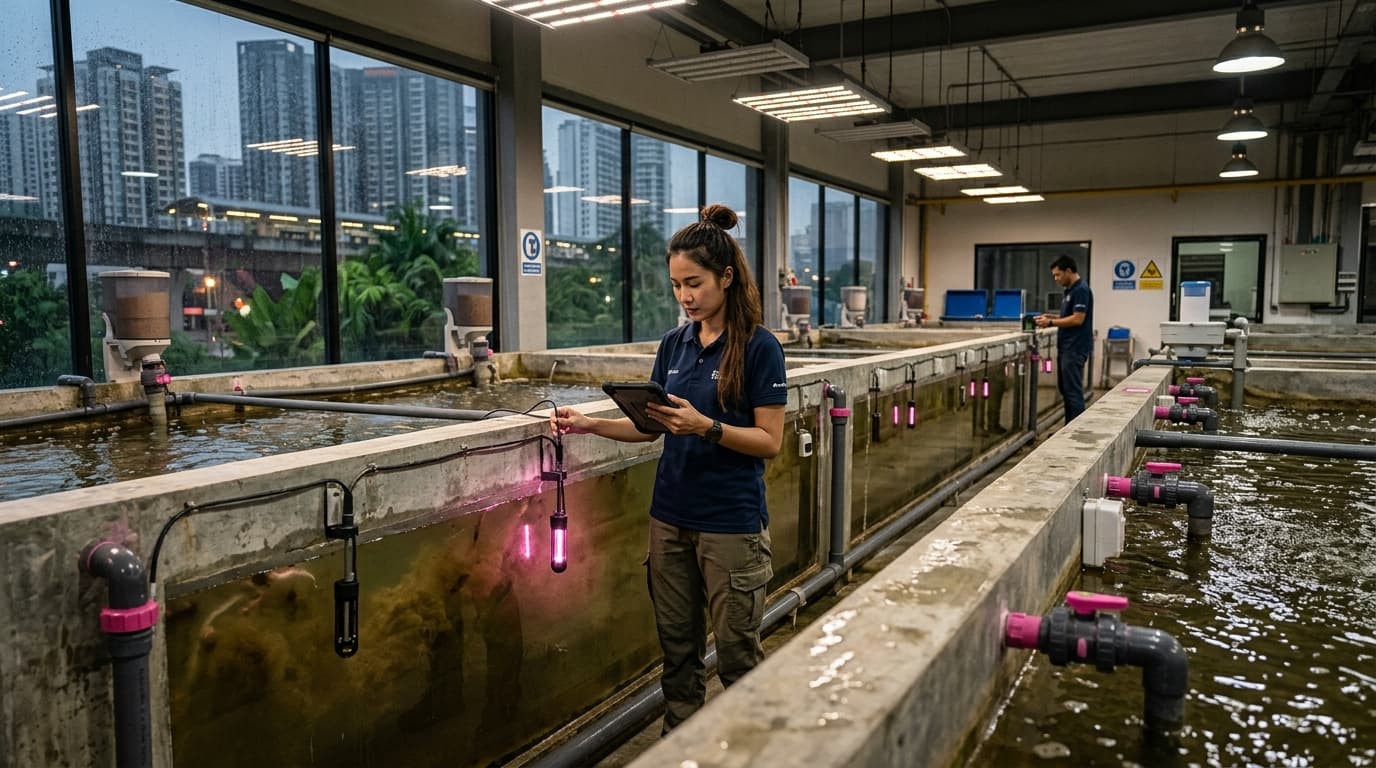
Vietnam — Vietnam exports over $4 billion in shrimp annually, ranking third globally after India and Ecuador. The Mekong Delta shrimp industry is adopting precision aquaculture technologies: IoT sensors for real-time water quality monitoring (pH, dissolved oxygen, temperature), AI-powered early warning systems for white spot syndrome and EMS disease, and biofloc technology that recirculates waste into microbial feed.
Traditional shrimp farming is high-risk: a disease outbreak can wipe out an entire pond within days. Technology-enabled intensification allows higher stocking densities (100+ shrimp per square meter vs. 30 in traditional ponds) while reducing mortality through continuous environmental monitoring. Biofloc systems additionally reduce water exchange by 80%, critical in areas facing saltwater intrusion from climate change.
The broader significance is food security technology for tropical aquaculture. As wild fisheries decline globally and demand for protein grows, high-tech aquaculture becomes a critical food production pathway. Vietnam's combination of aquaculture expertise, technology adoption, and massive production scale makes it the laboratory where tropical aquaculture intensification is being proven at national scale.
Research this in Signals
Signals turns a topic into a sourced research record you can inspect and rerun. Your first scan is free, and this one starts with High-Tech Shrimp Aquaculture already loaded, so edit it or scan as is.