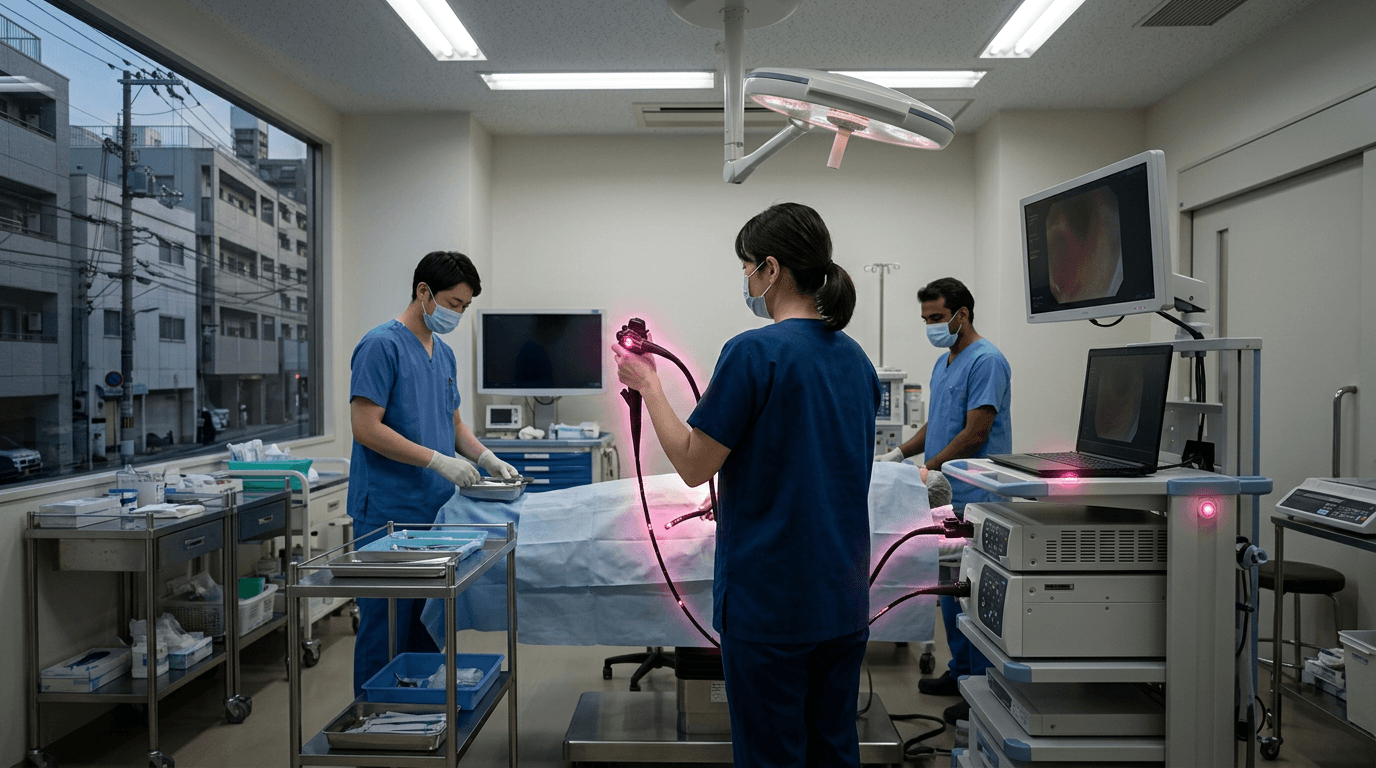
Advanced Medical Endoscopy and Devices
Geography: Asia Pacific · East Asia · Japan
Olympus Corporation dominates the global endoscopy market with approximately 70% market share in gastrointestinal endoscopes. The company's EVIS X1 and EVIS EXERA IV systems integrate AI-powered computer-aided detection (CADe) for real-time polyp detection during colonoscopy, achieving sensitivity rates exceeding 95%. Fujifilm and Hoya (Pentax Medical) add further Japanese presence in the endoscopy market.
The integration of AI into endoscopy is transforming gastroenterology: Olympus's EndoBRAIN system uses deep learning to classify colorectal polyps in real-time, reducing miss rates and unnecessary biopsies. Japan's early adoption of AI-assisted endoscopy reflects both its technology leadership and domestic need — Japan has one of the world's highest rates of gastric cancer, driving demand for early detection tools.
Japanese medical device excellence extends beyond endoscopy: Terumo (interventional cardiology devices), Sysmex (blood analysis systems), and Shimadzu (medical imaging) are global leaders in their niches. The pattern mirrors broader Japanese innovation — deep expertise in precision instruments, iterative improvement over decades, and global market dominance in categories that require manufacturing excellence rather than software disruption.
Research this in Signals
Signals turns a topic into a sourced research record you can inspect and rerun. Your first scan is free, and this one starts with Advanced Medical Endoscopy and Devices already loaded, so edit it or scan as is.