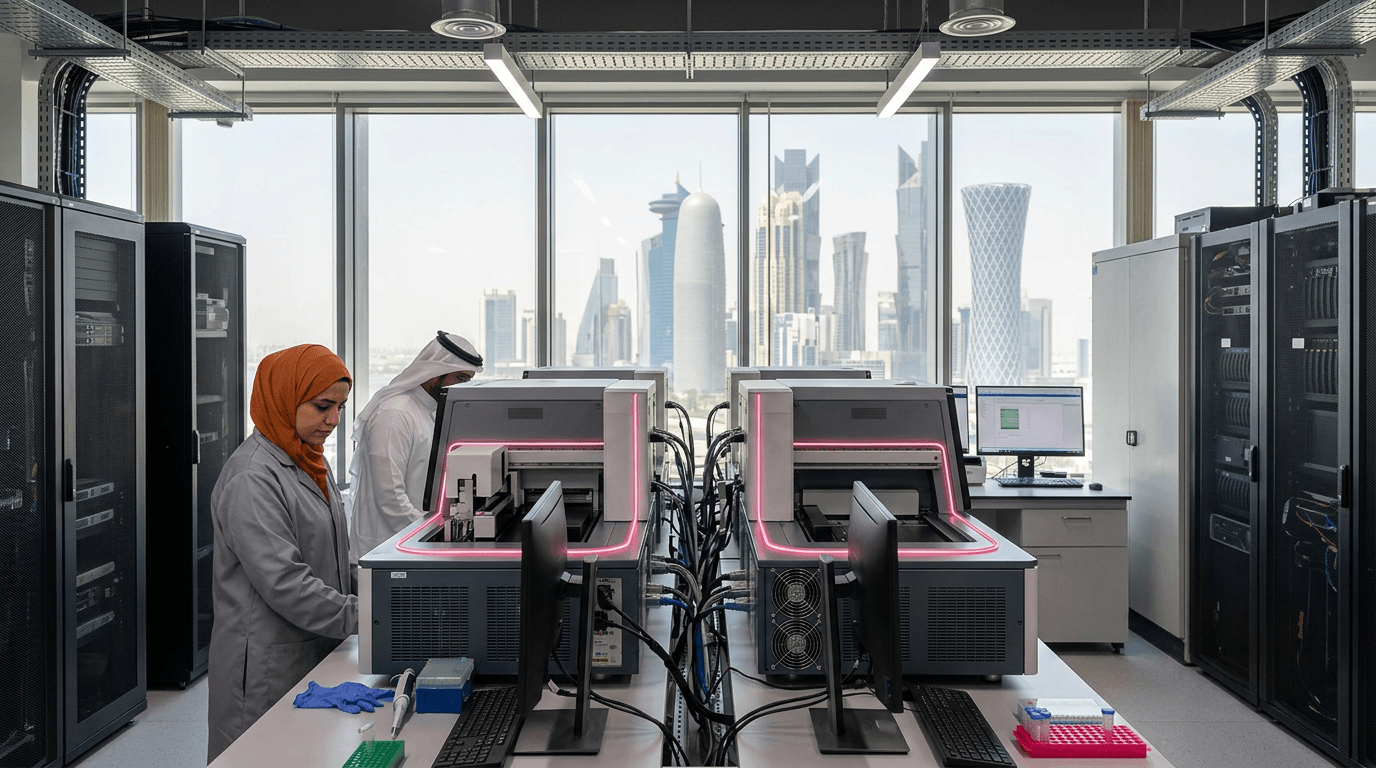
Population-Scale Arab Genomic Sequencing
Geography: Emea · Middle East · Gulf States
The Gulf states are conducting population-scale whole-genome sequencing of Arab and Middle Eastern populations that are severely underrepresented in global genomic databases. Qatar Biobank integrates with the Qatar Genome Programme to create matched genomic-clinical datasets covering a significant fraction of the national population. Abu Dhabi Biobank partnered with AstraZeneca in January 2026 to advance translational research targeting rare and difficult-to-diagnose diseases specific to Gulf populations. Saudi Arabia's National Biobank connects genomic data with Vision 2030 healthcare goals, linking whole-genome sequences to longitudinal electronic health records.
This genomic sequencing effort matters because over 80% of existing genomic reference data comes from populations of European descent, creating a systematic bias in precision medicine. Drug efficacy, disease risk prediction, and diagnostic algorithms trained on European genomes perform poorly for Arab, South Asian, and African populations — collectively billions of people. The Gulf's population-scale sequencing generates the reference datasets needed to develop precision medicine that works for MENA populations. Novel genetic variants specific to Arab populations — including founder mutations in consanguineous communities — are being discovered at accelerating rates.
The convergence of Gulf genomic datasets with AI analytical capabilities (G42, HUMAIN) creates a unique competitive advantage: the biological samples, clinical data, genomic sequences, and compute power to analyze them all exist within the same national ecosystems. This positions Gulf states as essential partners for any pharmaceutical or biotech company pursuing precision medicine beyond European populations. The commercial opportunity is substantial — pharmacogenomic insights from Arab populations can improve drug development for 400+ million people across MENA and the broader Muslim world.
Research this in Signals
Signals turns a topic into a sourced research record you can inspect and rerun. Your first scan is free, and this one starts with Population-Scale Arab Genomic Sequencing already loaded, so edit it or scan as is.