Industrial Synthetic Biology and BioFoundry Platform
Geography: Asia Pacific · Oceania · Australia New Zealand
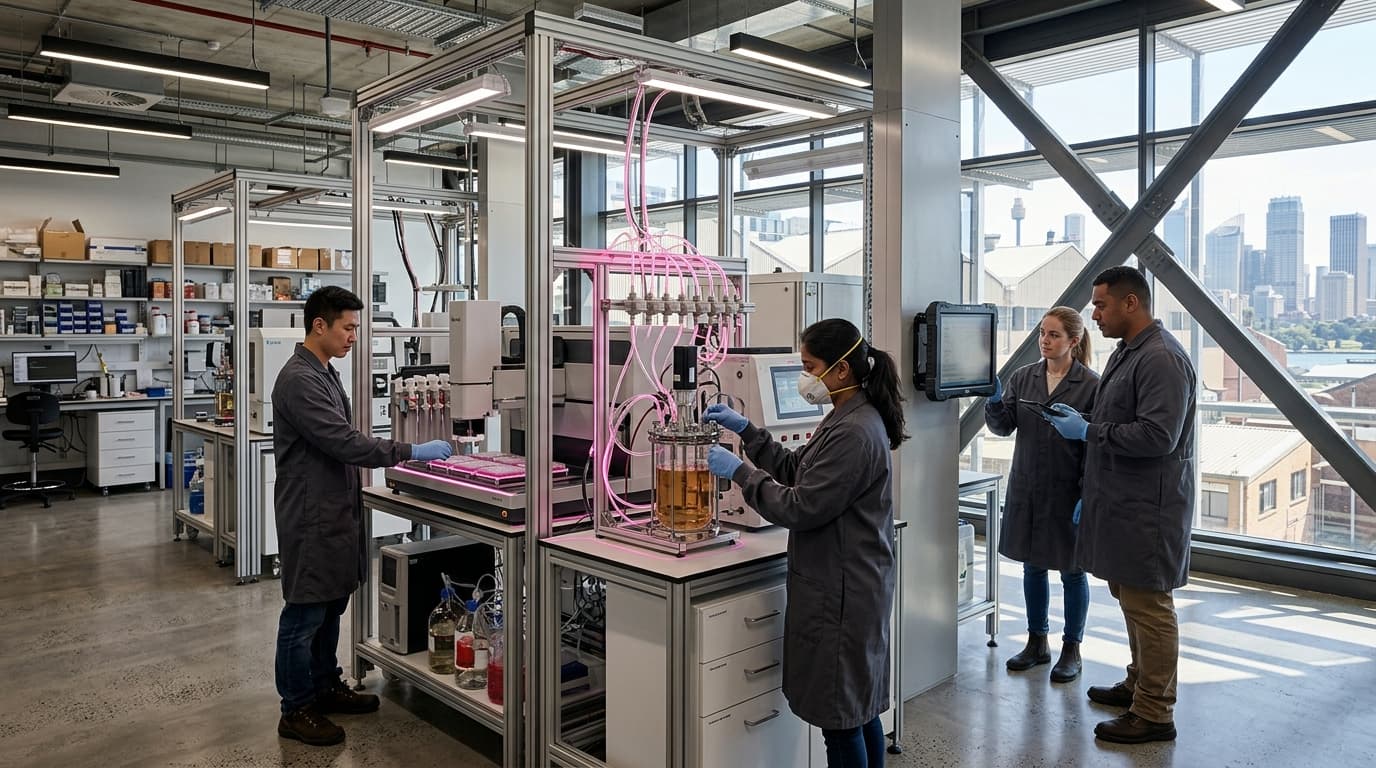
CSIRO operates the BioFoundry — a high-throughput automated facility at Brisbane's Ecosciences Precinct purpose-built for rapid design, build, and test cycles in synthetic biology. The platform uses robotics and machine learning to engineer microorganisms for industrial applications including pharmaceuticals, biofuels, specialty chemicals, agricultural biologicals, and food ingredients. In May 2025, CSIRO articulated its vision for a 'Future Made in Australia' through engineering biology, projecting $30 billion in economic contribution and 50,000 new jobs by 2040.
The CSIRO BioFoundry connects to a national network including IdeaBIO for systems biology and fermentation process development, and QUT's Pioneer BioPilot in Mackay for scale-up from laboratory to pilot-plant production. This integrated infrastructure — spanning strain engineering through to pilot manufacturing — gives Australian researchers and companies a pathway from discovery to commercial production that few countries outside the US can match. A 2025 review in PMC documented how this coordination has accelerated Australia's engineering biology capabilities.
Synthetic biology is poised to transform manufacturing by replacing petrochemical processes with biological ones — producing plastics, fuels, flavors, and medicines from engineered microorganisms fed on renewable feedstocks. Australia's competitive advantages include abundant biomass feedstocks (sugarcane, agricultural residues), strong research institutions, and a regulatory environment that is adapting to accommodate engineered biology. The strategic implication is manufacturing sovereignty — the ability to produce critical chemicals, fuels, and medicines domestically through biological processes rather than depending on imported petrochemicals.
Research this in Signals
Signals turns a topic into a sourced research record you can inspect and rerun. Your first scan is free, and this one starts with Industrial Synthetic Biology and BioFoundry Platform already loaded, so edit it or scan as is.