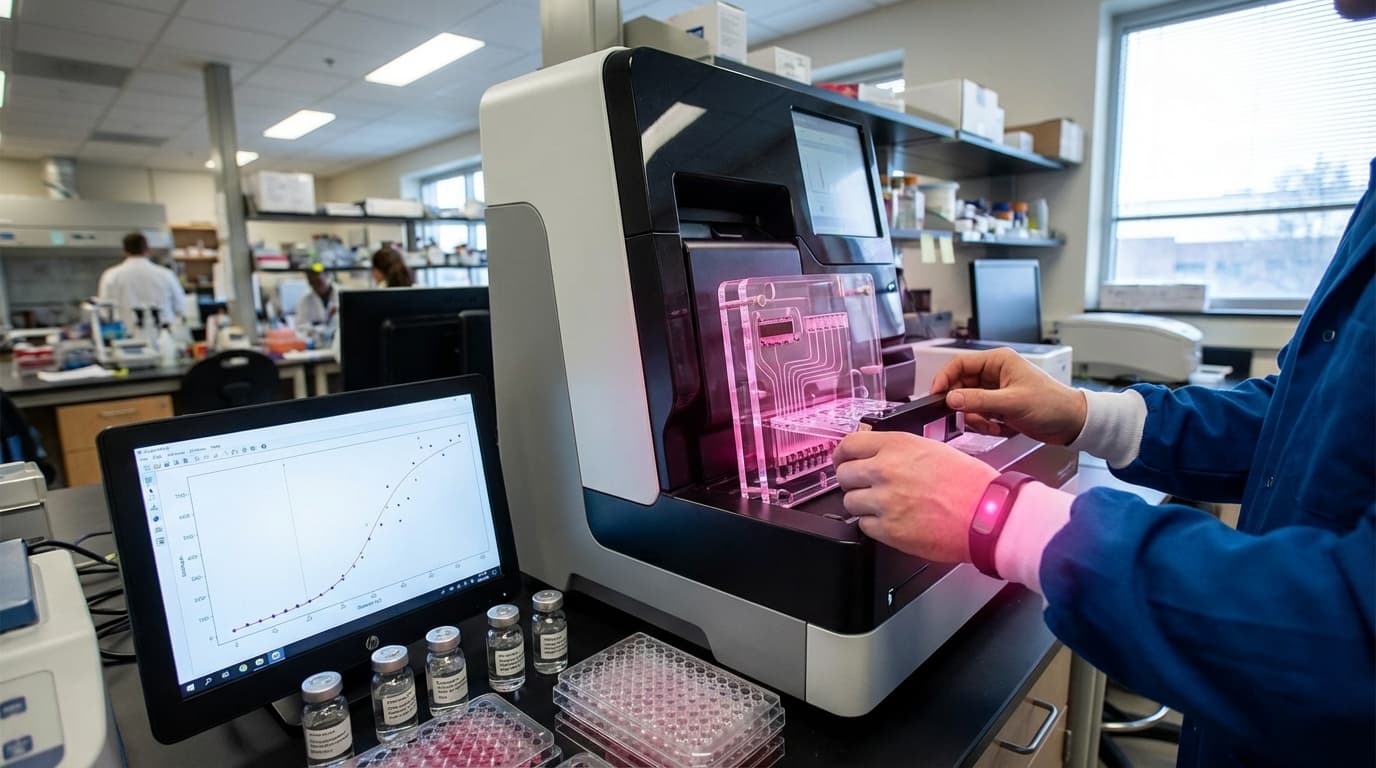
Adverse Event Prediction Systems
Adverse event prediction systems use machine learning platforms that continuously analyze clinical trial data including telemetry from wearable devices, laboratory values, and patient-reported outcomes to predict adverse events before they become serious, enabling proactive intervention. These systems can trigger protocol adjustments, emergency outreach to patients, or dose modifications when early warning signs are detected, reducing trial attrition and improving patient safety by catching problems early. Pharmaceutical sponsors are deploying these platforms to enhance safety monitoring in clinical trials.
This innovation addresses the challenge of monitoring patient safety in clinical trials, where adverse events can develop rapidly and early detection is critical for patient safety and trial success. By using AI to analyze multiple data streams continuously, these systems can identify patterns that might indicate developing problems before they become serious. Companies and research institutions are developing these systems for use in clinical trials.
The technology is particularly valuable for trials of new therapeutics where safety profiles are not fully understood, enabling better patient protection and potentially faster, safer drug development. As the technology improves, it could become standard in clinical trials. However, ensuring accuracy, avoiding false alarms, and integrating with trial protocols remain challenges. The technology represents an important evolution in clinical trial safety monitoring, but requires continued development to achieve the accuracy and integration needed for widespread use. Success could improve patient safety in trials and potentially accelerate drug development by enabling safer, more efficient trials, but the technology must prove itself in real-world trial environments.
Related Organizations
United States · Company
A Dassault Systèmes company offering the Acorn AI platform for clinical trial analytics.
Belgium · Company
Provides Risk-Based Quality Management (RBQM) software using statistical algorithms to detect anomalies.

Global provider of advanced analytics, technology solutions, and clinical research services.
United States · Company
Provides the Life Science Analytics Cloud (LSAC), an AI-driven platform for clinical operations.

The regulatory body convening advisory committees to discuss the safety, efficacy, and ethics of artificial womb technology (EXTEND).

Creates 'Prognostic Digital Twins' of patients to populate control arms in clinical trials, reducing the need for placebo patients.
United States · Company
Cloud computing company focused on pharmaceutical and life sciences industry applications.

Alphabet's life sciences arm, which operates the WastewaterScan initiative.

A biotech company that uses federated learning to train AI models on distributed patient data without the data leaving hospitals.
United States · Company
Provides AI-driven clinical development analytics to simulate trials and predict patient risks.
Supporting Evidence
Research this in Signals
Signals turns a topic into a sourced research record you can inspect and rerun. Your first scan is free, and this one starts with Adverse Event Prediction Systems already loaded, so edit it or scan as is.