


Human Digital Twins
Digital Twin Physiology Platforms
Patient-specific simulation stacks predicting therapy response.
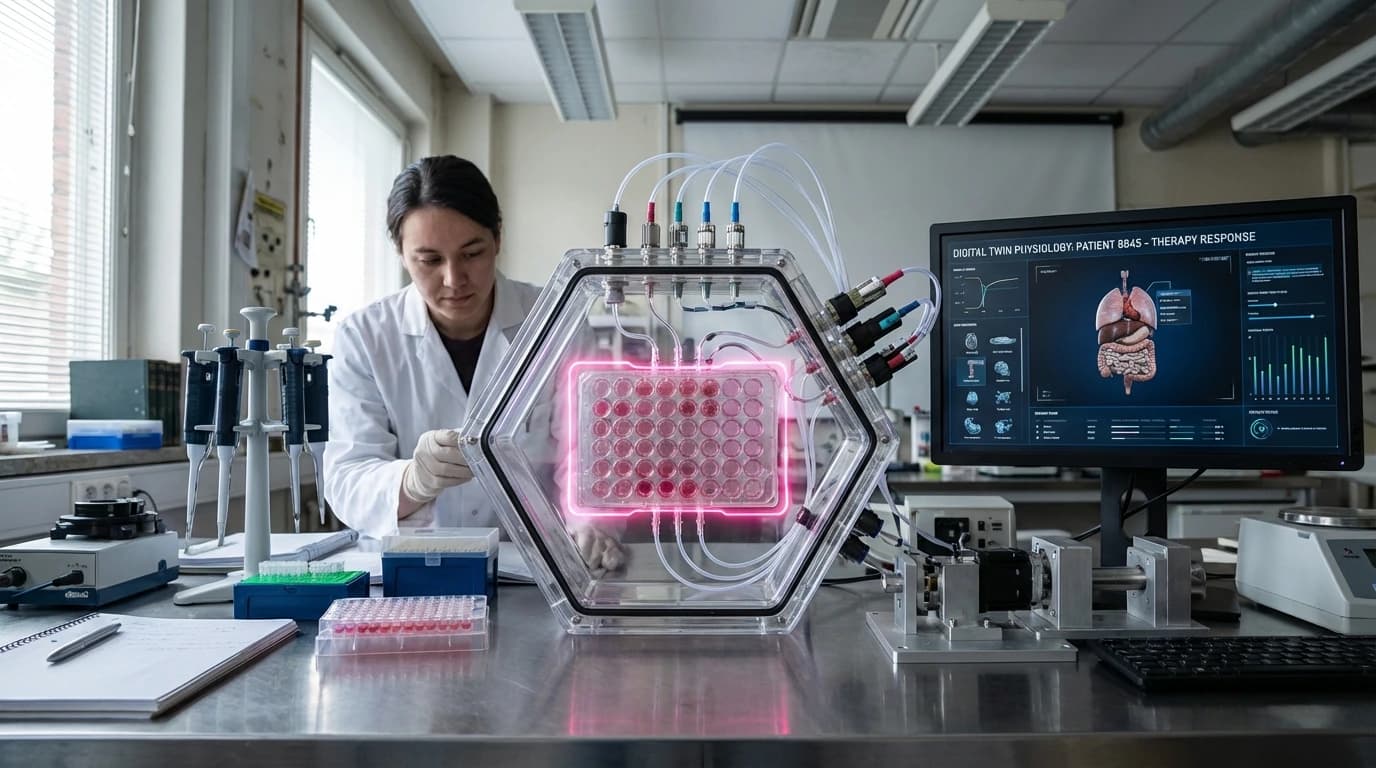
Digital twin physiology platforms create patient-specific computational models that merge data from genomics, laboratory tests, wearable devices, and medical imaging to simulate how individual patients will respond to different interventions before treatment is administered. These cloud-based systems allow clinicians to test different therapeutic approaches virtually, modeling the effects of senolytics, metabolic drugs, gene therapies, or other interventions on a patient's specific physiology, reducing trial-and-error care and enabling more personalized, effective treatments. Longevity programs are using these platforms to optimize interventions for individual patients.
This innovation addresses the challenge of personalized medicine, where predicting how individual patients will respond to treatments is difficult, leading to trial-and-error approaches that can waste time and resources while patients suffer. By creating accurate digital models of individual patients, these platforms enable clinicians to predict treatment outcomes and optimize interventions before administering them. Companies and research institutions are developing these platforms for various applications including longevity medicine, oncology, and chronic disease management.
The technology is particularly valuable for complex conditions where individual responses vary significantly, enabling truly personalized medicine. As the technology improves and integrates more data sources, it could become a standard tool for treatment planning. However, ensuring model accuracy, integrating diverse data sources, and validating predictions remain challenges. The technology represents an important evolution toward personalized medicine, but requires continued development to achieve the accuracy and reliability needed for clinical use. Success could transform healthcare by enabling truly personalized treatment planning, but the path to clinical adoption requires careful validation and integration with clinical workflows.
TRL
5/9Validated
Impact
5/5
Investment
4/5
Category
Software
Related Organizations
Software corporation specializing in 3D design and digital mock-ups.
Developer
Creates 'Prognostic Digital Twins' of patients to populate control arms in clinical trials, reducing the need for placebo patients.
Developer
Uses CT scan data to create a digital model of coronary arteries and simulate blood flow (FFRct) to diagnose heart disease.
Developer
SimBioSys
90%United States · Startup
Develops TumorScope, a platform that creates 3D digital twins of tumors to simulate response to surgical and drug interventions.
Developer
Twin Health
90%United States · Startup
Offers the 'Whole Body Digital Twin' service, using sensor data and AI to reverse chronic metabolic diseases like diabetes.
Developer
FEops
85%Belgium · Company
Provides 'HEARTguide', a predictive simulation platform for structural heart interventions based on patient-specific digital twins.
Developer
Provides an in silico clinical trial platform (JINKO) that models disease pathophysiology and drug effects.
Developer
Creates digital twins of patient anatomies to test medical devices virtually (v-Patients) before clinical trials.
Developer
PrediSurge
80%France · Startup
Develops digital twin software for endovascular interventions, simulating stent-graft deployment in patient-specific aortas.
Developer
Quris-AI
75%Israel · Startup
Uses a 'Bio-AI' platform that combines organ-on-chip data with machine learning to predict drug safety in humans.
Developer
What was expected
Published forecasts about this technology, graded against what happened in Hindsight.
Supporting Evidence
Evidence data is not available for this technology yet.
Research this in Signals
Scan Digital Twin Physiology Platforms for yourself.
Signals turns a topic into a sourced research record you can inspect and rerun. Your first scan is free, and this one starts with Digital Twin Physiology Platforms already loaded, so edit it or scan as is.