Data sharing and privacy-preserving computation
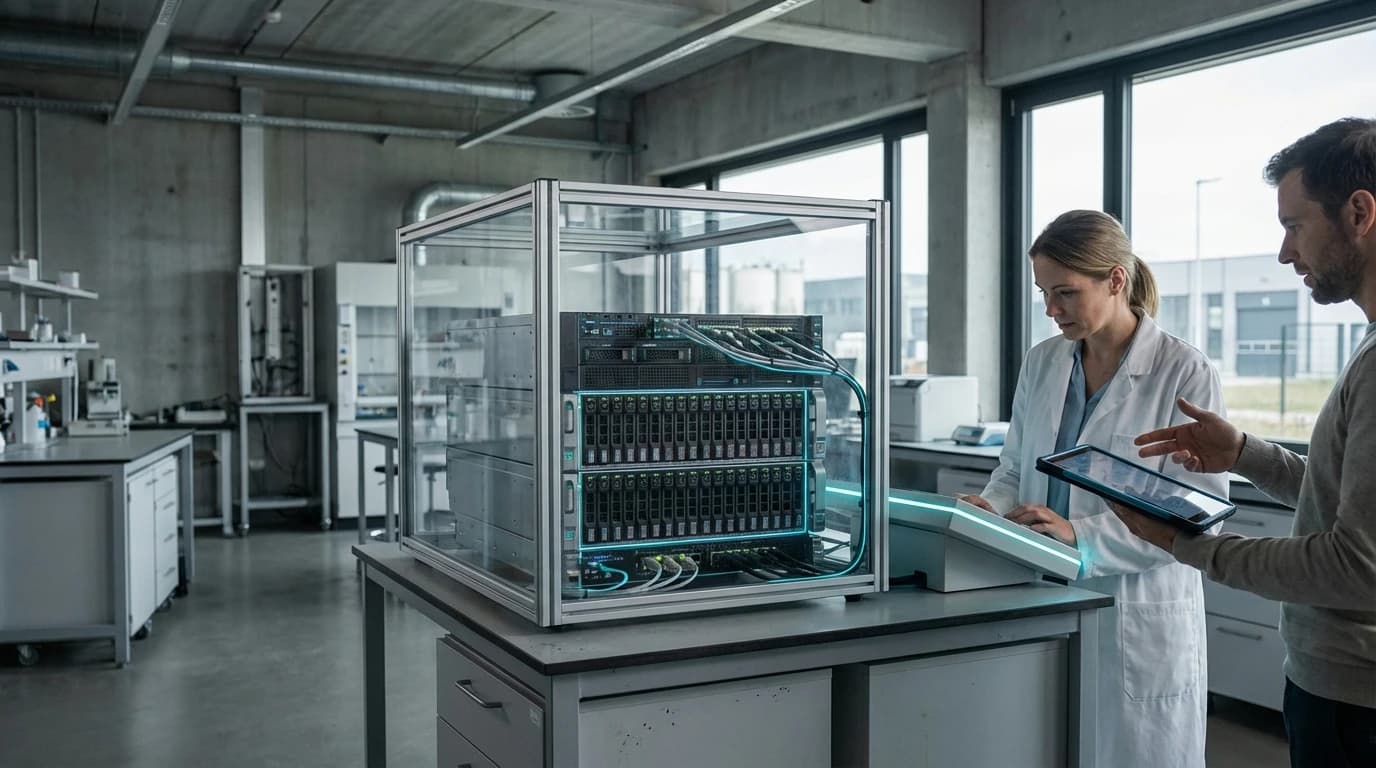
Privacy-Preserving Data Collaboration
Techniques like federated learning and secure enclaves that enable data sharing without exposing raw data.
In the highly competitive landscape of supply chain and logistics, companies possess vast amounts of operational data—shipment volumes, route efficiencies, demand patterns, inventory levels—that could yield significant insights if analysed collectively. However, sharing this raw data directly raises serious concerns around competitive intelligence, antitrust violations, intellectual property exposure, and regulatory compliance. Privacy-preserving data collaboration addresses this fundamental tension by enabling multiple parties to jointly train machine learning models, conduct analytics, or optimise operations without ever exposing their underlying datasets to one another. The technical foundation rests on approaches like federated learning, where algorithms are trained across decentralised datasets without data leaving its original location, and secure multi-party computation, which allows parties to compute functions over their combined inputs while keeping those inputs private. Trusted execution environments and homomorphic encryption further enable computations on encrypted data, ensuring that even the processing infrastructure cannot access sensitive information in plaintext.
For logistics networks, this capability unlocks transformative possibilities that were previously impossible due to data-sharing barriers. Competing carriers can collaboratively improve demand forecasting models without revealing customer lists or pricing strategies. Port operators, shipping lines, and freight forwarders can jointly optimise container movements and reduce empty miles across the network without exposing proprietary route information or contractual terms. Retailers and suppliers can coordinate inventory positioning and replenishment strategies while maintaining confidentiality around sales volumes and margin structures. These collaborative optimisations address systemic inefficiencies that no single player can solve alone—such as network-wide capacity utilisation, intermodal coordination, and demand volatility—while preserving the competitive boundaries that companies require. The technology also helps organisations navigate increasingly stringent data protection regulations by ensuring that personal information about drivers, customers, or employees never leaves controlled environments, even as it contributes to broader analytical insights.
Early implementations are emerging across logistics consortia and industry platforms, where groups of shippers or carriers are piloting federated approaches to route optimisation and capacity forecasting. Research initiatives suggest that privacy-preserving collaboration can improve forecast accuracy by 15-25% compared to isolated models, while reducing overall network costs through better asset utilisation and load matching. As supply chains grow more complex and interconnected, the ability to harness collective intelligence without sacrificing data sovereignty becomes increasingly critical. This technology represents a fundamental shift from zero-sum data competition toward collaborative optimisation, enabling the logistics industry to achieve network-level efficiencies that benefit all participants while maintaining the trust and confidentiality essential to business relationships. The trajectory points toward broader adoption as standardised protocols mature and regulatory frameworks increasingly recognise privacy-preserving techniques as viable alternatives to traditional data-sharing restrictions.
TRL
4/9Formative
Impact
4/5
Investment
3/5
Category
Ethics Security
What was expected
Published forecasts about this technology, graded against what happened in Hindsight.
Research this in Signals
Scan Privacy-Preserving Data Collaboration for yourself.
Signals turns a topic into a sourced research record you can inspect and rerun. Your first scan is free, and this one starts with Privacy-Preserving Data Collaboration already loaded, so edit it or scan as is.