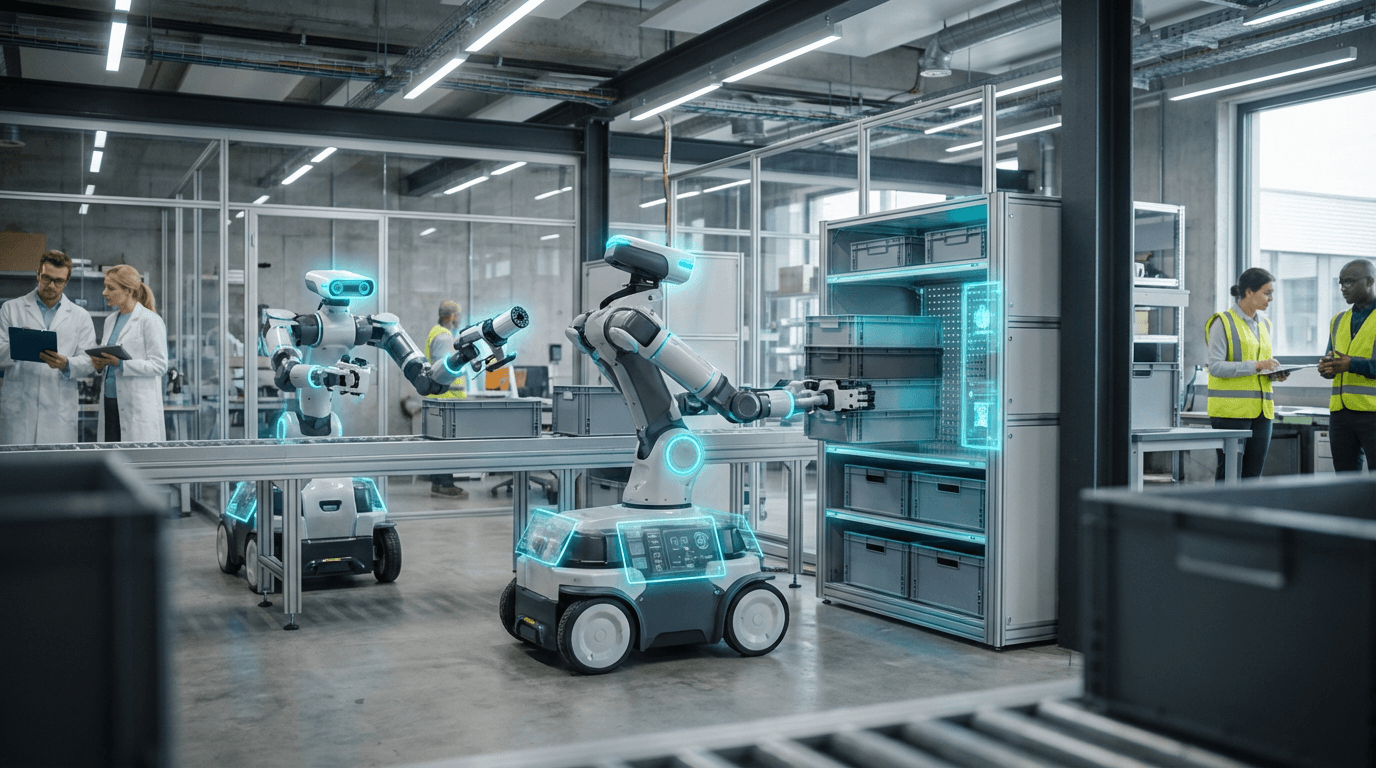
Polyfunctional Robots
Polyfunctional robots represent a fundamental shift in warehouse automation, moving away from dedicated, single-purpose machines toward adaptable systems capable of executing multiple distinct operations within the same facility. These robots integrate modular hardware components—particularly interchangeable end-effectors such as grippers, suction cups, and specialized tools—with sophisticated software architectures that enable real-time task switching. At their core, polyfunctional systems rely on advanced perception capabilities, including computer vision and sensor fusion, combined with AI-driven task planning algorithms that assess operational priorities and dynamically allocate robotic resources. Unlike traditional fixed automation, where each function requires a separate machine, these platforms can transition between sorting parcels, picking individual items, packing orders, palletizing finished goods, and conducting quality inspections without manual reconfiguration or extended downtime.
The logistics industry faces persistent challenges in balancing capital investment against operational flexibility, particularly as e-commerce drives increasingly volatile demand patterns and shorter product lifecycles. Traditional warehouse automation requires substantial upfront investment in specialized equipment, each optimized for a single function but unable to adapt when operational priorities shift. Polyfunctional robots address this rigidity by reducing the total number of robotic units needed while maintaining operational capacity across multiple processes. This approach significantly lowers capital expenditure barriers for mid-sized operations and enables facilities to respond more effectively to seasonal fluctuations, product mix changes, and unexpected disruptions. The technology also helps address labor challenges by allowing fewer robotic platforms to cover more ground, while their adaptability means warehouses can redeploy assets rather than purchasing new equipment when introducing new product lines or fulfillment strategies.
Early deployments in distribution centers indicate that polyfunctional systems are transitioning from pilot programs to broader commercial adoption, particularly in facilities handling diverse product catalogs or experiencing high variability in order composition. These robots typically operate within defined zones but can shift between tasks based on real-time workload analysis, with some implementations reporting improved asset utilization rates compared to dedicated automation. The technology aligns with broader industry trends toward flexible manufacturing and just-in-time logistics, where the ability to reconfigure operations quickly provides competitive advantage. As supply chains continue to fragment and demand patterns become less predictable, the capacity to deploy robotic systems that adapt rather than require replacement positions polyfunctional platforms as a key enabler of resilient, future-ready logistics infrastructure.
Related Organizations

Creators of Digit, a bipedal robot designed for logistics work.

Famous for Spot and Atlas, now integrating reinforcement learning for dynamic movement.

Building autonomous humanoid robots, partnering with OpenAI for the underlying intelligence.

A spin-out from the Human Centered Robotics Lab at UT Austin, developing Apollo, a general-purpose humanoid.

Offers 'Autopicker', a mobile robot that can pick items directly from shelves while moving.

Developing general-purpose humanoid robots (Phoenix) powered by Carbon, their AI control system.

Provides AI-enabled robotic solutions that automate picking, packing, and sorting operations for e-commerce.

AI robotics company building a universal AI brain for robots.

Develops intelligent robot controllers that enable industrial robots to perform complex picking and logistics tasks autonomously without human teaching.

Develops piece-picking solutions (RightPick) that combine suction and grippers to handle a vast range of items.
Supporting Evidence
Research this in Signals
Signals turns a topic into a sourced research record you can inspect and rerun. Your first scan is free, and this one starts with Polyfunctional Robots already loaded, so edit it or scan as is.