Computer Vision Quality Inspection Systems
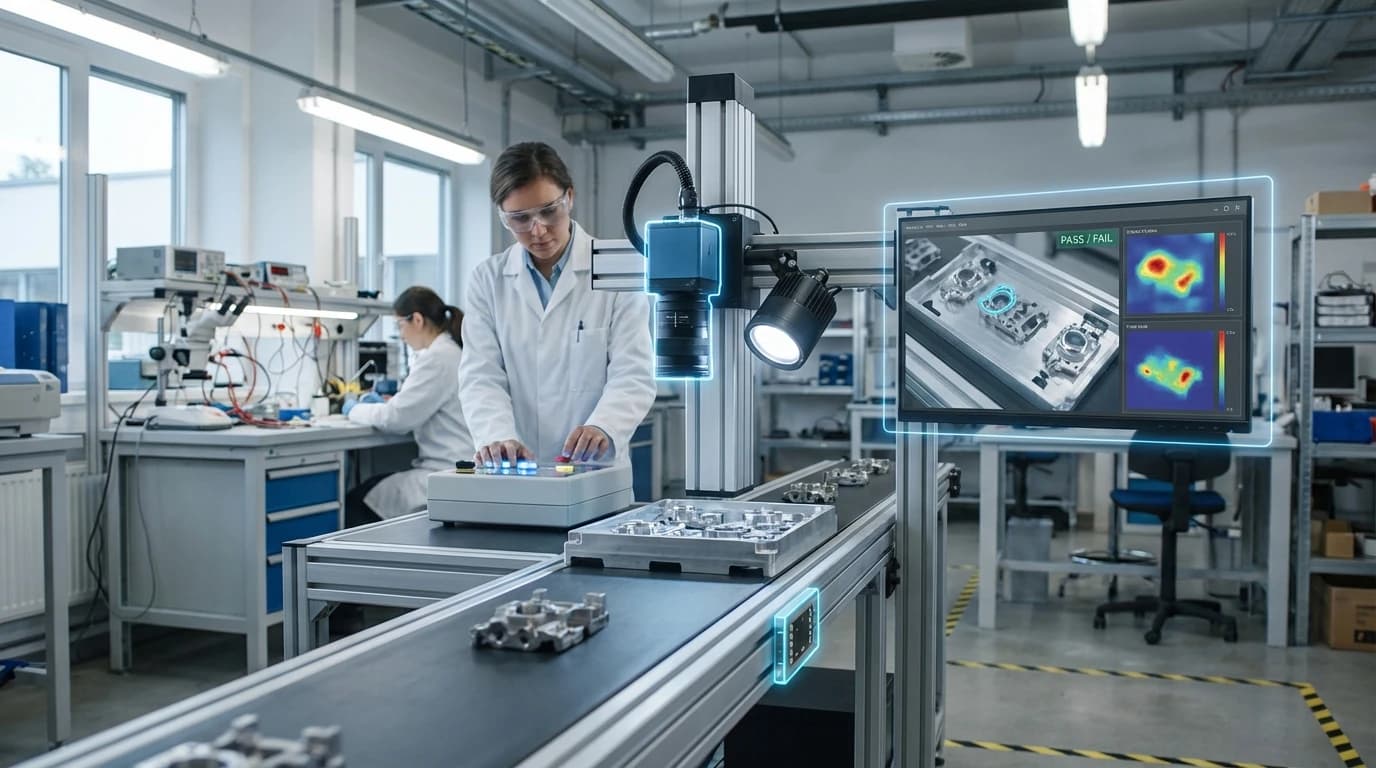
Computer vision quality inspection systems represent a convergence of advanced imaging technology and artificial intelligence that automates the detection of defects, damages, and compliance violations across manufacturing and logistics operations. These systems deploy networks of high-resolution cameras positioned at strategic points along production lines, packaging stations, and distribution centers to capture detailed visual data of products, components, and packaging materials. At the heart of these systems are deep learning models—particularly convolutional neural networks—trained on vast datasets of both acceptable products and various defect types. These models learn to identify subtle anomalies that might escape human inspection, from microscopic surface imperfections and color variations to structural defects, contamination, incorrect labeling, and packaging damage. The systems process images in real-time, often analyzing thousands of items per hour while maintaining consistent accuracy levels that typically exceed human performance, especially during extended operational periods.
The fundamental challenge these systems address is the inherent limitation of manual quality inspection in modern supply chains. Human inspectors face fatigue, inconsistency, and scalability constraints that become particularly acute as production volumes increase and quality standards tighten. Traditional inspection methods struggle to maintain the speed required by contemporary manufacturing lines while simultaneously detecting the increasingly diverse range of potential defects demanded by quality assurance protocols. Computer vision systems overcome these limitations by providing tireless, consistent inspection capabilities that scale seamlessly with production demands. They enable manufacturers and logistics operators to achieve near-zero-defect quality levels without creating bottlenecks or requiring proportional increases in inspection labor. Beyond simple pass-fail decisions, these systems generate detailed defect analytics that help identify root causes in production processes, enabling continuous improvement initiatives. They also facilitate compliance with regulatory requirements by maintaining comprehensive visual records of inspected items, creating audit trails that would be prohibitively expensive to generate manually.
Early adopters in automotive manufacturing, electronics assembly, and pharmaceutical packaging have demonstrated the viability of these systems, with deployments now expanding rapidly across food processing, e-commerce fulfillment, and general logistics operations. In warehouse environments, computer vision inspection verifies that incoming shipments match purchase orders, identifies damage that occurred during transit, and ensures outbound packages meet quality standards before reaching customers. The technology proves particularly valuable in high-mix, low-volume production environments where frequent product changes would require constant retraining of human inspectors. As these systems mature, they increasingly incorporate multi-spectral imaging capabilities that detect defects invisible to the human eye, such as internal structural flaws or contamination beneath opaque packaging. The trajectory points toward fully autonomous quality assurance ecosystems where computer vision systems not only detect defects but also trigger corrective actions, adjust production parameters, and coordinate with robotic systems to remove defective items—creating closed-loop quality control that operates with minimal human intervention while maintaining the flexibility to adapt to new products and evolving quality standards.
Related Organizations

Cognex Corporation
United States · Company
A global leader in machine vision that provides the underlying cameras and software libraries used in web inspection systems.

Develops LandingLens, a computer vision cloud platform that enables manufacturers to build and deploy AI visual inspection systems.

Provides a full-stack visual inspection platform combining easy-to-use software with camera hardware for automated quality control.

Basler AG
Germany · Company
A leading international manufacturer of high-quality imaging components for computer vision applications, including high-resolution ace and boost camera series.

Offers a manufacturing optimization platform that uses AI to detect anomalies and defects on assembly lines remotely.

Creators of Autonomous Machine Vision (AMV) systems designed for immediate deployment without complex integration.

Develops smart visual inspection solutions that combine 3D computer vision, AI, and robotics for quality control.

Provides Vision Inspection Automation (VIA) software that allows manufacturers to train AI models with very little data.
Supporting Evidence
Research this in Signals
Signals turns a topic into a sourced research record you can inspect and rerun. Your first scan is free, and this one starts with Computer Vision Quality Inspection Systems already loaded, so edit it or scan as is.