Climate Adaptation and Disaster Resilience Planning
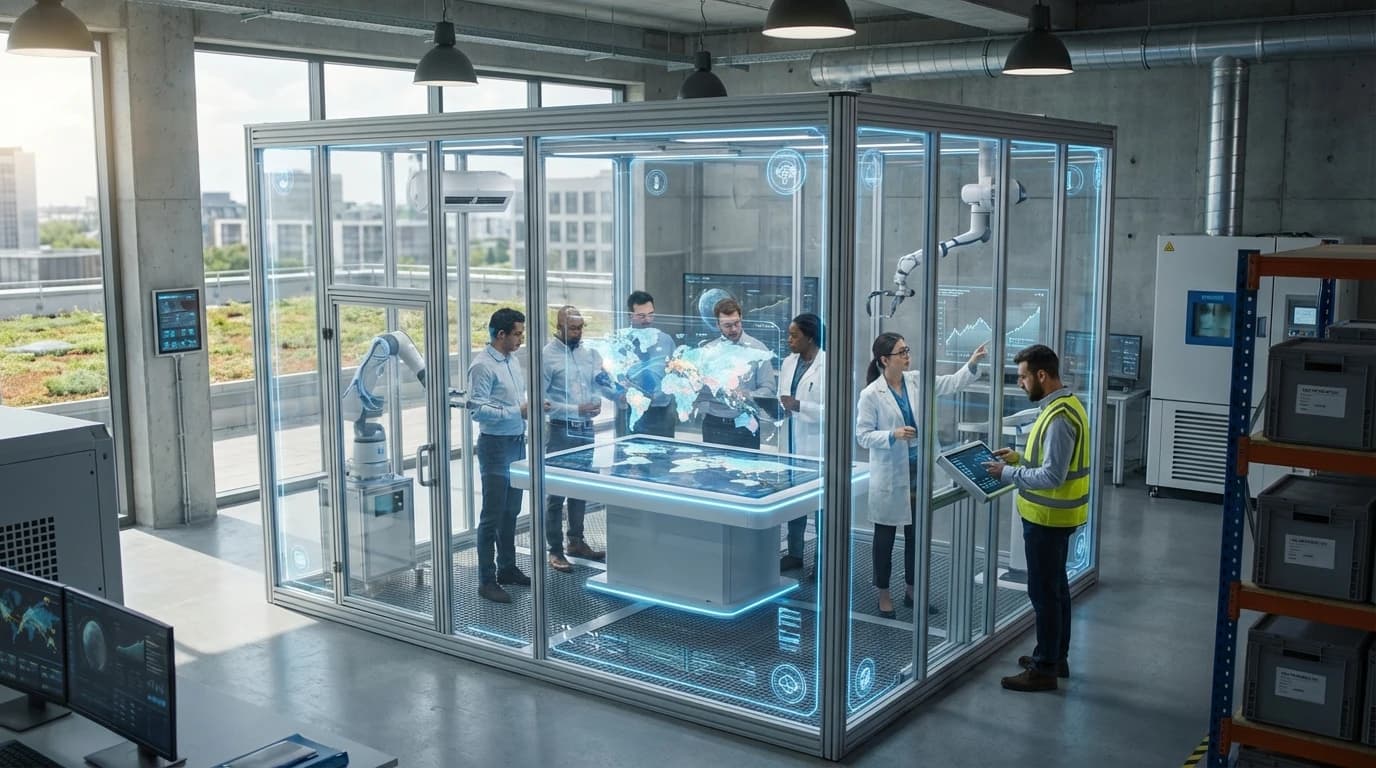
Climate Adaptation and Disaster Resilience Planning represents a strategic approach to supply chain management that integrates advanced climate modeling with operational design to safeguard logistics networks against the escalating impacts of environmental change. These frameworks combine historical climate data, predictive models, and scenario analysis to evaluate how rising sea levels, intensifying storm patterns, shifting temperature zones, and changing precipitation regimes will affect critical infrastructure over multi-decade timelines. The systems employ sophisticated risk assessment algorithms that map climate vulnerabilities across entire supply networks, identifying which warehouses face flooding risks, which transportation corridors may become unreliable due to extreme heat or precipitation, and which supplier regions might experience agricultural disruption or water scarcity. By overlaying climate projections with existing logistics infrastructure, these tools create detailed vulnerability profiles that quantify exposure across different time horizons, enabling organizations to distinguish between immediate threats and longer-term structural challenges.
The fundamental problem these frameworks address is the growing disconnect between traditional supply chain planning cycles and the accelerating pace of climate-related disruption. Conventional logistics networks were designed for relatively stable environmental conditions, with infrastructure investments made on assumptions that historical weather patterns would persist. However, the increasing frequency of extreme weather events, coupled with gradual shifts in baseline climate conditions, has exposed critical vulnerabilities in global supply chains. Major disruptions to manufacturing hubs, port facilities, and transportation networks have demonstrated that climate risk is no longer a distant concern but an immediate operational challenge. These planning systems enable organizations to move from reactive crisis management to proactive adaptation, identifying which facilities require physical hardening measures such as flood barriers or cooling systems, which routes need redundant alternatives, and which supplier relationships should be diversified to reduce geographic concentration risk. The frameworks also support strategic decisions about facility location, helping organizations avoid investing in infrastructure that may become obsolete or inoperable within the asset's expected lifespan.
Leading logistics providers and manufacturers are increasingly incorporating these frameworks into their long-term strategic planning processes, recognizing that climate resilience is essential to maintaining competitive advantage and operational continuity. Early implementations have focused on coastal port facilities and transportation networks in regions already experiencing significant climate impacts, where the business case for adaptation investment is most immediate. The frameworks support scenario planning exercises that help executives understand potential futures and make informed decisions about capital allocation, insurance strategies, and supplier partnerships. As climate impacts intensify and stakeholder expectations around sustainability grow, these planning tools are evolving to incorporate broader considerations such as carbon footprint reduction, circular economy principles, and social resilience in supplier communities. The trajectory points toward climate adaptation becoming a core competency in supply chain management, with resilience planning frameworks serving as essential infrastructure for organizations seeking to maintain operations and market position through the profound environmental transitions ahead.
Related Organizations

Supply chain risk analytics company applying AI to monitor global risks.

Provides climate risk analytics using cloud computing and AI to model extreme weather risks for asset planning.

Focuses on supply chain resilience by applying AI to climate models to predict impacts on agriculture and logistics.

Resilience-as-a-Service solution for disaster prediction.

Operates proprietary radar satellites and uses generative AI ('Gale') for weather intelligence.

Uses AI to build a shared source of truth for the global supply chain, mapping networks and compliance.

Uses a constellation of nanosatellites to collect radio occultation data, fed into ML models for forecasting.
Uses satellite data and AI to create climate risk models for financial institutions and supply chains.
Supporting Evidence
Research this in Signals
Signals turns a topic into a sourced research record you can inspect and rerun. Your first scan is free, and this one starts with Climate Adaptation and Disaster Resilience Planning already loaded, so edit it or scan as is.