Physical Internet (PI)
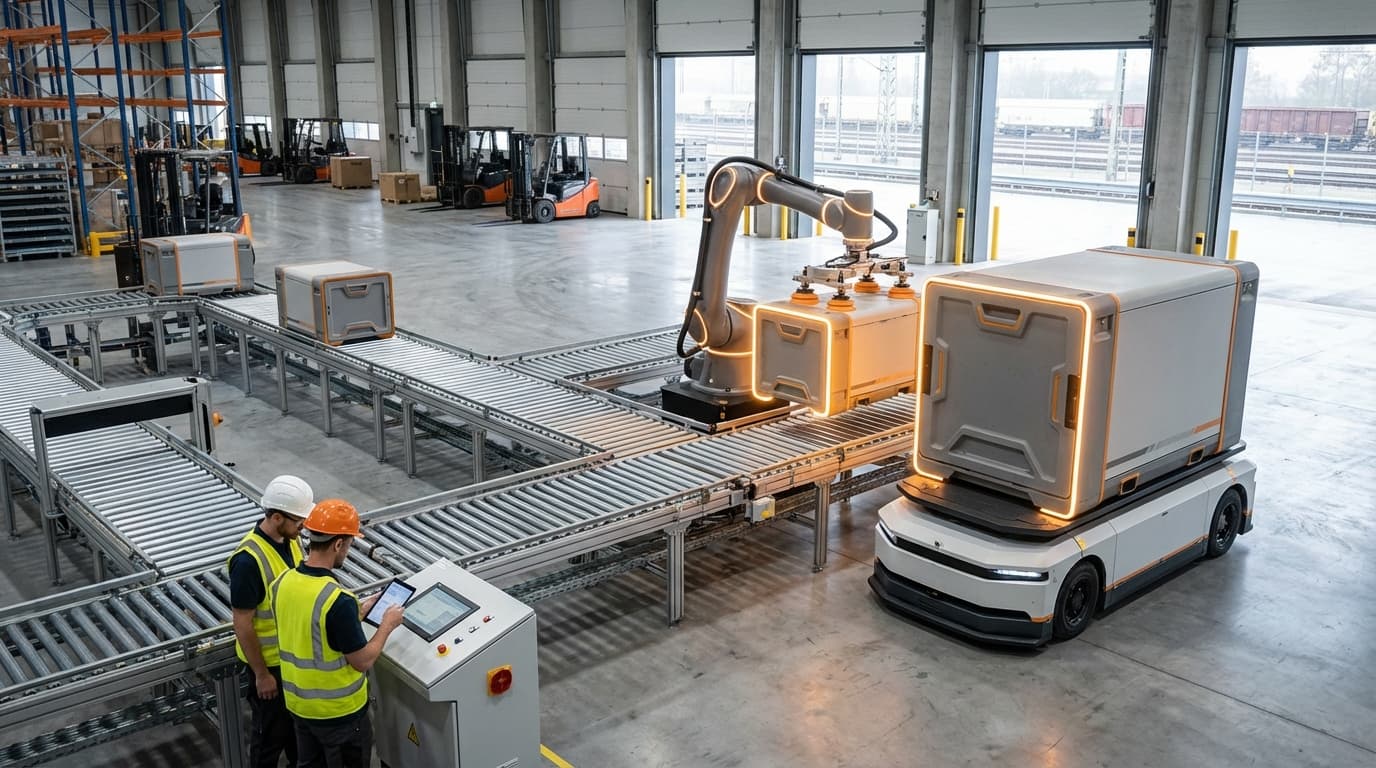
The Physical Internet represents a fundamental reimagining of global logistics infrastructure, drawing inspiration from the digital internet's packet-switching architecture to address inefficiencies in how physical goods move through supply chains. At its core, the concept envisions a universal system where cargo is transported in standardized, modular containers—analogous to data packets—that can be seamlessly transferred between different carriers, modes of transport, and distribution networks without the need for unpacking or repackaging. These smart containers, equipped with sensors and tracking capabilities, would move through an open network of interconnected hubs and nodes, following optimized routing protocols that determine the most efficient path from origin to destination. Unlike traditional logistics systems where each company operates its own closed network of trucks, warehouses, and distribution centers, the Physical Internet proposes shared infrastructure and standardized interfaces that enable any certified carrier to handle any container, much like how internet service providers route data packets regardless of their origin or content.
The logistics industry currently faces mounting pressures from inefficiency, environmental concerns, and rising costs. Traditional supply chains suffer from significant waste, with trucks often running half-empty or completely empty on return journeys, warehouses operating below capacity, and redundant transportation networks crisscrossing the same routes. Industry analysts note that typical truck utilization rates hover around 60%, meaning vast amounts of fuel, labor, and capital are expended moving air rather than goods. The Physical Internet addresses these challenges by enabling dynamic consolidation and resource sharing across organizational boundaries. When multiple shippers can utilize the same transportation assets and storage facilities through standardized protocols, the system achieves dramatically higher utilization rates. This collaborative approach also tackles the growing demand for faster delivery times and increased supply chain resilience, as the distributed network architecture provides multiple routing options and reduces dependency on single points of failure.
Early pilot programs and research initiatives have demonstrated the viability of Physical Internet principles in controlled environments, with some logistics providers experimenting with modular container systems and collaborative distribution networks in specific regions. The technology shows particular promise in urban last-mile delivery, where consolidation centers could receive standardized containers from multiple retailers and coordinate efficient delivery routes, reducing congestion and emissions in city centers. Manufacturing sectors with complex, multi-tier supply chains are also exploring how standardized physical protocols could streamline component flows and reduce inventory costs. Looking forward, the Physical Internet aligns with broader industry trends toward sustainability, digitalization, and circular economy principles, as the system's inherent efficiency gains translate directly into reduced carbon emissions and resource consumption. The transition to such an open logistics system faces significant challenges around standardization, governance, and the coordination required among competing entities, yet the potential benefits—estimated by researchers to include reductions in logistics costs and environmental impact by up to 50%—continue to drive interest in this transformative vision for global freight movement.
Related Organizations

The European Technology Platform for logistics, actively developing the roadmap and framework for the implementation of the Physical Internet in Europe by 2030.

Home to the Physical Internet Center, led by Benoit Montreuil (a father of the PI concept), driving core research and industry pilots.

German research institute working on the 'Silicon Economy' and open source hardware/software for the Physical Internet.

GS1
Belgium · Consortium
Global standards organization (barcodes) now developing the 'GS1 Digital Link' to connect physical products to the web and digital passports.

Home to the 'Physical Internet Chair', conducting advanced research on interconnectivity and logistics protocols.

Provides cloud software solutions that enable logistics collaboration and interconnectivity, effectively acting as a router for the Physical Internet.

Developed the Opté Precision Skincare System (wand).

Global logistics giant involved in ALICE and various collaborative logistics initiatives aligned with PI principles.

Participated in EU-funded projects (like ICONET) to test Physical Internet concepts in postal and parcel networks.

Telecommunications giant developing the connectivity layer (5G, IoT) required to track π-containers in a Physical Internet system.
Supporting Evidence
Research this in Signals
Signals turns a topic into a sourced research record you can inspect and rerun. Your first scan is free, and this one starts with Physical Internet (PI) already loaded, so edit it or scan as is.