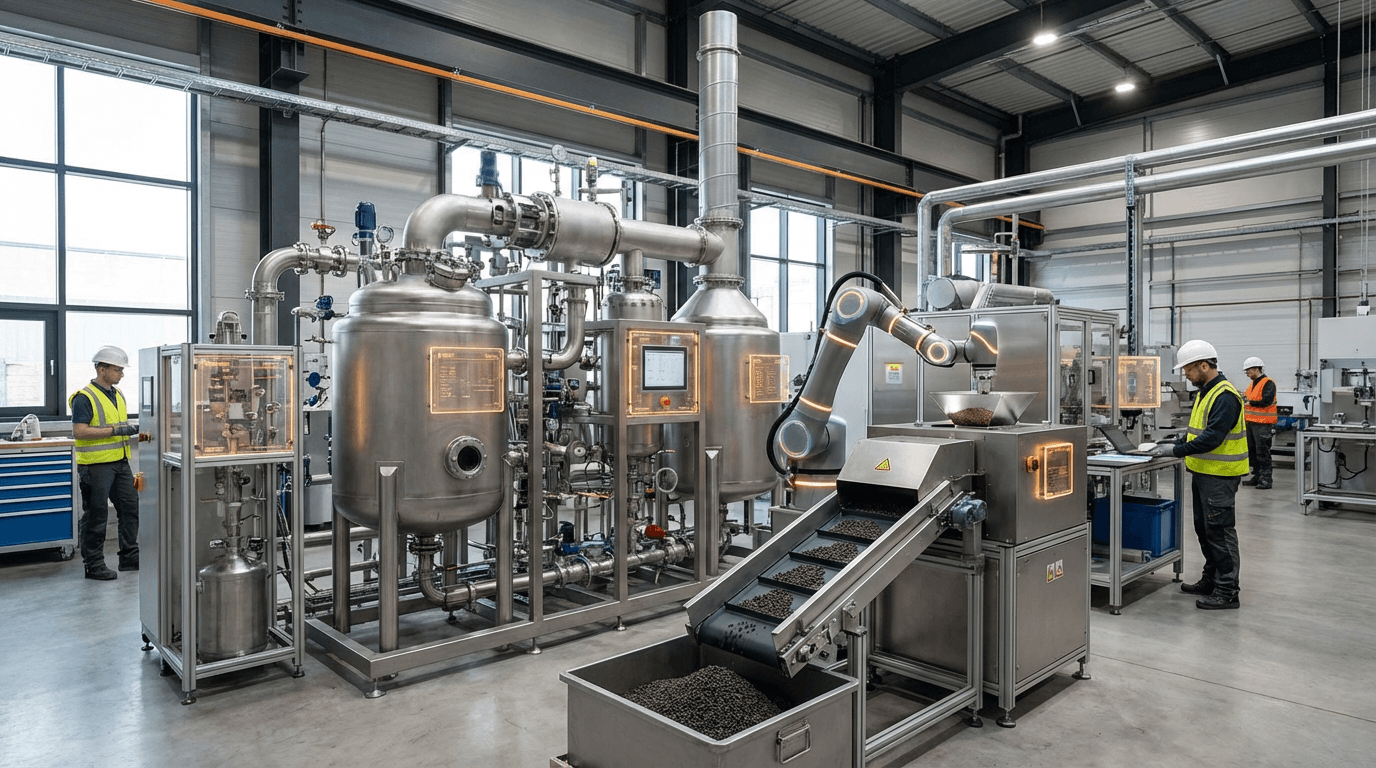
Carbon Capture & Utilization (CCU) Manufacturing
Carbon Capture & Utilization (CCU) Manufacturing represents a paradigm shift in industrial emissions management, transforming carbon dioxide from a waste product into a valuable manufacturing feedstock. Unlike traditional carbon capture and storage (CCS) approaches that simply sequester CO2 underground, CCU technologies actively convert captured emissions into commercially viable materials and products. The process typically begins at the point of emission—factory smokestacks, cement kilns, or chemical plants—where specialized sorbents or membrane systems extract CO2 from exhaust streams. This captured carbon then undergoes catalytic conversion, electrochemical reduction, or mineralization processes to produce a range of materials including polymers, building materials, synthetic fuels, carbon nanotubes, and chemical precursors. The specific conversion pathway depends on the desired end product and the available energy inputs, with some processes requiring renewable electricity to drive reactions while others leverage waste heat from the same industrial facilities generating the emissions.
The manufacturing sector faces mounting pressure to decarbonize, particularly in hard-to-abate industries where process emissions are inherent to production chemistry rather than merely energy-related. Cement manufacturing, for instance, releases CO2 not just from fuel combustion but from the chemical decomposition of limestone itself—a challenge that efficiency improvements alone cannot solve. CCU addresses this fundamental limitation by creating closed-loop systems where emissions become inputs for subsequent production cycles. This approach is particularly compelling for chemical manufacturers and materials producers who currently rely on fossil-derived feedstocks. By substituting petroleum-based inputs with CO2-derived alternatives, these facilities can simultaneously reduce their carbon footprint and decrease dependence on volatile commodity markets. Industry analysts note that CCU also offers economic advantages over pure sequestration by generating revenue streams from converted products, potentially offsetting the substantial capital and operational costs associated with capture infrastructure.
Early commercial deployments indicate growing viability across multiple sectors. Several cement producers have begun incorporating mineralized CO2 into concrete formulations, where the carbon becomes permanently locked within the material structure while potentially enhancing strength characteristics. In the chemicals industry, pilot facilities are producing CO2-derived methanol and ethylene—fundamental building blocks for plastics and industrial chemicals. Research suggests that carbon-based nanomaterials represent another promising application, with some processes yielding high-value carbon nanotubes suitable for advanced composites and electronics. The technology aligns with broader industrial trends toward circular economy principles and carbon accounting frameworks that increasingly value emissions reduction. As carbon pricing mechanisms expand globally and supply chain sustainability requirements intensify, CCU manufacturing positions itself as both an emissions mitigation strategy and a competitive differentiator, potentially reshaping how industries conceptualize waste streams and resource flows in the transition toward carbon-neutral production systems.
Related Organizations

Develops technology to inject captured CO2 into fresh concrete, where it mineralizes and strengthens the material.

Recycles carbon from industrial off-gases into sustainable fuels and chemicals using biological catalysts.

Carbon transformation company using CO2 electrolysis to produce E-Jet fuel and materials.

Creates carbon-negative alcohols and fuels by converting captured CO2 using renewable electricity.


Produces sustainable cement and cures concrete with CO2 instead of water, permanently sequestering the gas.

Captures CO2 and converts it into limestone aggregate for concrete, mimicking the natural biomineralization process of shellfish.

Operates the world's first renewable methanol plant, converting CO2 and hydrogen into e-methanol for fuel and chemical applications.

Develops catalyst technologies that allow chemical manufacturers to replace fossil-fuel feedstocks with captured CO2 in polymer production.
Supporting Evidence
Research this in Signals
Signals turns a topic into a sourced research record you can inspect and rerun. Your first scan is free, and this one starts with Carbon Capture & Utilization (CCU) Manufacturing already loaded, so edit it or scan as is.