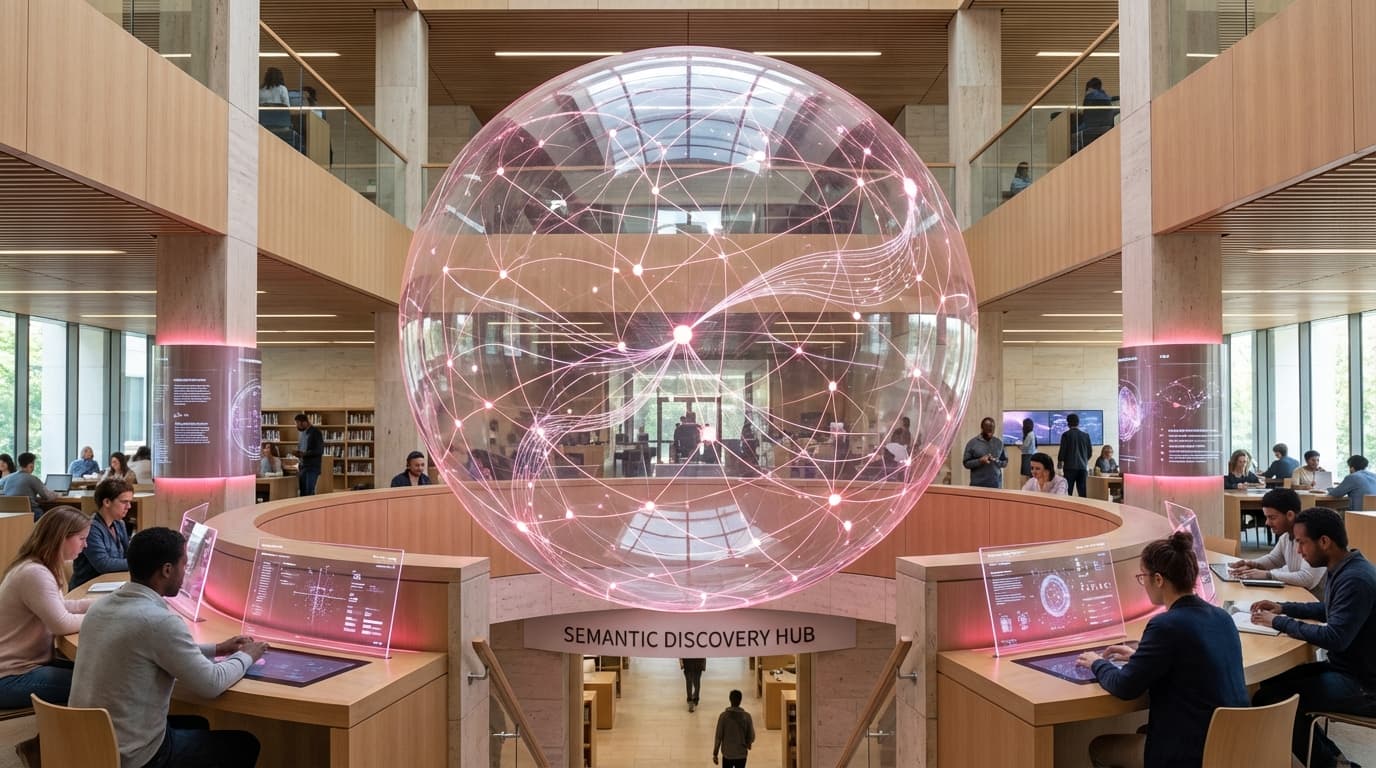
Semantic Knowledge Graphs
Semantic knowledge graphs represent a fundamental shift in how information systems organize and retrieve data, moving beyond traditional keyword-based search to capture the rich web of relationships between concepts, entities, and events. Unlike conventional databases that store information in rigid tables or simple hierarchies, these advanced data structures model knowledge as interconnected nodes and edges, where each connection carries semantic meaning. The underlying architecture relies on graph databases and ontologies—formal representations of knowledge domains that define entities, their attributes, and the relationships between them. Through technologies like RDF (Resource Description Framework) and OWL (Web Ontology Language), semantic knowledge graphs can represent complex relationships such as "authored by," "influenced," or "contemporaneous with," enabling systems to understand not just what information exists, but how different pieces of knowledge relate to one another in meaningful ways.
For libraries, archives, and research institutions, semantic knowledge graphs address a critical challenge: the difficulty of discovering relevant materials when users don't know exactly what they're looking for or when valuable connections span multiple collections and formats. Traditional catalog systems require users to know specific keywords, subject headings, or classification codes, often missing materials that are conceptually related but described differently. Semantic knowledge graphs overcome these limitations by enabling reasoning capabilities—the ability to infer new connections based on existing relationships and rules. When a researcher queries about a historical event, the system can automatically surface related correspondence, contemporaneous publications, influenced works, and biographical information about key figures, even if these materials were cataloged separately or described using different terminology. This technology also supports natural language queries, allowing users to ask questions in conversational terms rather than mastering complex search syntax or controlled vocabularies.
Research institutions and national libraries are increasingly deploying semantic knowledge graph technologies to enhance discovery across their collections. These systems excel at cross-collection search, where materials from manuscripts, photographs, oral histories, and published works can be explored through their conceptual relationships rather than their physical or format-based organization. Early implementations demonstrate particular value in specialized domains like biographical research, where the technology can automatically link individuals to their works, correspondences, institutional affiliations, and social networks across time. As digital humanities scholarship increasingly relies on computational methods to identify patterns and connections across large corpora, semantic knowledge graphs provide the foundational infrastructure for this work. Looking forward, these systems are expected to integrate more sophisticated machine learning capabilities, automatically extracting and validating relationships from unstructured text while maintaining the scholarly rigor and provenance tracking essential to archival practice.
Related Organizations
The international standards organization for the Web, responsible for the Decentralized Identifiers (DID) and Verifiable Credentials (VC) recommendations.

A free, collaborative, multilingual, secondary database, collecting structured data to support Wikipedia and other projects.



Developer of the PoolParty Semantic Suite, a platform for taxonomy and ontology management.

An Enterprise Knowledge Graph platform that unifies data to create a semantic data fabric.

Uses AI to crawl the web and automatically build a massive commercial knowledge graph.

Developers of AllegroGraph, a neuro-symbolic knowledge graph platform focused on complex reasoning.

A platform for advanced analytics and machine learning on connected data.
A global information analytics business that heavily utilizes knowledge graphs for scientific discovery.
Supporting Evidence
Research this in Signals
Signals turns a topic into a sourced research record you can inspect and rerun. Your first scan is free, and this one starts with Semantic Knowledge Graphs already loaded, so edit it or scan as is.