Personal Knowledge Graph Agents
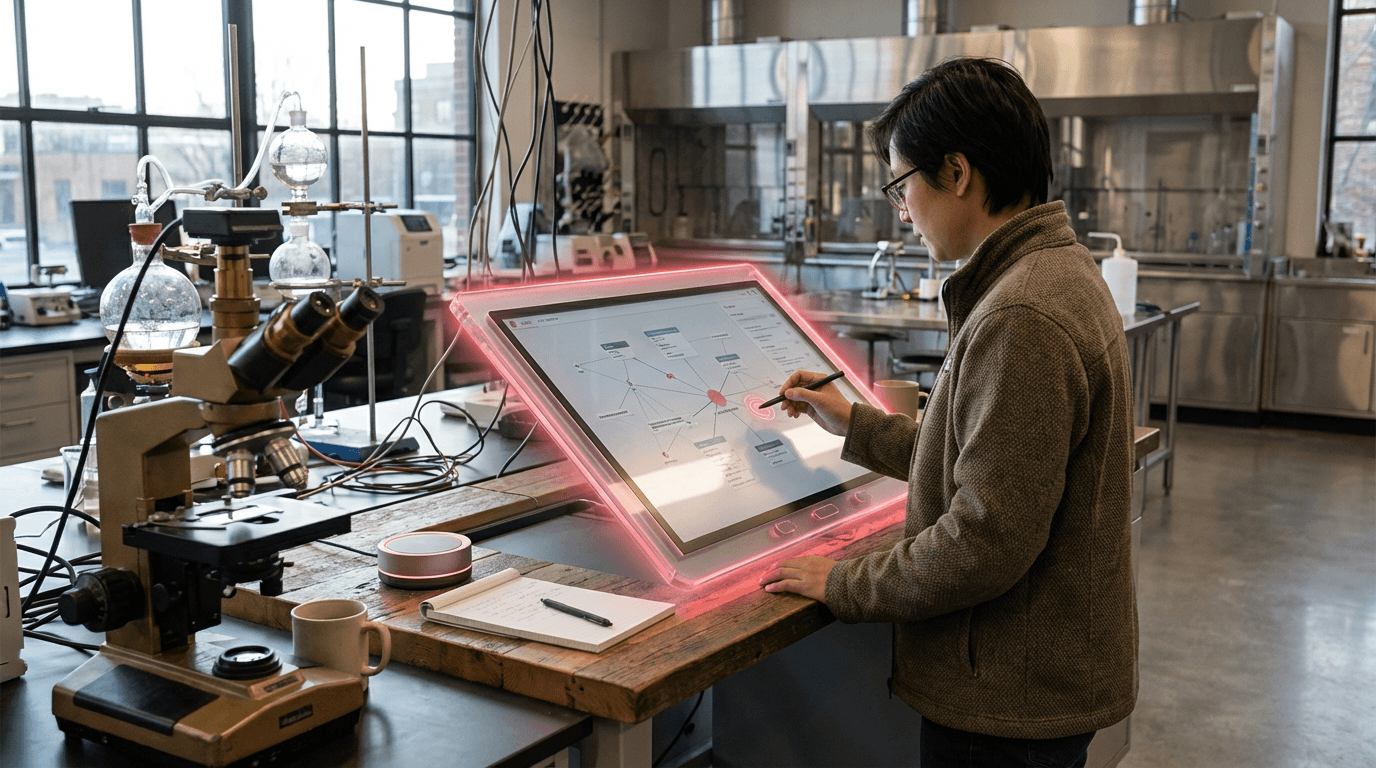
Personal Knowledge Graph Agents represent a new class of intelligent software that continuously monitors and synthesizes an individual's scholarly activities into a dynamic, machine-readable representation of their intellectual landscape. Unlike traditional reference managers or note-taking applications that simply store discrete items, these agents employ natural language processing and knowledge extraction techniques to identify entities, concepts, and relationships within everything a researcher encounters—journal articles, conference papers, web annotations, email exchanges, and draft manuscripts. The system constructs a private semantic network where nodes represent ideas, authors, methodologies, and claims, while edges capture the connections between them: citations, contradictions, thematic overlaps, and conceptual dependencies. This graph evolves organically as the agent observes reading patterns, writing habits, and curation decisions across multiple devices and platforms, creating a living map of how a scholar's understanding develops over time.
The fundamental challenge these agents address is the growing fragmentation of scholarly work in an era of information abundance. Researchers today navigate dozens of disconnected tools—institutional repositories, preprint servers, citation databases, cloud storage, and social bookmarking platforms—making it increasingly difficult to maintain coherent awareness of their own intellectual trajectory or to recognize meaningful patterns across disparate sources. Personal Knowledge Graph Agents solve this by serving as a unified cognitive infrastructure that bridges these silos, automatically linking a researcher's private annotations to institutional collections, open access archives, and collaborative knowledge bases. They surface serendipitous connections that might otherwise remain invisible: a methodology mentioned in passing in one paper that directly addresses a limitation in the researcher's current project, or an emerging debate in an adjacent field that reframes a familiar problem. By identifying gaps—topics frequently referenced but never deeply explored, or claims accepted without examining primary sources—these agents function as intellectual accountability partners, prompting more rigorous and comprehensive scholarship.
Early implementations of this technology are appearing in academic settings, with research groups piloting systems that integrate with existing scholarly workflows while respecting privacy and data sovereignty. Some institutions are exploring how these personal graphs might optionally federate into departmental or interdisciplinary knowledge networks, enabling discovery of unexpected collaborations while preserving individual control over sensitive or preliminary work. The technology aligns with broader movements toward researcher-owned infrastructure and the semantic web, offering a counterbalance to centralized commercial platforms. As these agents mature, they promise to transform not just how scholars organize information, but how they think—externalizing memory and pattern recognition in ways that augment rather than replace human insight, and making the invisible architecture of knowledge production visible and navigable.
Related Organizations
A note-taking tool for networked thought that popularized bi-directional linking and graph-based knowledge management.

A private, flexible writing app that adapts to the way you think, building a local knowledge graph of markdown files.
An intelligent workspace that combines the structure of a database with the flexibility of an outliner, using 'supertags' to create a semantic graph.
An open-source, privacy-first platform for knowledge management and collaboration using graph databases.

A citation-based literature mapping tool that acts as a 'Spotify for research', helping users discover related papers.

A visual note-taking tool for learning complex topics, allowing users to map out their knowledge graph on a whiteboard.
A text network analysis tool that visualizes insights and connects ideas in a knowledge graph structure.
An AI-powered workspace that self-organizes notes and information, using a personal knowledge graph to surface relevant memories and tasks automatically.

A web-based visual knowledge base that combines mind mapping with note-taking.

Supporting Evidence
Research this in Signals
Signals turns a topic into a sourced research record you can inspect and rerun. Your first scan is free, and this one starts with Personal Knowledge Graph Agents already loaded, so edit it or scan as is.