Oneiric Co-Presence Interfaces
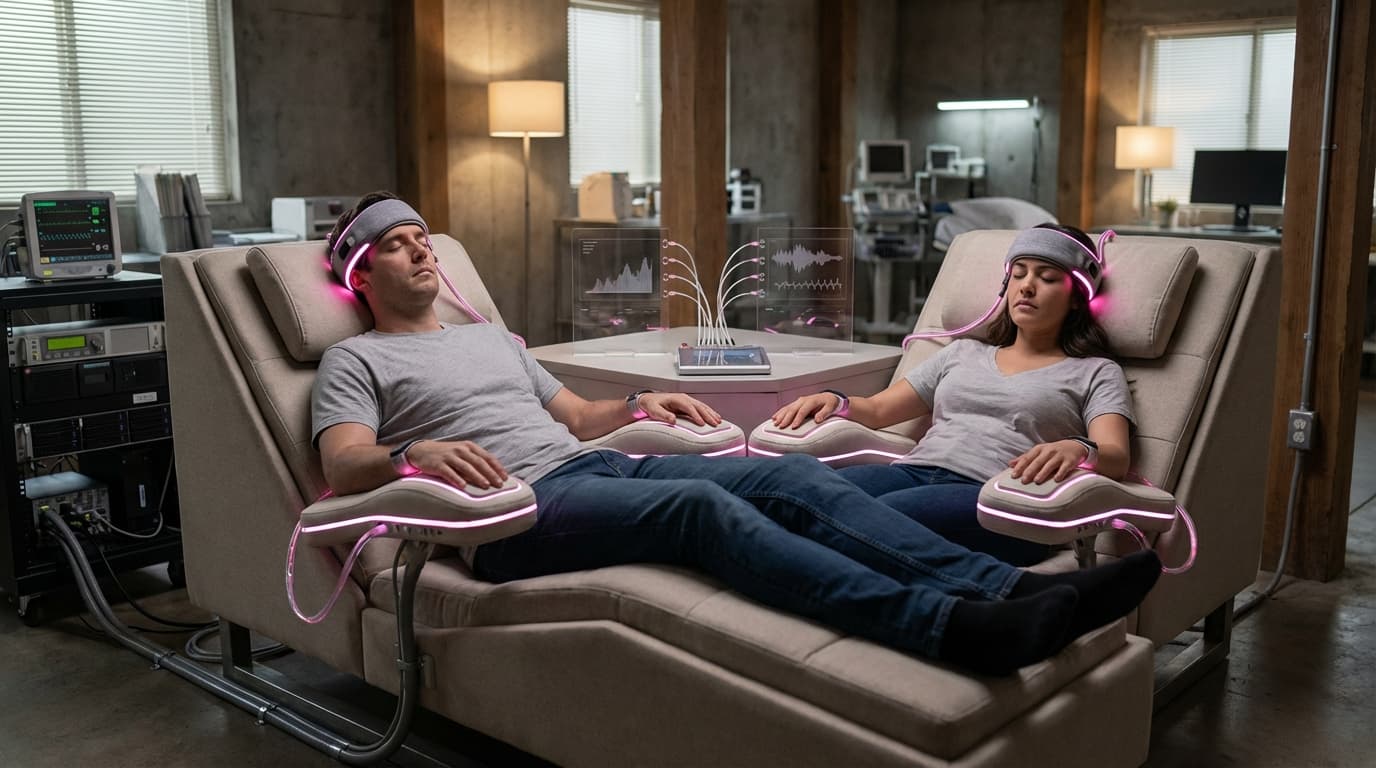
Oneiric co-presence interfaces represent a convergence of neuroscience, sleep research, and communication technology designed to enable shared experiences during dream states. These systems employ advanced electroencephalography (EEG) sensors and machine learning algorithms to detect specific brain wave patterns associated with REM sleep and lucid dreaming. When the system identifies that a user has entered a dream state, it can introduce carefully calibrated stimuli—such as subtle audio tones, gentle haptic vibrations, or low-intensity light pulses—that are designed to be incorporated into the dream narrative without causing awakening. The technical challenge lies in creating stimuli that are strong enough to influence dream content but gentle enough to maintain sleep continuity. Current prototypes utilize closed-loop systems that continuously monitor sleep architecture and adjust stimulus parameters in real-time, creating a bidirectional communication channel between sleeping partners.
The development of these interfaces addresses fundamental challenges in long-distance relationships and emotional connection across physical separation. Traditional communication technologies cease to function during the eight hours humans spend sleeping, creating a significant gap in continuous connection for partners separated by distance, shift work, or other circumstances. Research suggests that shared dream experiences could provide a unique form of intimacy that transcends the limitations of waking communication, potentially offering therapeutic benefits for couples managing separation anxiety or maintaining emotional bonds across time zones. Early pilot programs have explored applications in military families, international relationships, and couples where one partner works night shifts. The technology also holds promise for addressing broader social isolation, as the dream state may offer a less inhibited space for emotional expression and vulnerability than waking interactions.
Current implementations remain in early research phases, with several neuroscience laboratories and sleep research centres exploring the foundational mechanisms. Initial studies focus on simpler goals, such as enabling one partner to send a predetermined signal—like a specific sound or scent—that appears in the other's dream, creating a sense of presence even during sleep. These early deployments indicate that while full bidirectional dream communication remains technically challenging, unidirectional cue transmission is achievable with existing technology. The broader trajectory of this field connects to growing interest in consciousness research, therapeutic applications of lucid dreaming, and the quantified self movement's expansion into sleep optimization. As our understanding of dream neuroscience deepens and sensor technology becomes more sophisticated, oneiric interfaces may evolve from experimental curiosities into legitimate tools for maintaining intimacy across distance, potentially reshaping how we conceptualize presence, connection, and the boundaries between conscious and unconscious emotional life.
Related Organizations

Prophetic
United States · Startup
Developing 'The Halo', a non-invasive neurostimulation headband designed to induce and stabilize lucid dreams.
A research center and community focused on lucid dreaming technology, conducting experiments on communication during sleep.
Home of the Affective Computing research group led by Rosalind Picard.

Creators of the Muse headband, a consumer EEG device used for meditation and cognitive research.

Conducts research into consciousness, including extended research into lucid dreaming and precognition.

Manufacturer of biosensor chips (ThinkGear) and the MindWave headset, enabling low-cost consumer EEG.

A company focused on sleep measurement and improvement using non-contact sonar technology.
Supporting Evidence
Research this in Signals
Signals turns a topic into a sourced research record you can inspect and rerun. Your first scan is free, and this one starts with Oneiric Co-Presence Interfaces already loaded, so edit it or scan as is.