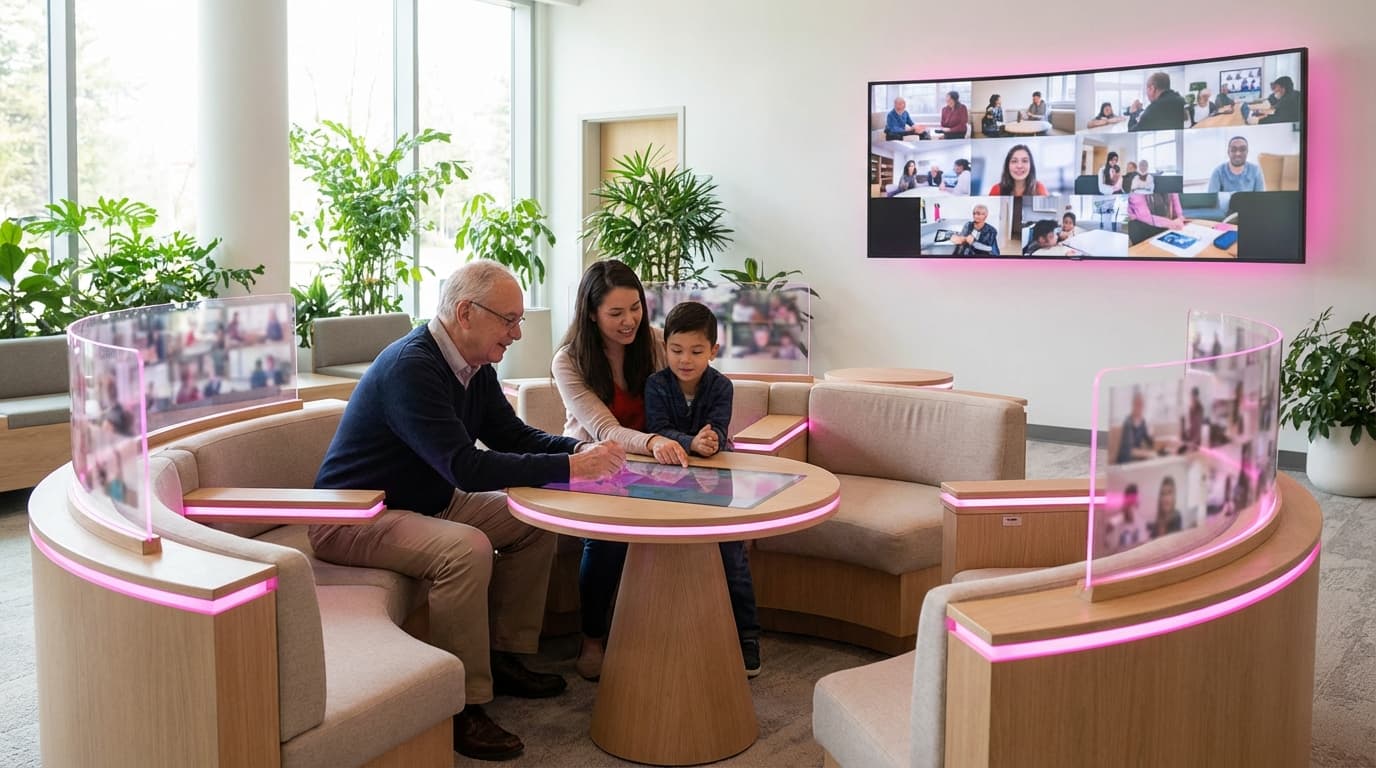
Intergenerational Presence Hubs
Intergenerational Presence Hubs represent a technological infrastructure designed to maintain continuous social connection across age groups within extended families, addressing the growing challenge of geographic dispersion and generational isolation. These systems combine large-format displays, dedicated communication tablets, and mobile applications into a cohesive platform that facilitates both scheduled and spontaneous interaction between grandparents, parents, and grandchildren. The technical architecture typically includes always-on video portals installed in common areas of senior living facilities or elder homes, paired with simplified tablet interfaces that reduce the cognitive load associated with traditional video calling software. Unlike conventional video conferencing tools that require deliberate initiation, these hubs maintain a persistent presence channel—a low-bandwidth connection that allows family members to see ambient activity without formal calls, creating what researchers describe as "digital proximity." The systems also incorporate asynchronous features such as photo streams, voice message libraries, and shared digital scrapbooks that accommodate different schedules and communication preferences across generations.
The fundamental problem these hubs address is the documented correlation between social isolation and accelerated cognitive decline in aging populations, a challenge intensified by modern family structures where adult children often live hundreds of miles from aging parents. Traditional solutions—scheduled phone calls, infrequent visits, or institutional care settings—frequently fail to provide the consistent, low-effort contact that maintains emotional bonds and allows families to monitor wellbeing. Intergenerational Presence Hubs lower the friction of connection by eliminating the technical barriers that often prevent older adults from initiating contact, while simultaneously providing adult children with passive awareness of their parents' daily routines. This continuous visibility enables earlier detection of health changes or safety concerns, potentially reducing emergency interventions and supporting aging-in-place strategies. For younger family members, particularly grandchildren, these platforms create opportunities for spontaneous storytelling sessions and cultural knowledge transfer that might otherwise be lost to distance and busy schedules.
Early deployments in senior living communities and multigenerational households indicate that consistent use of presence technology correlates with measurable improvements in reported loneliness scores and family satisfaction metrics. Some assisted living facilities have begun installing communal presence hubs in common areas, allowing residents to maintain contact with dispersed family networks without requiring individual device ownership or technical proficiency. The technology also supports hybrid care models where professional caregivers can join family communication channels to coordinate medication schedules, share health updates, and facilitate care transitions. As demographic trends continue to increase the ratio of elderly dependents to working-age adults, these platforms align with broader movements toward distributed caregiving and technology-supported aging. The integration of ambient sensing capabilities—such as motion detection or routine pattern recognition—suggests future iterations may blend social connection with passive health monitoring, creating a more comprehensive support infrastructure for aging populations while preserving the dignity and autonomy that traditional institutional care often compromises.
Related Organizations

Creator of ElliQ, an AI care companion robot for older adults.

Creators of KOMP, a one-button screen device designed specifically for seniors to receive photos, messages, and video calls from family.

Provides a purpose-built tablet and private network for seniors to connect with family members without complex interfaces.

Smart frames with auto-answer video calling designed specifically for seniors with memory loss or tech challenges.

Develops 4G-connected photo frames for seniors who do not have internet or smartphones, allowing instant photo sharing from family.

VR platform designed specifically for seniors and hospice care to reduce isolation.

Smart digital photo frames that allow family members to instantly share photos to a loved one's home display.

Technology integration platform specifically for senior living communities.
Supporting Evidence
Research this in Signals
Signals turns a topic into a sourced research record you can inspect and rerun. Your first scan is free, and this one starts with Intergenerational Presence Hubs already loaded, so edit it or scan as is.