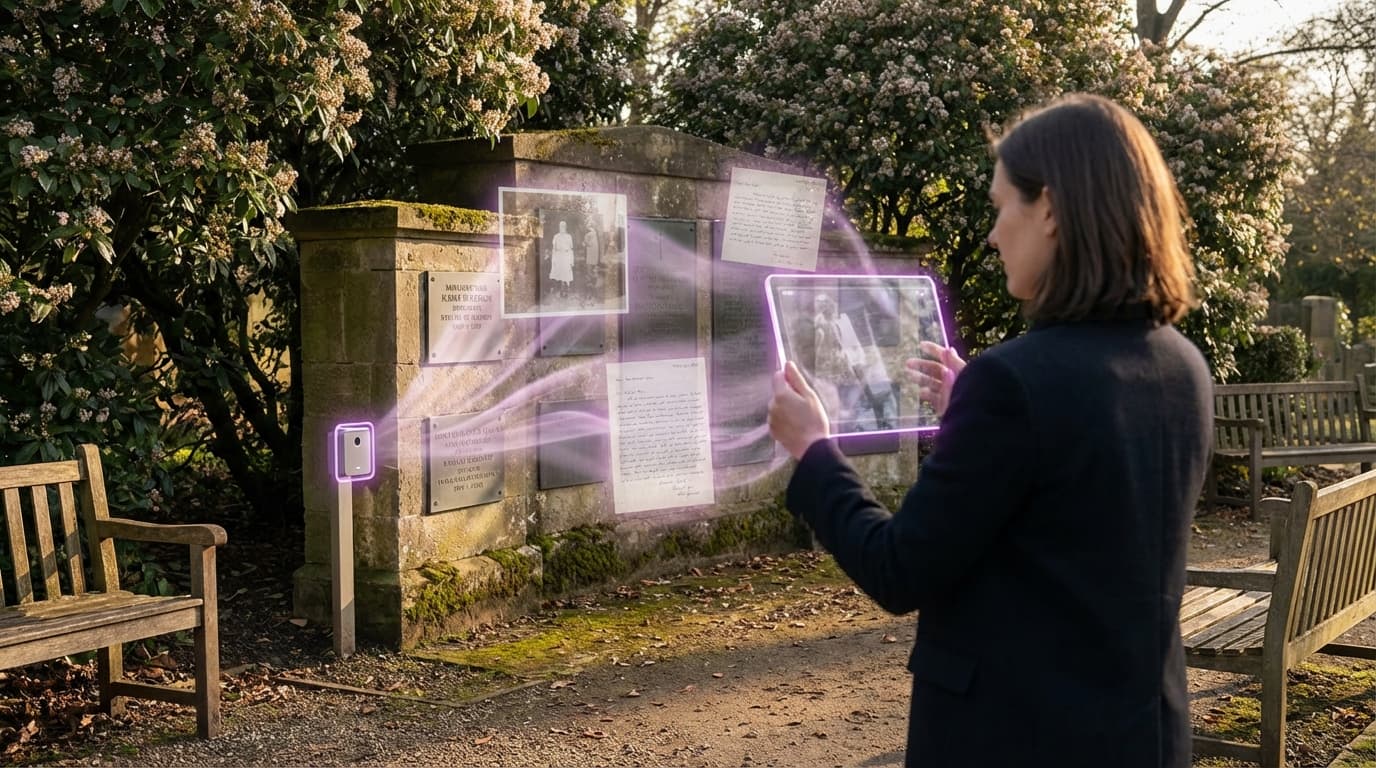
Memorial AR Engines
Memorial AR Engines represent a convergence of augmented reality, geospatial computing, and digital archiving technologies designed to transform static memorial sites into interactive, narrative-rich environments. These systems employ location-based tracking—typically GPS, Bluetooth beacons, or visual markers—to precisely anchor digital content to physical memorial objects such as headstones, urns, plaques, or entire cemetery plots. When visitors approach these sites with AR-enabled smartphones or wearable displays, the engine retrieves and renders multimedia layers that can include photographs, video testimonials, audio recordings, written stories, and even three-dimensional reconstructions of the deceased. The underlying architecture relies on spatial mapping databases that maintain persistent digital coordinates, ensuring that content remains accurately positioned even as users move through the space. Advanced implementations incorporate permission systems that allow families to control who can view, contribute to, or modify memorial content, creating graduated levels of access from public tributes to intimate family memories. Some platforms also support temporal triggers, revealing different content based on anniversaries, birthdays, or other significant dates, thereby creating evolving memorial experiences that change throughout the year.
The traditional memorial industry has long grappled with the challenge of static commemoration—physical markers that capture only a fraction of a person's life and offer limited opportunities for ongoing connection or storytelling. Conventional headstones and plaques provide minimal space for expression, often reducing complex lives to names, dates, and brief epitaphs. Memorial AR Engines address this limitation by effectively expanding the "surface area" of remembrance, allowing families to preserve and share rich multimedia archives that would be impossible to convey through stone or metal alone. This technology also responds to changing patterns of grief and remembrance in an increasingly mobile society, where family members may be geographically dispersed and unable to visit physical sites regularly. By digitizing and geolocating memorial content, these systems enable remote participation in remembrance rituals and create opportunities for asynchronous connection—one family member might leave a voice message at the gravesite that others can discover weeks later from across the country. Furthermore, these platforms address the challenge of intergenerational memory transfer, as younger family members who never met the deceased can access curated stories and media that provide context and connection beyond what traditional memorials offer.
Early implementations of Memorial AR Engines have appeared at progressive cemeteries and memorial parks, particularly in urban areas where space constraints make traditional expansion difficult. Some funeral service providers have begun offering AR memorial creation as part of their service packages, working with families to digitize photographs, record oral histories, and organize content before anchoring it to physical sites. Museums and historical societies have also adopted this technology to enhance cemetery tours and heritage sites, overlaying historical context and biographical information onto the graves of notable figures. Research in human-computer interaction and grief studies suggests that these digital extensions of physical memorials can support healthy mourning processes by providing structured opportunities for ongoing connection and narrative construction. As AR hardware becomes more accessible and social norms around digital commemoration continue to evolve, Memorial AR Engines are positioned to become a standard component of end-of-life planning, sitting alongside traditional elements like wills and funeral arrangements. This trajectory aligns with broader shifts toward personalized, technology-mediated rituals and the growing recognition that digital legacy management is an essential aspect of contemporary death care, offering families tools to preserve memory in formats that resonate with how we increasingly experience and share our lives.
Related Organizations

AR platform company that develops the Lightship ARDK and owns Scaniverse, a 3D scanning app leveraging LiDAR.

A WebAR development platform (owned by Niantic) that allows for markerless and image-target AR experiences directly in mobile browsers.

Develops 'Dimensions in Testimony', an interactive biography system that often utilizes holographic and AR display technologies to allow visitors to converse with survivors at memorial sites.

Creates conversational video AI that allows people to record their life stories for future generations to interact with.

An AR browser platform that allows users to place and view digital content (videos, holograms, audio) at specific GPS coordinates, widely used for historical tours and digital statues.

Provides a platform for building location-based AR games and tours without coding, specifically targeting heritage and tourism sectors.

Social media and camera company developing AR spectacles.

An AR platform specifically for art and heritage, allowing creators to overlay digital narratives onto physical artworks, plaques, or monuments.

A global platform for museums and heritage sites that uses image recognition to deliver audio stories and AR overlays about exhibits.

A major institution that actively employs interactive storytelling and digital preservation technologies to maintain the legacy of the WWII generation.
Supporting Evidence
Research this in Signals
Signals turns a topic into a sourced research record you can inspect and rerun. Your first scan is free, and this one starts with Memorial AR Engines already loaded, so edit it or scan as is.