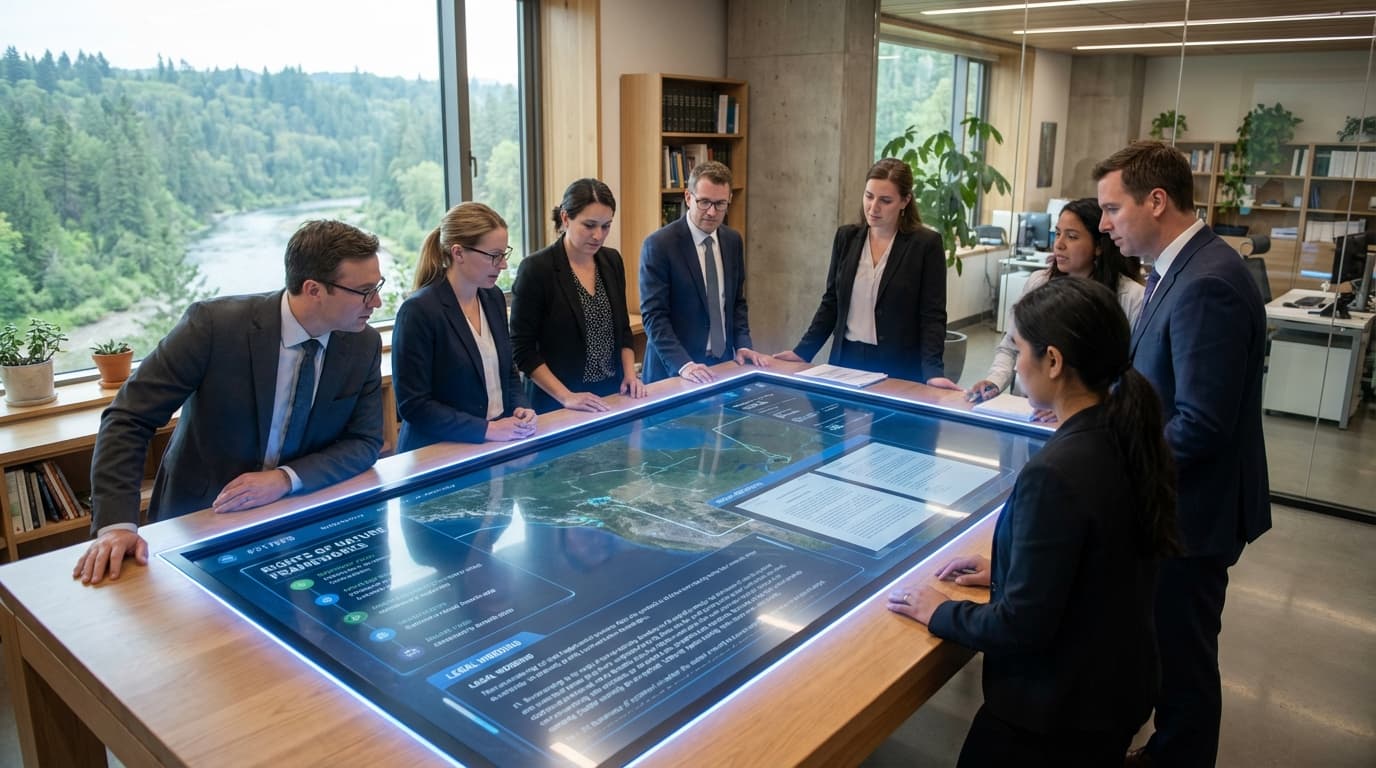
Rights of Nature Legal Frameworks
Rights of Nature legal frameworks represent a fundamental shift in environmental law, moving beyond treating ecosystems as property or resources to recognizing them as entities with inherent rights to exist, flourish, and regenerate. These constitutional and statutory systems grant legal personhood to specific natural features—rivers, forests, mountains, wetlands, or entire biomes—enabling them to be represented in court through designated guardians or custodians. The legal mechanism typically establishes both the rights of the ecosystem (such as the right to flow in the case of rivers, or the right to maintain biodiversity for forests) and corresponding human duties to protect and restore these natural systems. This approach draws heavily from indigenous cosmologies that have long recognized nature as possessing agency and deserving respect, translating these worldviews into enforceable legal structures. The frameworks often designate specific individuals, communities, or governmental bodies as legal guardians who can bring lawsuits on behalf of the ecosystem, creating a fiduciary relationship where humans act as trustees rather than owners.
The emergence of Rights of Nature addresses a critical gap in traditional environmental regulation, which has often failed to prevent ecosystem degradation despite decades of protective legislation. Conventional environmental law typically balances economic development against environmental protection, frequently resulting in incremental harm that accumulates over time. By contrast, granting ecosystems legal standing fundamentally reframes the question: rather than asking how much damage is acceptable, these frameworks require demonstrating that proposed activities respect the ecosystem's rights to health and continuity. This shift proves particularly powerful in contexts where extractive industries, agricultural expansion, or infrastructure development threaten critical watersheds, old-growth forests, or biodiverse regions. The legal personhood model also addresses intergenerational justice concerns, as guardians can represent not only current communities but future generations who will inherit these ecosystems. Furthermore, these frameworks often empower indigenous communities and local populations who have been marginalized in traditional resource management decisions, recognizing their knowledge systems and granting them formal authority to defend territories they have stewarded for generations.
Ecuador's 2008 constitution pioneered this approach at a national scale, establishing rights for Pachamama (Mother Earth), while New Zealand granted legal personhood to the Whanganui River in 2017 following decades of advocacy by Māori communities. Similar frameworks have since emerged in Colombia, India, Bangladesh, and numerous local jurisdictions worldwide, though implementation and enforcement vary considerably. In practice, these laws have enabled communities to successfully challenge mining operations, halt dam construction, and demand restoration of degraded ecosystems through court proceedings that would have been impossible under traditional environmental statutes. Research suggests that the effectiveness of Rights of Nature frameworks depends heavily on robust enforcement mechanisms, adequate funding for guardianship bodies, and integration with existing environmental regulations rather than operating in isolation. As climate change and biodiversity loss intensify pressure on ecosystems worldwide, this legal innovation represents a growing movement toward recognizing planetary boundaries and ecological limits as fundamental constraints on human activity, potentially reshaping how societies conceptualize their relationship with the natural world for generations to come.
Related Organizations

The supreme constitutional court of Ecuador, responsible for interpreting the 2008 Constitution which was the first to enshrine Rights of Nature.

A global network of organizations and individuals committed to the universal adoption and implementation of legal systems that recognize, respect, and enforce 'Rights of Nature'.

A non-profit law firm providing legal services and organizing support to communities facing environmental threats, pioneering Rights of Nature ordinances in the US.

A legal advocacy organization working to secure legal rights for nature, including rivers, oceans, and ecosystems, often within urban contexts.

An organization dedicated to securing actual legal rights for nonhuman animals through common law litigation.
Supporting Evidence
Research this in Signals
Signals turns a topic into a sourced research record you can inspect and rerun. Your first scan is free, and this one starts with Rights of Nature Legal Frameworks already loaded, so edit it or scan as is.