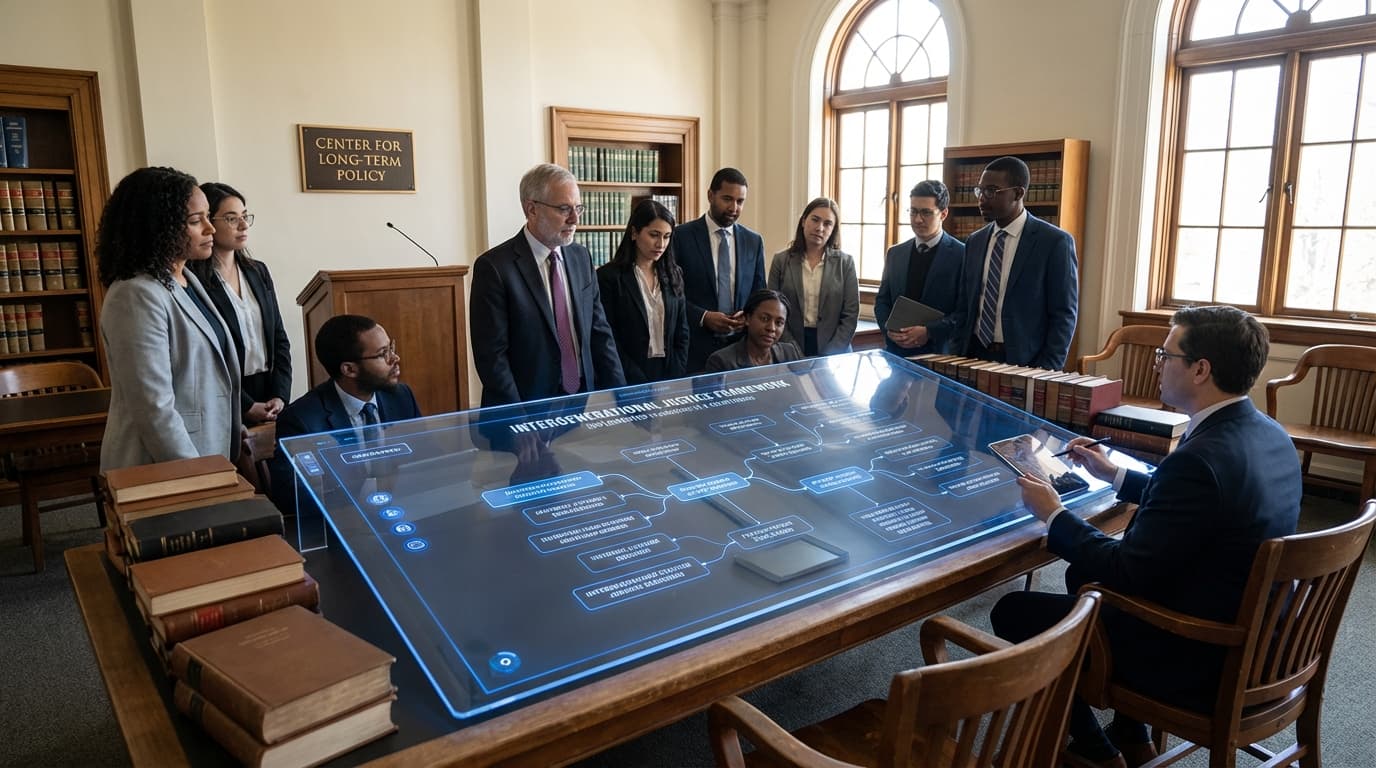
Intergenerational Justice Frameworks
The concept of intergenerational justice frameworks addresses a fundamental flaw in contemporary governance: the structural bias toward short-term decision-making that often comes at the expense of future generations. Democratic systems, while designed to represent the will of the people, inherently privilege the interests of current voters over those who cannot yet vote—or who have not yet been born. This temporal myopia manifests in critical policy domains, from climate change and environmental degradation to unsustainable fiscal practices and infrastructure neglect. Intergenerational justice frameworks seek to correct this imbalance by establishing legal and institutional mechanisms that give formal standing to the interests of future generations. These mechanisms typically take several forms: constitutional amendments that enshrine the rights of future citizens, specialized ombudspersons or commissioners tasked with representing long-term interests in policy deliberations, and legal doctrines that allow advocates to bring cases on behalf of unborn generations in courts of law. By creating formal channels through which future interests can be voiced and defended, these frameworks fundamentally alter the calculus of policy-making, forcing decision-makers to consider impacts that extend far beyond traditional electoral cycles.
The implementation of intergenerational justice frameworks responds to mounting evidence that many of today's most pressing challenges—from climate instability to resource depletion to accumulating public debt—stem from governance systems that systematically discount the future. Research in behavioral economics and political science suggests that without institutional safeguards, democratic processes naturally favor immediate benefits over deferred costs, even when those costs may be catastrophic for future populations. Several jurisdictions have begun experimenting with these frameworks, establishing offices such as future generations commissioners who review proposed legislation for long-term impacts, or incorporating constitutional provisions that recognize the rights of citizens yet to be born. Courts in various countries have also begun entertaining cases brought by youth plaintiffs or environmental advocates arguing that current policies violate the rights of future generations to a stable climate and healthy environment. These legal innovations create accountability mechanisms that extend beyond the next election cycle, compelling policymakers to justify decisions in terms of century-scale consequences rather than quarterly results or four-year terms.
As global challenges increasingly reveal the limitations of short-term thinking, intergenerational justice frameworks are gaining traction as essential components of resilient governance systems. Early implementations indicate that even modest institutional changes—such as requiring long-term impact assessments or establishing advisory bodies focused on future interests—can meaningfully shift policy outcomes toward greater sustainability and foresight. The frameworks prove particularly relevant in domains where decisions create irreversible or long-lasting consequences, such as nuclear waste management, biodiversity conservation, infrastructure investment, and climate policy. Industry analysts note growing interest from both public sector reformers and civil society organizations in scaling these approaches, with some proposing that future generations representation should become a standard feature of democratic governance alongside other checks and balances. The trajectory suggests a gradual but significant evolution in how societies conceptualize democratic representation itself, expanding the circle of stakeholders to include not just current citizens but also those who will inherit the consequences of today's choices. This shift toward temporal inclusivity may prove as transformative for governance as earlier expansions of suffrage were for democracy, fundamentally reorienting policy-making toward genuine long-term sustainability and civilizational resilience.
Related Organizations

A statutory body established by the Well-being of Future Generations (Wales) Act 2015.

A think tank and advocacy group focused on intergenerational justice in politics, law, and economics.
Network of Institutions for Future Generations (NIFG)
Hungary · Consortium
An independent network of national institutions (Ombudsmen, Commissioners) dedicated to protecting future generations.

A non-profit public interest law firm that provides strategic, campaign-based legal services to youth.

A foundation that identifies and promotes future-just policies worldwide.

An environmental law charity that uses the power of the law to protect the planet and the people who live on it.

A non-profit consultancy that uses foresight to help governments and organizations plan for the long term.

Fosters long-term thinking and responsibility through projects like the 10,000 Year Clock.

A research platform at Sciences Po evaluating public policies.
Supporting Evidence
Research this in Signals
Signals turns a topic into a sourced research record you can inspect and rerun. Your first scan is free, and this one starts with Intergenerational Justice Frameworks already loaded, so edit it or scan as is.