








Distributed Storage
This page is a narrower case of it.
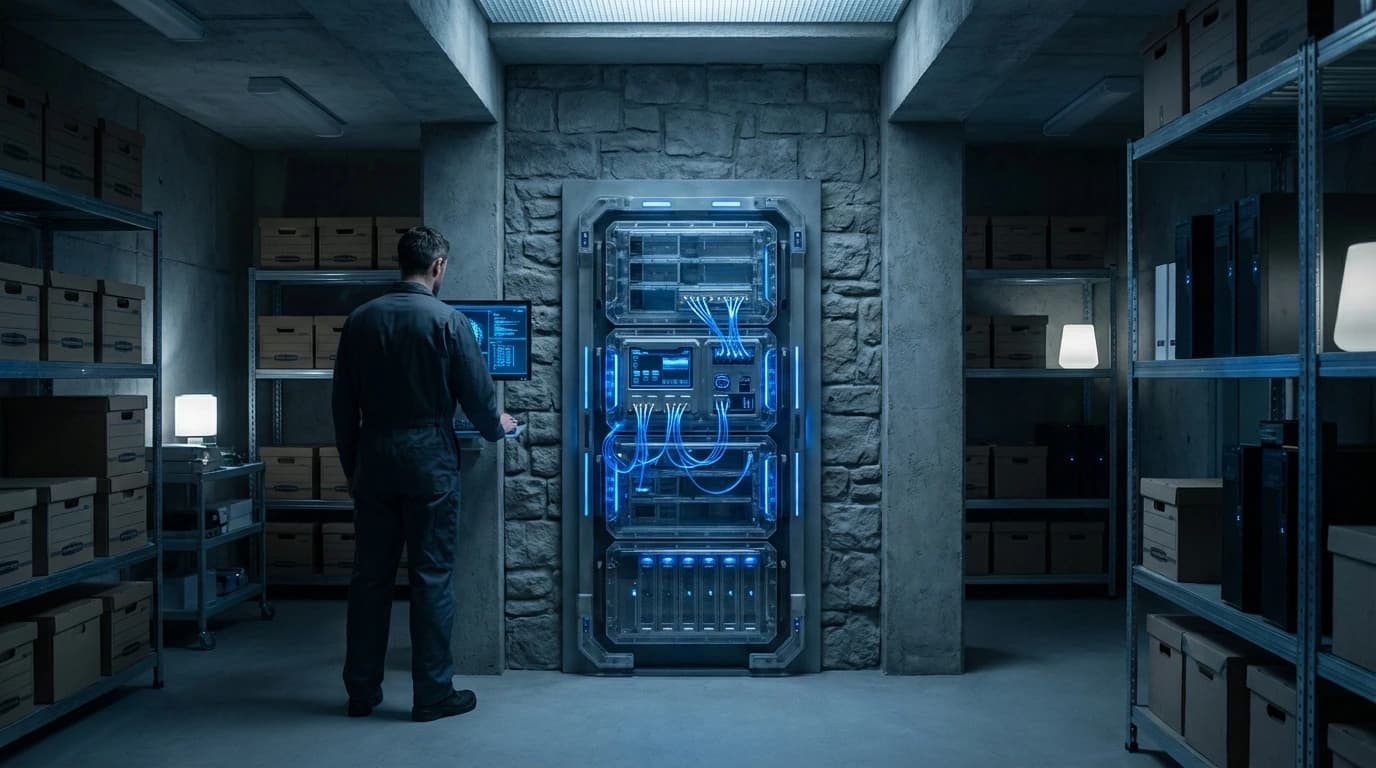
Distributed Knowledge Archives represent a fundamental reimagining of how humanity preserves and transmits its collective intellectual heritage. Unlike traditional centralized repositories—libraries, data centers, or cloud storage platforms—that concentrate information in specific geographic locations, these systems employ peer-to-peer protocols to fragment and replicate data across thousands or even millions of independent nodes worldwide. The technical foundation typically combines several complementary technologies: the InterPlanetary File System (IPFS) for content-addressed storage, blockchain or distributed ledger technologies for maintaining immutable records of what exists and where, and sophisticated error-correcting codes that allow data reconstruction even when significant portions are lost or corrupted. Each piece of knowledge—whether a scientific paper, cultural artifact, or technical specification—is broken into encrypted fragments and distributed across the network, with built-in redundancy ensuring that no single node failure can eliminate access to the information. This architecture creates a resilient mesh where data persists as long as a sufficient number of participating nodes remain operational, regardless of what happens to any individual location.
The imperative for such systems emerges from growing concerns about the fragility of our current knowledge infrastructure. Centralized repositories face multiple vulnerabilities: physical disasters can destroy irreplaceable archives, political instability can lead to deliberate erasure of inconvenient histories, corporate decisions can render entire platforms inaccessible, and internet fragmentation—whether through geopolitical conflict or infrastructure failure—can sever access to vital information. Research institutions and cultural organizations increasingly recognize that concentration of knowledge creates existential risk, particularly for materials documenting marginalized perspectives, controversial research, or politically sensitive topics. Distributed Knowledge Archives address these challenges by making censorship or destruction prohibitively difficult—eliminating information would require simultaneously targeting thousands of independent nodes across multiple jurisdictions and continents. This approach also enables new models of collaborative preservation, where communities can collectively maintain archives relevant to their interests without depending on institutional gatekeepers or commercial platforms whose priorities may shift over time.
Early implementations have emerged primarily within academic and activist communities, with projects focused on preserving scientific literature, endangered languages, and documentation of human rights violations. Some initiatives operate as overlay networks to existing internet infrastructure, while others explore integration with mesh networks and satellite communications to maintain functionality even during major connectivity disruptions. The technology aligns with broader movements toward digital sovereignty and information resilience, particularly relevant as climate change, geopolitical tensions, and technological dependencies create new risks to knowledge continuity. As storage costs decline and peer-to-peer protocols mature, these systems may evolve from specialized preservation tools into foundational infrastructure for a more resilient information ecosystem, ensuring that future generations retain access to humanity's intellectual heritage regardless of what catastrophes or transformations lie ahead.
Hosts the 'Internet Arcade' and massive collections of abandonware, utilizing browser-based emulation (Emularity) to keep software accessible.
Open-source R&D lab building Filecoin and IPFS, the storage layer for decentralized science data.
Nonprofit dedicated to archiving human knowledge for billions of years.
A decentralized storage network designed for permanent data storage, often used to archive historical records and internet content immutably.
Fosters long-term thinking and responsibility through projects like the 10,000 Year Clock.
Provides ultra-secure, long-term data storage on film, operating the Arctic World Archive.
An offline reader that allows people to download and browse Wikipedia and other content without internet.
Published forecasts about this technology, graded against what happened in Hindsight.
Distributed Storage
This page is a narrower case of it.
Signals turns a topic into a sourced research record you can inspect and rerun. Your first scan is free, and this one starts with Distributed Knowledge Archives already loaded, so edit it or scan as is.