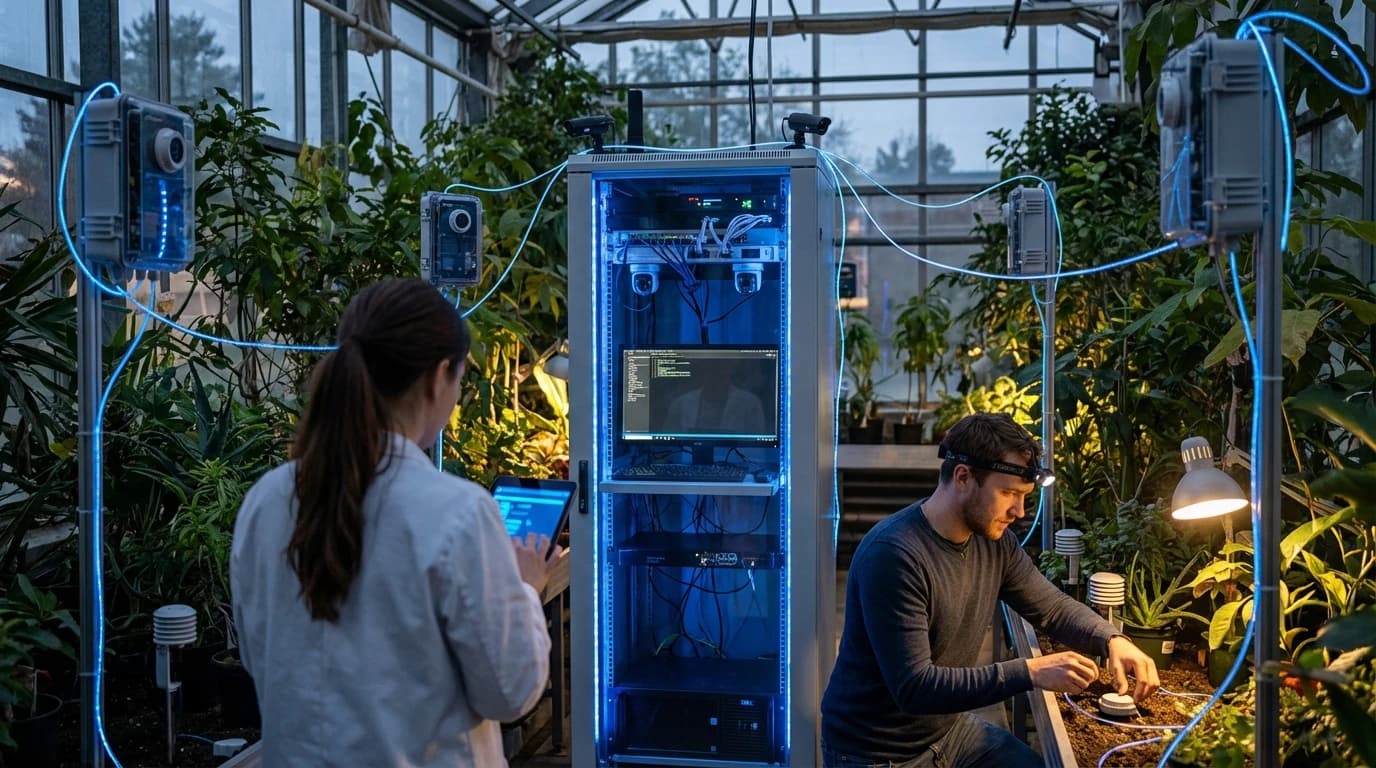
AI Biodiversity Monitoring
AI biodiversity monitoring represents a fundamental shift in how we track and protect Earth's ecosystems, moving from periodic manual surveys to continuous, automated observation networks. This technology combines multiple sensing modalities—acoustic sensors that capture animal vocalizations and environmental sounds, camera traps triggered by motion or heat signatures, satellite imagery providing landscape-scale vegetation analysis, and environmental DNA (eDNA) sampling that detects species presence from genetic material in soil and water. Machine learning algorithms process these diverse data streams, identifying individual species through visual recognition, classifying sounds to detect specific calls or distress signals, and analyzing spectral signatures in satellite data to assess vegetation health and land-use changes. Advanced neural networks can distinguish between thousands of species with accuracy rivaling expert naturalists, while also detecting subtle patterns invisible to human observers, such as gradual shifts in species distribution or early indicators of ecosystem stress.
The conservation sector has long struggled with the challenge of monitoring vast, remote areas with limited personnel and funding. Traditional biodiversity surveys require trained specialists to physically visit sites, often covering only small sample areas at infrequent intervals, making it nearly impossible to detect rapid changes or illegal activities in real-time. AI biodiversity monitoring addresses these limitations by providing persistent surveillance across entire protected areas and critical habitats. The technology enables park rangers and conservation managers to receive immediate alerts when acoustic sensors detect chainsaw sounds indicating illegal logging, when camera traps capture images of poachers, or when satellite analysis reveals unexpected deforestation patterns. This rapid detection capability dramatically shortens response times, allowing authorities to intervene before significant damage occurs. Furthermore, the continuous data collection provides unprecedented insights into ecosystem dynamics, revealing how species populations fluctuate seasonally, how wildlife responds to climate variations, and which habitat corridors are most critical for maintaining biodiversity.
Research institutions and conservation organizations have begun deploying these systems in biodiversity hotspots worldwide, with early implementations demonstrating their effectiveness in protecting endangered species and detecting environmental threats. In tropical rainforests, acoustic monitoring networks now track primate populations and identify illegal logging activities across thousands of square kilometers. Marine protected areas employ underwater acoustic sensors and eDNA sampling to monitor fish populations and detect unauthorized fishing vessels. The technology has proven particularly valuable for tracking elusive or nocturnal species that are difficult to observe through conventional methods, as well as for establishing baseline ecosystem health metrics that can inform long-term conservation strategies. As climate change accelerates and biodiversity loss intensifies, these AI-powered monitoring systems are becoming essential infrastructure for planetary stewardship, providing the early warning capabilities needed to prevent ecosystem collapse and guide adaptive management strategies. The integration of these tools with broader environmental monitoring networks promises to create a comprehensive, real-time understanding of Earth's biological systems, enabling more effective conservation interventions and helping societies recognize and respond to ecological tipping points before they trigger irreversible changes.
Related Organizations

Uses upcycled sensors and AI to monitor rainforest acoustics in real-time to detect illegal logging and track biodiversity.

Runs the 'BirdCast' project, which uses weather radar to track bird migration and issues light pollution warnings to cities.

Uses environmental DNA (eDNA) to map biodiversity at scale, providing biological data layers for nature digital twins.

A cloud-based platform that uses AI to automatically identify animals in camera trap images, backed by Google and conservation NGOs.

An acoustic analysis platform (now part of RFCx) that allows researchers to upload audio and use AI to identify species.

Develops the 'Sentinel' smart camera and other hardware/software solutions that bring AI to the edge for conservation.

Developers of Wildbook, an open-source platform using AI for wildlife identification and tracking.

An open data platform connecting global restoration projects with scientific data on local ecology and carbon potential.

Builds cloud-based operating systems for forest restoration and wildfire resilience, creating granular data visualizations of land health.
Supporting Evidence
Research this in Signals
Signals turns a topic into a sourced research record you can inspect and rerun. Your first scan is free, and this one starts with AI Biodiversity Monitoring already loaded, so edit it or scan as is.