Adaptive Coastal Megaprojects
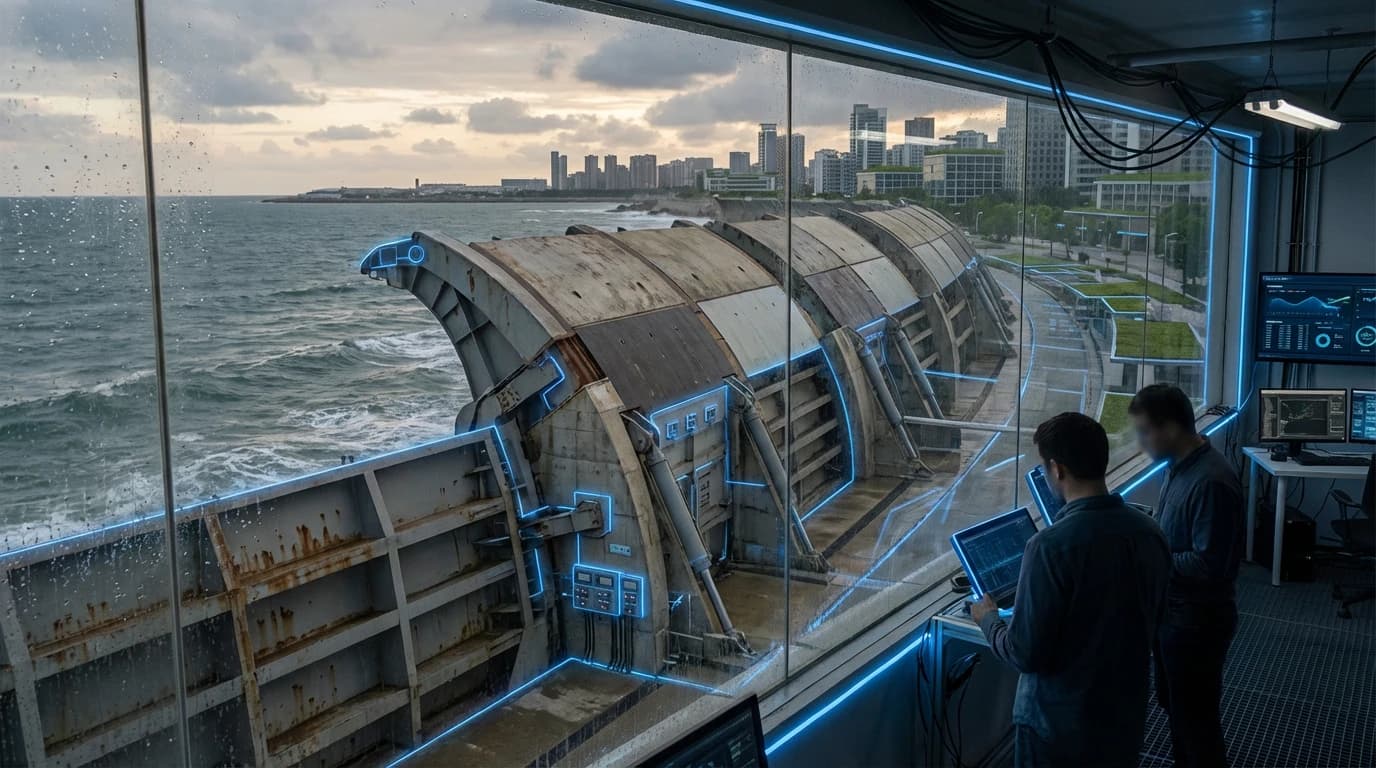
Adaptive coastal megaprojects represent a paradigm shift in how societies defend themselves against rising seas and intensifying storms. Unlike traditional static seawalls or levees, these systems integrate multiple layers of protection that can be reconfigured as conditions change. At their core, they combine engineered structures—such as movable flood barriers that can be raised or lowered depending on tidal forecasts and storm surge predictions—with nature-based solutions like restored salt marshes, mangrove forests, and oyster reefs that absorb wave energy and reduce erosion. Urban components include permeable pavements, bioswales, and underground detention basins that allow cities to function as "sponges," capturing and slowly releasing stormwater rather than channeling it into overwhelmed drainage systems. These elements are networked through sensor arrays and predictive modeling platforms that continuously monitor sea levels, wave heights, rainfall intensity, and subsurface water tables, enabling operators to adjust barrier positions, activate pumping stations, or issue evacuation warnings with greater precision and lead time than ever before.
The imperative for such infrastructure stems from the accelerating threats facing coastal populations, which now include more than 40 percent of humanity. Traditional hard defenses prove increasingly inadequate as sea-level rise outpaces initial design assumptions and storm patterns become less predictable. Static barriers also create ecological dead zones, disrupt sediment flows, and can paradoxically increase flood risk by encouraging development in vulnerable areas under a false sense of security. Adaptive megaprojects address these shortcomings by maintaining ecological connectivity—allowing fish migration and tidal exchange during calm periods while providing protection during extreme events—and by incorporating flexibility into their design. When a barrier system can be upgraded or reconfigured without complete reconstruction, cities avoid the financial and political paralysis that comes from committing to a single, irreversible strategy. This approach also enables phased investment, allowing communities to scale protection incrementally as climate impacts materialize and funding becomes available.
Early implementations of adaptive coastal infrastructure are already underway in regions facing acute flood risk. The Netherlands has pioneered movable surge barriers that protect major port cities while preserving maritime access, and similar systems are being considered for vulnerable estuaries and harbor entrances worldwide. In Asia, several megacities are retrofitting dense urban districts with green infrastructure corridors and tidal parks that double as recreational spaces during dry weather and flood storage during monsoons. These projects typically unfold over decades, requiring sustained political commitment and coordination across multiple jurisdictions and stakeholder groups. As climate models grow more refined and construction techniques advance, the trend is toward increasingly sophisticated hybrid systems that blur the boundary between built and natural environments. The long-term success of adaptive coastal megaprojects will depend not only on engineering prowess but also on governance structures capable of managing these complex, evolving systems across generational timescales, ensuring that investments made today remain effective and equitable as the coastline of tomorrow takes shape.
Related Organizations

The executive agency of the Ministry of Infrastructure and Water Management.

The consortium responsible for the construction and operation of the MOSE project, Venice's mobile flood barriers.

A landscape architecture firm led by Kongjian Yu, pioneering the 'Sponge City' concept to manage urban floods.

Federal agency responsible for public engineering, including flood risk management and large-scale coastal adaptation projects.

Independent institute for applied research in the field of water and subsurface.

Global design and consultancy firm for natural and built assets.

Architecture firm partnering with ICON and NASA on Project Olympus to design the layout and structure of 3D printed lunar bases.

PUB, Singapore's National Water Agency
Singapore · Government Agency
Manages Singapore's water supply and drainage, implementing the 'Active, Beautiful, Clean Waters' (ABC Waters) programme.

An independent international engineering and project management consultancy.

A leading provider of consulting and engineering services, focusing on water, environment, and sustainable infrastructure.
Supporting Evidence
Research this in Signals
Signals turns a topic into a sourced research record you can inspect and rerun. Your first scan is free, and this one starts with Adaptive Coastal Megaprojects already loaded, so edit it or scan as is.