Interactive Whiteboards
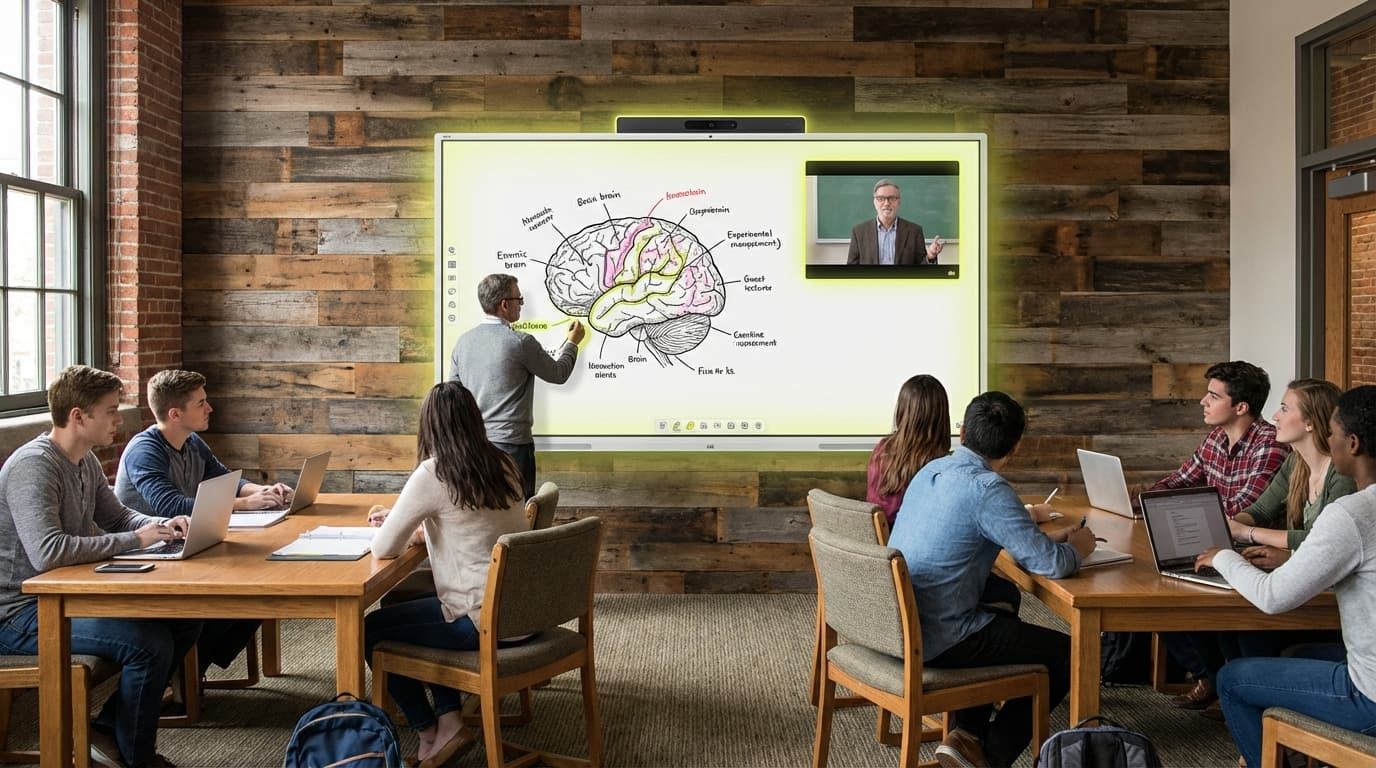
Interactive whiteboards are large-format touch-sensitive displays that combine the functionality of traditional whiteboards with digital capabilities, enabling multi-user touch interaction, real-time annotation, and seamless integration with video conferencing, cloud storage, and educational software platforms. These systems use infrared, capacitive, or optical touch detection to support multiple simultaneous users, allowing collaborative note-taking, diagramming, and problem-solving. Advanced models integrate cameras and microphones for video conferencing, enabling remote learners to participate fully in classroom activities, while cloud connectivity allows content to be saved, shared, and accessed from any device, making these boards essential tools for blended and hybrid learning environments.
This innovation addresses the need for collaborative, interactive learning tools that work seamlessly across in-person and remote settings, where traditional whiteboards and projectors are limited in their interactivity and connectivity. By providing digital, connected, multi-user interfaces, interactive whiteboards enable more engaging, collaborative learning experiences. Companies like SMART Technologies, Promethean, and various display manufacturers have developed these systems, with interactive whiteboards becoming standard equipment in modern classrooms and corporate training facilities.
The technology is particularly significant for hybrid and blended learning, where tools that seamlessly connect in-person and remote participants are essential. As display technology improves and costs decrease, interactive whiteboards could become standard in all educational and training settings. However, ensuring teacher training, maintaining content quality, and maximizing the interactive capabilities remain important considerations. The technology represents a mature and widely-adopted educational technology, with clear benefits for collaborative learning and hybrid instruction.
Related Organizations

A global leader in interactive displays (ActivPanel) and lesson delivery software (ActivInspire) for K-12 classrooms.

The inventor of the SMART Board, providing interactive displays and the Lumio learning software suite.

Manufacturer of the ViewBoard interactive displays and myViewBoard software ecosystem.

Provider of Mimio and Clevertouch interactive displays and STEM education solutions.

Manufacturer of non-proprietary interactive touch screens that integrate with any software ecosystem.

Produces the BenQ Board for education, featuring germ-resistant screens and cloud whiteboarding tools.

European developer of interactive displays and collaborative software environments.

Major supplier of 'UltraGear' gaming monitors specifically marketed to and bulk-sold to PC Bangs.

Visual collaboration platform that powers the software experience on many interactive displays.
Supporting Evidence
Research this in Signals
Signals turns a topic into a sourced research record you can inspect and rerun. Your first scan is free, and this one starts with Interactive Whiteboards already loaded, so edit it or scan as is.