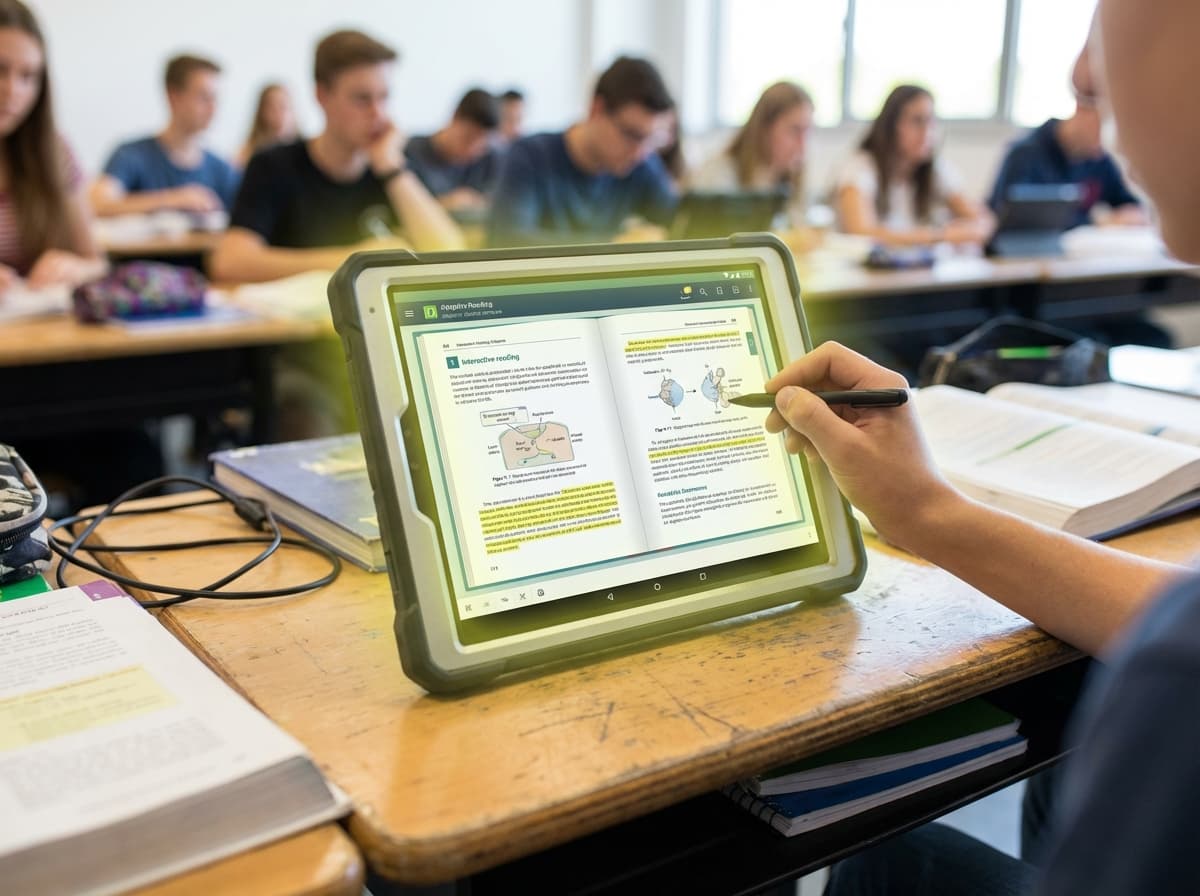
Tablet-Based Textbooks
Tablet-based textbooks are rugged, education-focused tablet devices preloaded with digital curriculum content, interactive textbooks, and adaptive reading software that replace traditional printed textbooks while adding capabilities like multimedia content, interactive exercises, built-in dictionaries, note-taking, and progress tracking. These devices use either e-ink displays (for reduced eye strain and long battery life) or LCD screens (for color and video content), and are designed to withstand the rigors of classroom use with durable construction, protective cases, and long battery life. Advanced systems include offline content storage for areas with unreliable internet, adaptive reading software that adjusts text complexity and presentation based on individual reading levels, and analytics that track student engagement and comprehension.
This innovation addresses the limitations of printed textbooks, which are expensive, quickly outdated, heavy, and lack interactivity and personalization. By providing digital, updatable, interactive content on durable devices, tablet-based textbooks can reduce costs, improve accessibility, enable personalization, and provide rich multimedia learning experiences. Education ministries in countries like South Korea, various states in the US, and school districts worldwide have deployed tablet programs, with mixed results depending on implementation quality, teacher training, and content quality.
The technology is particularly significant for improving access to educational content in resource-constrained settings and for enabling personalized, adaptive learning experiences. As tablet technology improves and costs decrease, digital textbooks could become standard in education. However, ensuring content quality, managing device maintenance, providing teacher training, and addressing concerns about screen time and distraction remain important challenges. The technology represents an important evolution in educational content delivery, but requires careful implementation to achieve its potential benefits.
Related Organizations

A leading education technology solutions provider committed to helping partners create, deliver, and distribute affordable, accessible, and impactful learning experiences worldwide via their Bookshelf platform.

Provides free access to a vast library of digital books via mobile phones and e-readers to support literacy in the Global South.

The UK's leading personal learning platform and supplier of digital textbooks to universities, providing an enhanced reading experience on devices.

A learning enablement platform that automates textbook workflows and provides digital access to content on any device.

One of the world's largest learning companies, shifting aggressively from print to the Pearson+ digital subscription app.

Delivers micro-learning courses to mobile devices, originally via dedicated offline tablets.

An education and technology company offering Cengage Unlimited, a subscription service for digital textbooks.

An EdTech company providing a platform for digital content delivery and affordable course materials.
Supporting Evidence
Research this in Signals
Signals turns a topic into a sourced research record you can inspect and rerun. Your first scan is free, and this one starts with Tablet-Based Textbooks already loaded, so edit it or scan as is.