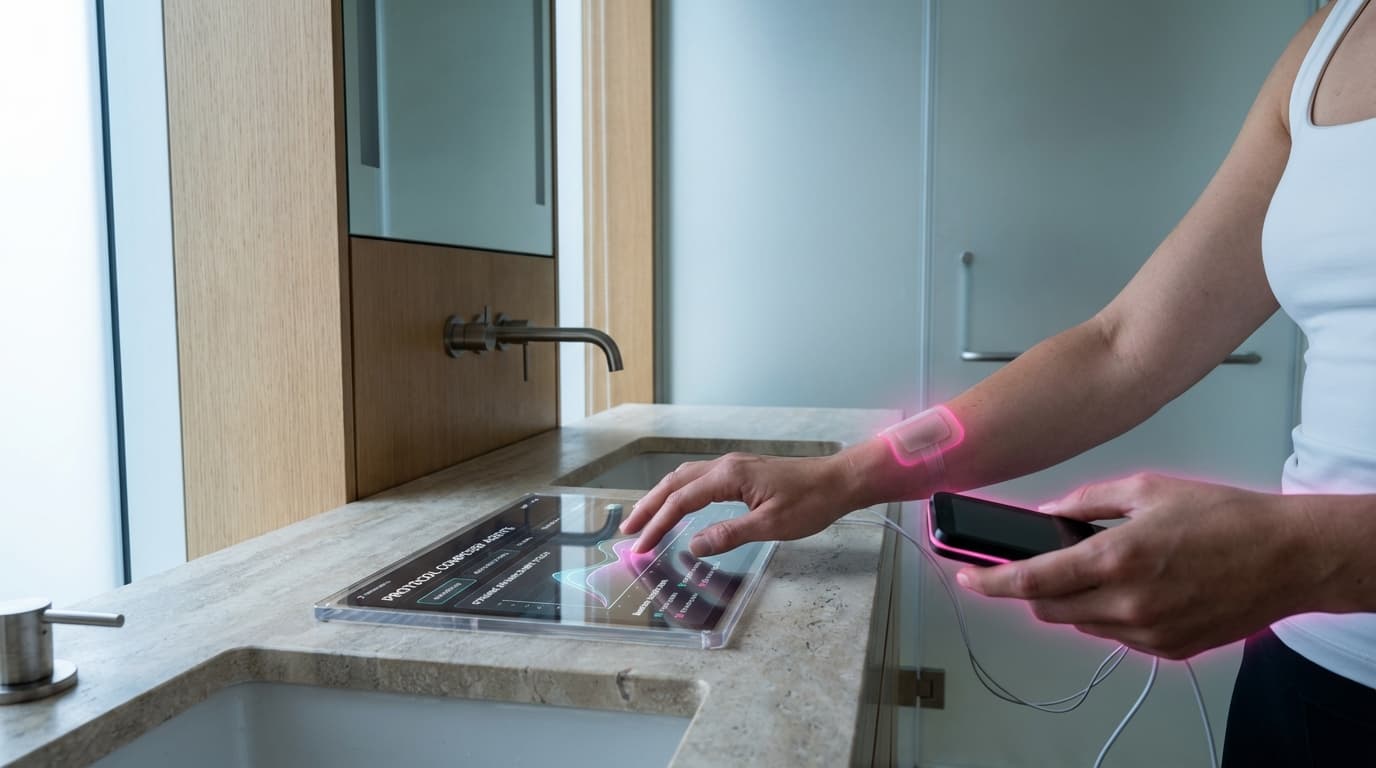
Protocol Composer Agents
Protocol composer agents are AI systems that act as autonomous designers of comprehensive enhancement programs, combining multiple intervention types—topical skincare products, devices (LED masks, microneedling), light therapy protocols, sleep optimization, exercise routines, nutritional plans, supplements, and lifestyle modifications—into integrated, multi-step protocols tailored to individual goals and biology. These agents use reinforcement learning and optimization algorithms to design protocols that account for timing, sequencing, interactions between interventions, and individual responses, then simulate outcomes on digital twin models before recommending real-world implementation. The outputs are dynamic, living protocols that adapt based on progress data, rather than static product recommendations.
This innovation addresses the fragmentation of current beauty and wellness approaches, where consumers must piece together products, treatments, and lifestyle changes without understanding optimal combinations or timing. By designing comprehensive, integrated protocols, these agents enable more effective and efficient enhancement strategies. Research institutions and forward-thinking wellness companies are exploring these capabilities, with the goal of creating AI-powered personal enhancement coaches that design and optimize complete programs.
The technology is particularly significant for the future of personalized wellness, where integrated protocols could be more effective than isolated interventions. As AI capabilities improve and digital twin models become more accurate, protocol composers could become essential tools for optimizing appearance and health. However, ensuring protocol safety, managing complexity, validating simulated outcomes, and maintaining user engagement with comprehensive programs remain challenges. The technology represents an ambitious vision for AI-powered personal enhancement, but requires significant development to achieve practical, reliable systems.
Related Organizations
Estonia · Startup
A leader in generative AI for skincare, creating predictive models that simulate skin aging and the effects of products over time.
Finland · Startup
Provides a Digital Health-Beauty-Wellness Platform that combines AI skin analysis with AR try-on capabilities for retailers.
United States · Startup
Uses the 'Skin Genome Project' database to create personalized skincare products based on AI analysis of data, including genetic predispositions and lifestyle factors.
Australia · Startup
Offers an app-connected LED mask that customizes light therapy protocols based on skin analysis.
United States · Company
Uses algorithms to create custom hair, skin, and body care formulations based on user quizzes.
Taiwan · Company
Developer of the YouCam suite and AgileHand technology, providing enterprise-grade AR try-on solutions for makeup, nails, watches, and jewelry.
United Kingdom · Startup
A teledermatology platform that uses digital consultations to design and prescribe personalized prescription skincare protocols.

Developed Derm Assist, an AI-powered tool that helps identify skin conditions and provides information on common treatments.
Supporting Evidence
Research this in Signals
Signals turns a topic into a sourced research record you can inspect and rerun. Your first scan is free, and this one starts with Protocol Composer Agents already loaded, so edit it or scan as is.