Building Energy Management Systems
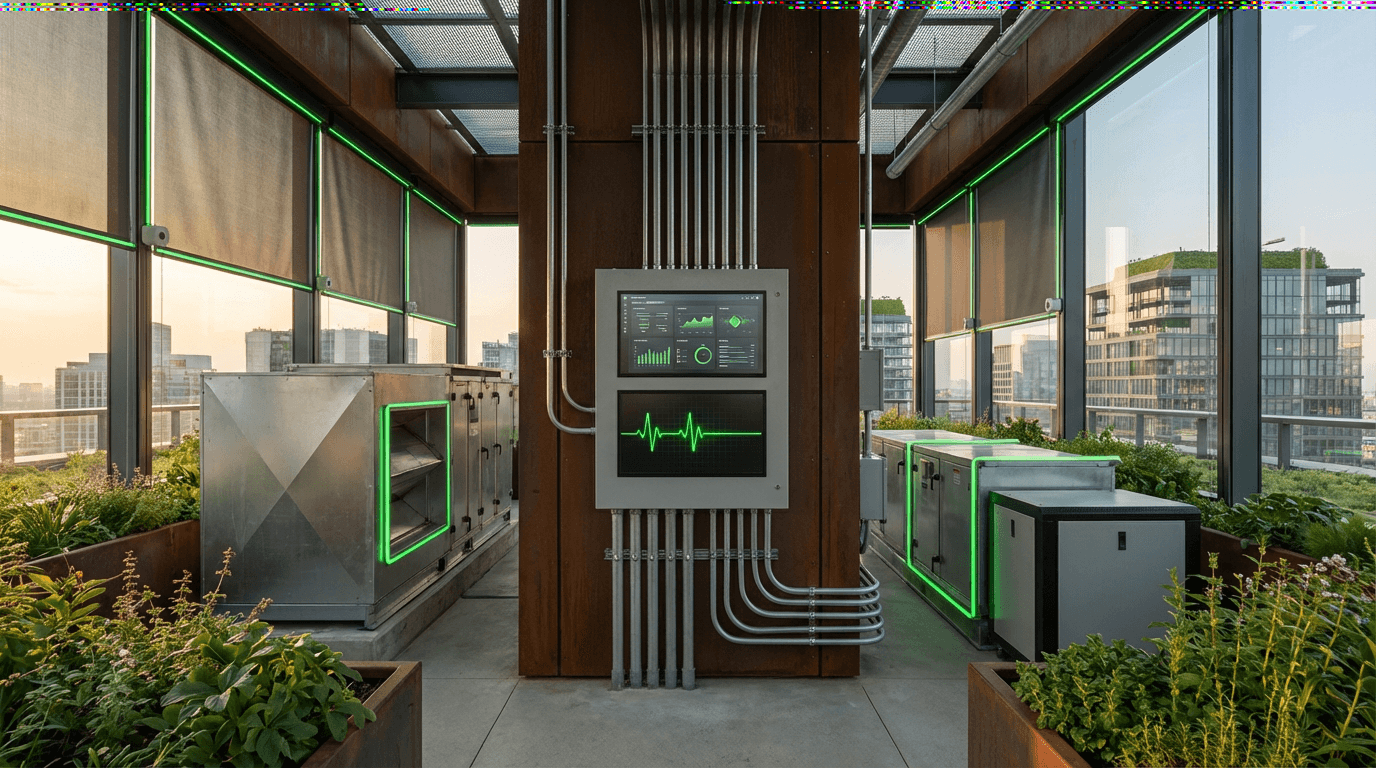
Modern building energy management systems (BEMS) pull data from thousands of sensors—temperature, humidity, occupancy, plug loads—and use digital twins plus AI to orchestrate HVAC, lighting, elevators, and onsite storage. They learn thermal mass behavior, detect faults before occupants feel discomfort, and coordinate with rooftop PV, batteries, and EV chargers to flatten demand charges. Cloud-based dashboards let facility teams run what-if scenarios, automate retro-commissioning, and benchmark performance against peer portfolios.
Commercial campuses use BEMS to participate in demand-response markets, automatically pre-cooling before peak events and monetizing flexibility. Hospitals and data centers integrate resilience logic so microgrids island smoothly, while industrial sites tie process heat recovery into plant-wide controls. BEMS also intersect with ESG reporting, feeding real-time energy and emissions data into corporate dashboards and green lease frameworks.
The technology is TRL 8, but many buildings still run on siloed BAS controllers. Interoperability (BACnet, Haystack tagging), cybersecurity, and workforce training are ongoing needs. Incentives like the US DOE’s Building a Better Grid initiative, EU EPBD revisions, and local performance standards (NYC LL97) are accelerating adoption. As heat pumps, sensors, and DERs proliferate, intelligent BEMS will become the operating system for decarbonized buildings.
Related Organizations

Uses autonomous AI to optimize HVAC systems in real-time, predicting thermal behavior to save energy.

Develops the first autonomous building platform, allowing buildings to make their own control decisions using physics-based digital twins.

IoT-based building management system that uses smart sensors and cloud computing to predictively control HVAC and lighting.

Johnson Controls
United States · Company
Multinational conglomerate producing HVAC and building control systems, notably the OpenBlue digital platform.

Global specialist in energy management and automation that integrates cybersecurity into its industrial hardware and software.

Provides energy management and optimization technology that decarbonizes commercial buildings and connects them to the grid.

AI-driven property operations platform that unifies building data to optimize performance and sustainability.

Develops smart motor systems and building automation controls to drastically reduce HVAC energy consumption.

Smart building platform combining IoT sensors with AI to measure occupancy, air quality, and energy efficiency.

Provides a digital building platform that integrates with legacy systems to monitor and control building performance.
Supporting Evidence
Research this in Signals
Signals turns a topic into a sourced research record you can inspect and rerun. Your first scan is free, and this one starts with Building Energy Management Systems already loaded, so edit it or scan as is.