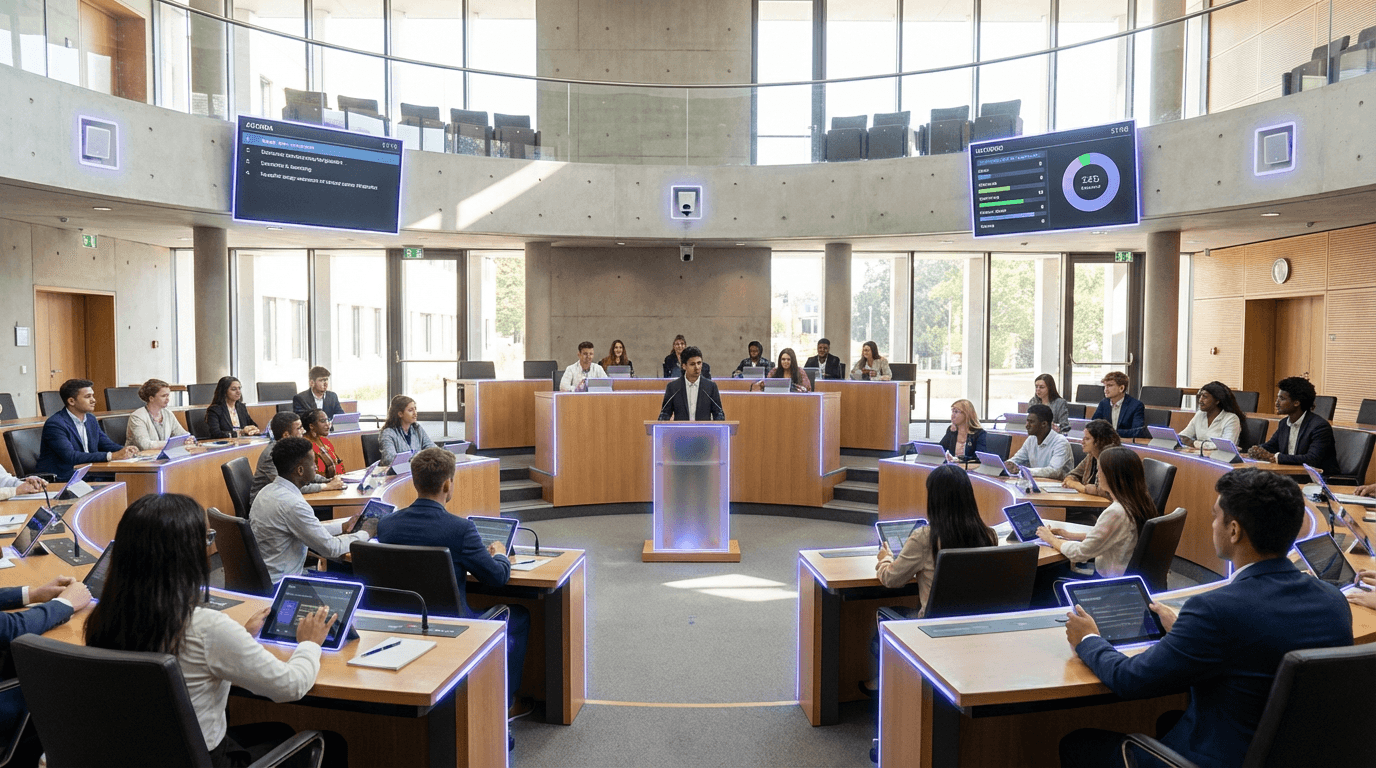
Youth Parliaments & Civic Education Platforms
Youth Parliaments and Civic Education Platforms represent a structured approach to political socialization, combining both simulated governance environments and real decision-making forums where young people can develop democratic competencies through active participation. These platforms typically operate through digital interfaces that mirror actual parliamentary procedures, enabling students and young citizens to engage in debate, propose legislation, form coalitions, and experience the mechanics of representative democracy firsthand. The technical architecture often includes features such as structured debate forums with time limits and speaking orders, voting mechanisms that reflect various democratic systems (from simple majority to proportional representation), amendment processes, and role-assignment systems that rotate participants through different positions of responsibility. Many platforms incorporate scaffolding elements—guided prompts, procedural templates, and educational resources—that help participants understand parliamentary rules, rhetorical strategies, and the ethical dimensions of political representation. Some systems integrate with real municipal or school governance structures, allowing youth decisions on designated issues to carry actual weight, while others function as pure simulations designed to build skills and understanding.
The fundamental challenge these platforms address is the widespread decline in civic literacy and political engagement among younger generations, coupled with a growing disconnect between democratic institutions and the citizens they serve. Traditional civics education often relies on passive learning—textbooks and lectures about governmental structures—which fails to cultivate the practical skills needed for effective democratic participation: persuasive communication, active listening, compromise, coalition-building, and the ability to represent diverse constituencies. Youth Parliaments and Civic Education Platforms solve this problem by creating experiential learning environments where abstract concepts become concrete through practice. Participants learn that democracy is not merely a system of voting but a complex social process requiring negotiation, empathy, and the balancing of competing interests. These platforms also address the challenge of youth political alienation by demonstrating that young people's voices can influence real outcomes, whether through advisory councils that feed recommendations to actual governing bodies or through dedicated youth budgets where participants allocate real municipal funds to community projects.
Research suggests that participation in structured youth governance experiences correlates with higher rates of civic engagement in adulthood, including voting, community organizing, and political awareness. Current implementations range from school-based student councils using digital platforms to coordinate activities and budgets, to national youth parliament programs in countries like Scotland, Finland, and New Zealand, where young representatives debate policy proposals that are sometimes forwarded to actual legislative bodies for consideration. Some municipalities have established permanent youth councils with dedicated platforms that allow young residents to propose and vote on projects funded through allocated city budgets, creating tangible connections between democratic participation and community outcomes. The European Youth Parliament network, for instance, connects thousands of young people across dozens of countries through both digital collaboration tools and in-person assemblies. As concerns about democratic resilience and institutional legitimacy intensify globally, these platforms represent a crucial investment in the next generation's capacity for democratic citizenship, offering a counterbalance to the polarization and misinformation that increasingly characterize digital public discourse. The trajectory points toward greater integration of youth governance platforms with actual municipal decision-making processes, potentially creating permanent channels for intergenerational dialogue and ensuring that policies affecting future generations incorporate the perspectives of those who will live with their long-term consequences.
Related Organizations

A non-profit organization that provides educational online games and lesson plans to promote civics education.

A non-partisan and independent educational project which is tailored specifically to the needs of the young European citizen.
Provides digital tools to help schools run democratic, inclusive school councils.

UNICEF
United States · Nonprofit
United Nations agency responsible for providing humanitarian and developmental aid to children.
Works to ensure that every student in the United States receives an effective action civics education.

A public discussion platform designed to facilitate rational debate through argument mapping.

Runs the 'Youth and Government' program, a national program allowing students to simulate state government.

Dedicated to building the foundations of youth civic engagement and voter participation in high schools.

A nonprofit working to strengthen and expand democracy worldwide.
Supporting Evidence
Research this in Signals
Signals turns a topic into a sourced research record you can inspect and rerun. Your first scan is free, and this one starts with Youth Parliaments & Civic Education Platforms already loaded, so edit it or scan as is.