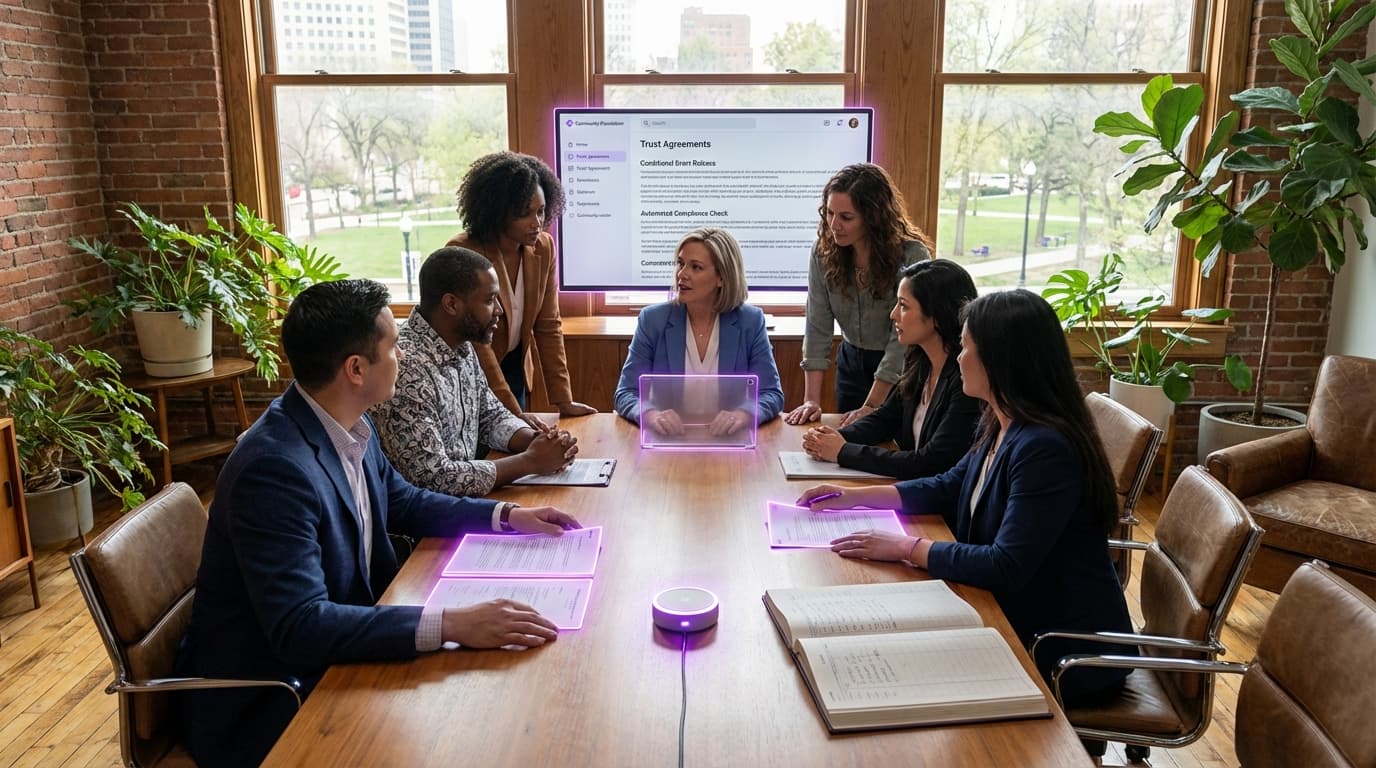
Smart-Contract Logic for Conditional Giving
Smart-contract logic for conditional giving represents a fundamental reimagining of how philanthropic transactions can be structured and executed. At its core, this technology leverages blockchain-based smart contracts—self-executing programs that automatically enforce predetermined rules when specific conditions are met. Unlike traditional grant-making, which relies on intermediaries, manual verification, and trust-based relationships, smart contracts encode giving conditions directly into immutable code. When a donor commits funds to a smart contract, those assets remain locked until predefined triggers are satisfied: a nonprofit reaching a fundraising milestone, a community project achieving measurable outcomes, or multiple stakeholders providing cryptographic verification of progress. The system operates on distributed ledger technology, ensuring that all transactions are transparent, auditable, and irreversible once conditions are met. This architecture eliminates the need for third-party oversight while creating a permanent, publicly verifiable record of philanthropic flows.
The philanthropic sector has long struggled with challenges of accountability, overhead costs, and donor trust. Traditional charitable giving often involves significant administrative burden, with foundations and nonprofits dedicating substantial resources to grant management, reporting, and compliance. Smart-contract logic addresses these inefficiencies by automating verification and fund disbursement, potentially reducing transaction costs and enabling more capital to reach intended beneficiaries. This technology also enables novel giving mechanisms such as quadratic funding, where matching pools are distributed based on the number of unique contributors rather than total amount raised, or milestone-based grants that release funds incrementally as projects demonstrate progress. For donors concerned about impact verification, smart contracts can integrate with external data sources—known as oracles—to automatically confirm that real-world conditions have been met before releasing funds. This capability is particularly valuable for outcome-based philanthropy, where funding is tied to measurable social results rather than activities or outputs.
Early implementations of smart-contract giving have emerged primarily in the cryptocurrency and decentralized finance communities, where platforms like Gitcoin have facilitated millions of dollars in programmable grants for open-source development and public goods. However, broader adoption faces significant challenges. Encoding complex social outcomes into rigid code proves difficult when impact is multifaceted, context-dependent, or requires qualitative assessment. The immutability that makes smart contracts trustworthy also creates inflexibility—once deployed, contracts cannot easily adapt to changing circumstances or unintended consequences without predetermined governance mechanisms. Questions persist about how to handle edge cases, disputes, or situations where conditions are partially met, and whether automated execution might inadvertently harm beneficiaries by removing human discretion during implementation. As the technology matures, the philanthropic sector must grapple with fundamental questions about the appropriate balance between automation and judgment, efficiency and adaptability, and whether the pursuit of trustless systems might paradoxically erode the relational trust that has historically underpinned effective giving.
Related Organizations

A platform for funding and coordinating open source development.
A community focused on building the Future of Giving using blockchain technology.

The innovation arm of the WFP, funding and scaling high-tech solutions for hunger, including connectivity and edge computing projects.

The first on-chain 501(c)(3) public charity offering Donor-Advised Funds (DAFs) powered by DeFi.

ImpactMarket
Portugal · Nonprofit
A decentralized poverty alleviation protocol enabling Unconditional Basic Income (UBI) in vulnerable communities.

A stablecoin that automatically generates basic income for people in extreme poverty through its reserve yields.
A global humanitarian organization empowering people to recover from crisis.
Ethereum Layer 2 scaling solution that utilizes Retroactive Public Goods Funding (RPGF), a variant of mechanism design related to QF.

A non-profit organization that supports the development and growth of the Stellar network.

Open-source R&D lab building Filecoin and IPFS, the storage layer for decentralized science data.