Collaborative Combat Aircraft (CCA)
Geography: Americas · North America · United States
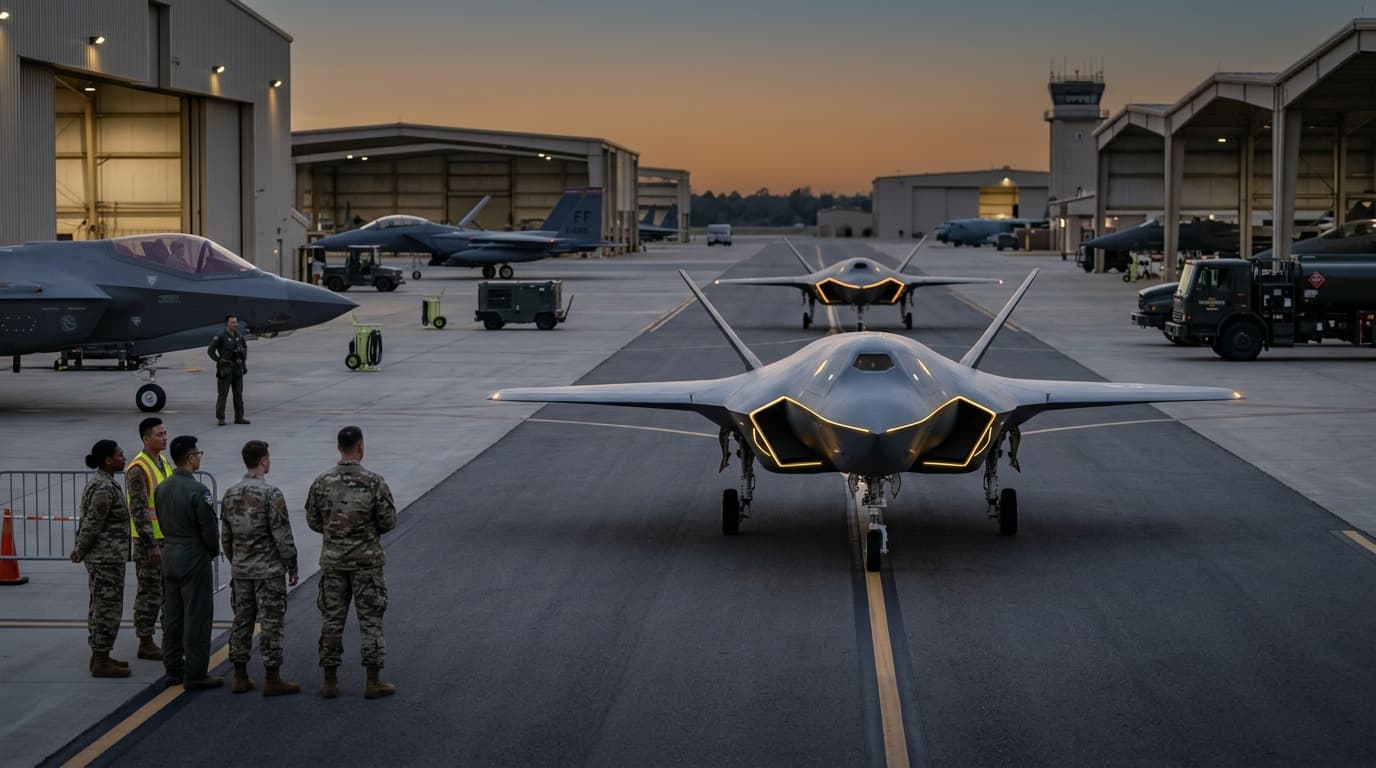
Collaborative Combat Aircraft are autonomous or semi-autonomous drone wingmen designed to fly alongside manned fighters, extending sensor coverage, carrying weapons, and absorbing risk. Anduril's YFQ-44A Fury made history in February 2026 by flying with two different AI pilot systems — Shield AI's Hivemind and Anduril's own Lattice — during a single flight, demonstrating that combat aircraft can swap AI 'brains' mid-mission.
CCAs represent the most significant change in air combat doctrine since stealth. By fielding affordable autonomous wingmen alongside expensive manned fighters, the US Air Force and Navy can generate mass without proportionally increasing pilot training or aircraft costs. Each manned fighter could control 2-5 CCAs, dramatically multiplying combat effectiveness. The Air Force's NGAD program integrates CCAs as a core element of future air superiority.
The defense-tech startup ecosystem — led by Anduril ($28B valuation), Shield AI ($12B), and complemented by incumbents like General Atomics and Kratos — is driving CCA development at venture-capital speed rather than traditional defense acquisition timelines. This represents a fundamental shift in how the US develops military technology.
Research this in Signals
Signals turns a topic into a sourced research record you can inspect and rerun. Your first scan is free, and this one starts with Collaborative Combat Aircraft (CCA) already loaded, so edit it or scan as is.