Modular Robotics Platforms
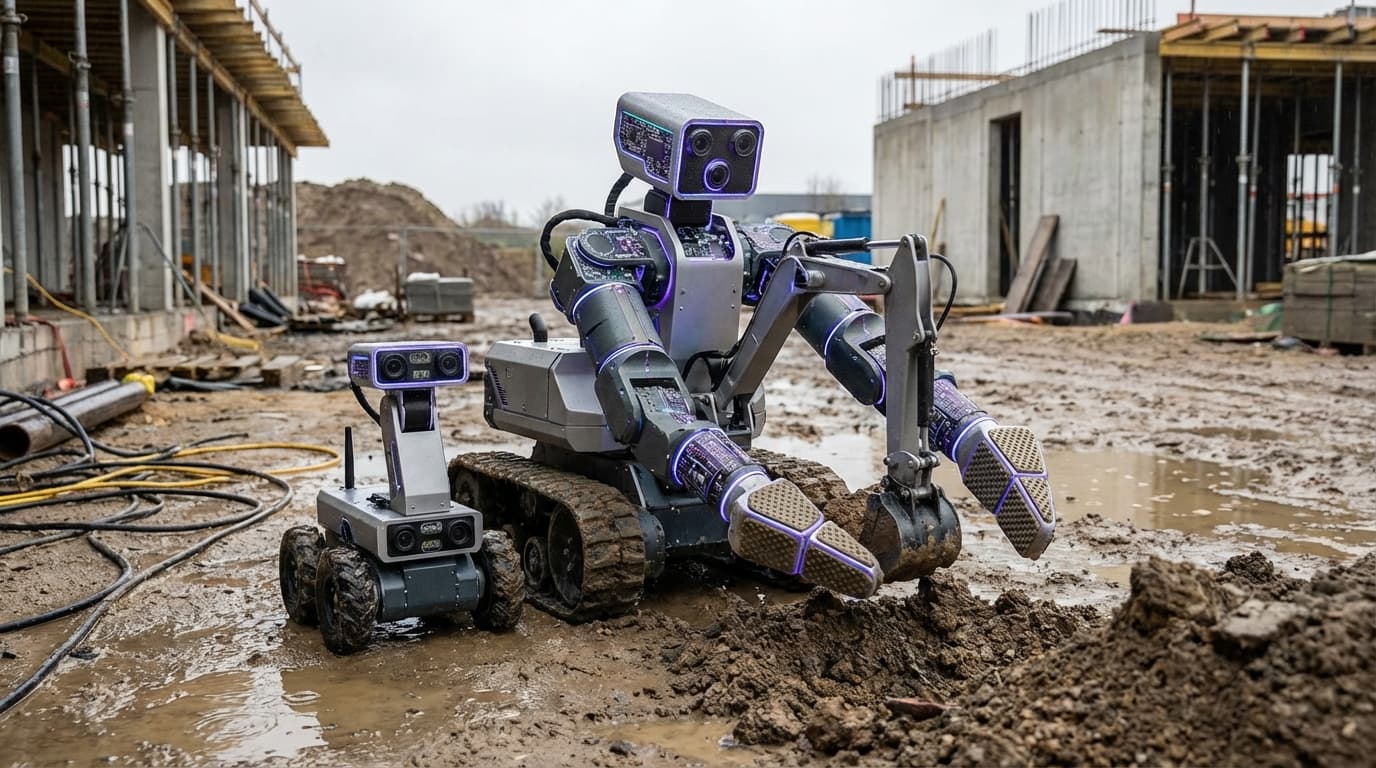
Modular robotics platforms use standardized interfaces and interchangeable components to create robots that can be rapidly reconfigured for different tasks by swapping sensor modules, actuators, and processing units. These systems integrate diverse sensing modalities including event cameras (which detect changes rather than full frames), tactile skins (providing touch and pressure sensing), and proprioceptive sensors (tracking body position and movement), creating rich multimodal perception capabilities.
This innovation addresses the challenge of creating versatile robots that can adapt to diverse tasks without requiring complete redesign for each application. By enabling rapid reconfiguration, modular platforms reduce development time and cost while allowing robots to be optimized for specific tasks. The multimodal sensing capabilities provide rich environmental understanding that enables more sophisticated behaviors. Companies and research institutions are developing these platforms, though widespread adoption remains limited by technical complexity and cost.
The technology is particularly valuable for applications requiring versatility and adaptability, such as research, education, and applications where robots must handle diverse tasks. As robotics becomes more accessible and applications expand, modular platforms could enable a new paradigm where robots are customized for specific needs rather than purchased as fixed systems. However, achieving true plug-and-play modularity while maintaining performance and reliability remains a significant engineering challenge.
Related Organizations
United States · Company
Produces modular robotic building blocks (actuators) that allow users to rapidly configure custom robots.

Develops tactile intelligence technology using elastomeric sensors to give robots the sense of touch.

Swiss company specializing in Dynamic Vision Sensors (DVS) and neuromorphic software for robotics.

Pioneer in event-based vision sensors and associated neuromorphic processing algorithms.

Famous for Spot and Atlas, now integrating reinforcement learning for dynamic movement.

Developers of EELS (Exobiology Extant Life Surveyor), a snake-like modular robot designed for diverse terrains.
Switzerland · University
Creators of ANYmal, a quadruped robot that serves as a platform for modular sensor integration and locomotion research.
Builders of the Shadow Dexterous Hand, a modular end-effector used for advanced manipulation research.

Creators of Digit, a bipedal robot designed for logistics work.
Supporting Evidence
Research this in Signals
Signals turns a topic into a sourced research record you can inspect and rerun. Your first scan is free, and this one starts with Modular Robotics Platforms already loaded, so edit it or scan as is.