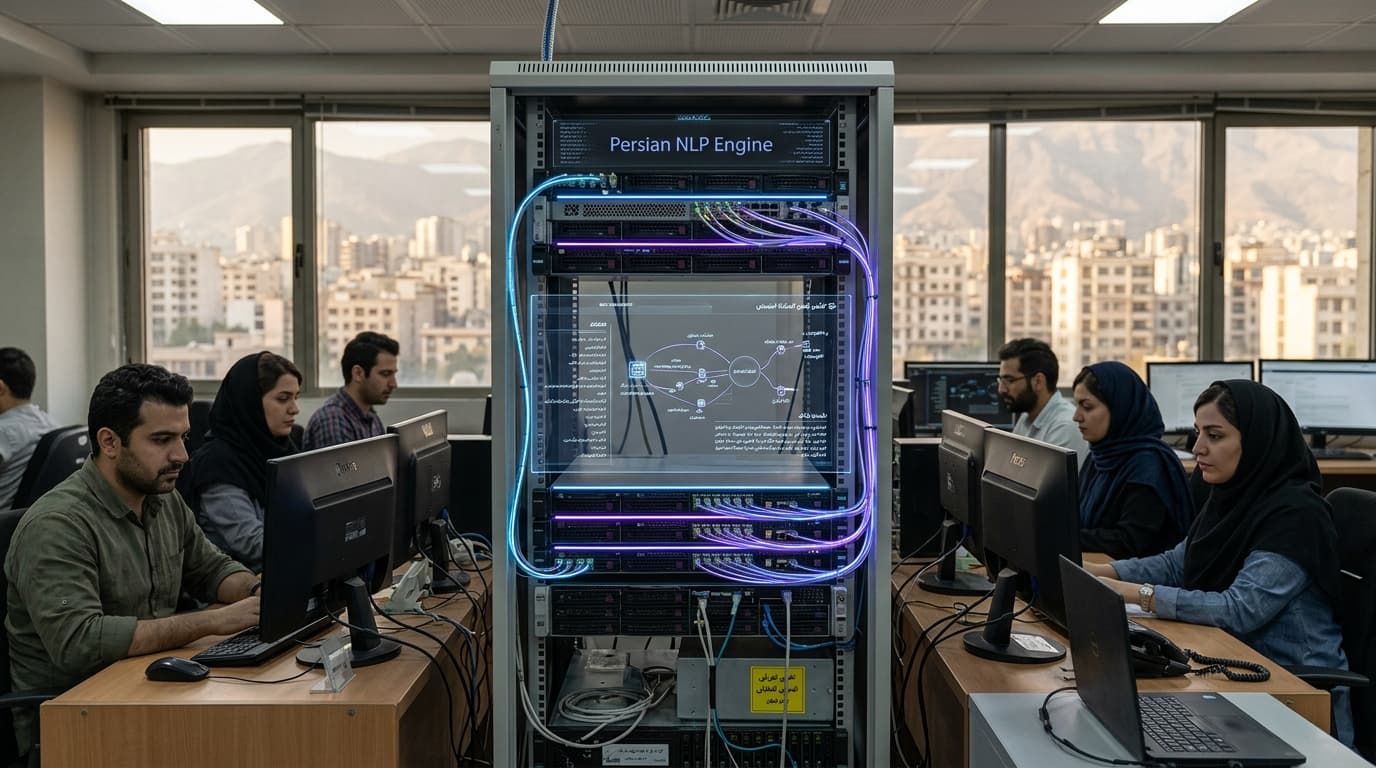
Persian-Language NLP and Foundation Models
Geography: Emea · Middle East · Iran
Iran's AI research community has developed Persian-language natural language processing capabilities, including tokenizers, word embeddings, sentiment analysis, and search algorithms optimized for the Farsi script and linguistic structure. This work is driven by practical necessity: Western AI services (ChatGPT, Google AI tools, etc.) are either sanctions-blocked or unreliable for Persian users, creating demand for indigenous alternatives. Iranian universities and companies have released Persian language datasets and trained domain-specific models.
Persian NLP faces specific technical challenges: the Arabic-derived script with its complex morphology, the prevalence of informal/colloquial registers in social media, and the relative scarcity of high-quality annotated training data compared to English or Chinese. Iranian researchers have contributed to multilingual NLP benchmarks and have developed tools for tasks including information retrieval, document summarization, and machine translation between Persian and other languages.
The strategic dimension involves digital sovereignty: a population of 80+ million Farsi speakers requires AI tools that work in their language and are controlled by their government. Applications include content moderation on Iranian social media platforms, search engines (Parsijoo), and government digital services. The military applications of Persian NLP include signals intelligence, open-source intelligence analysis, and influence operations targeting Persian-speaking populations. The field is growing but remains constrained by the same hardware limitations affecting broader Iranian AI development.
Research this in Signals
Signals turns a topic into a sourced research record you can inspect and rerun. Your first scan is free, and this one starts with Persian-Language NLP and Foundation Models already loaded, so edit it or scan as is.