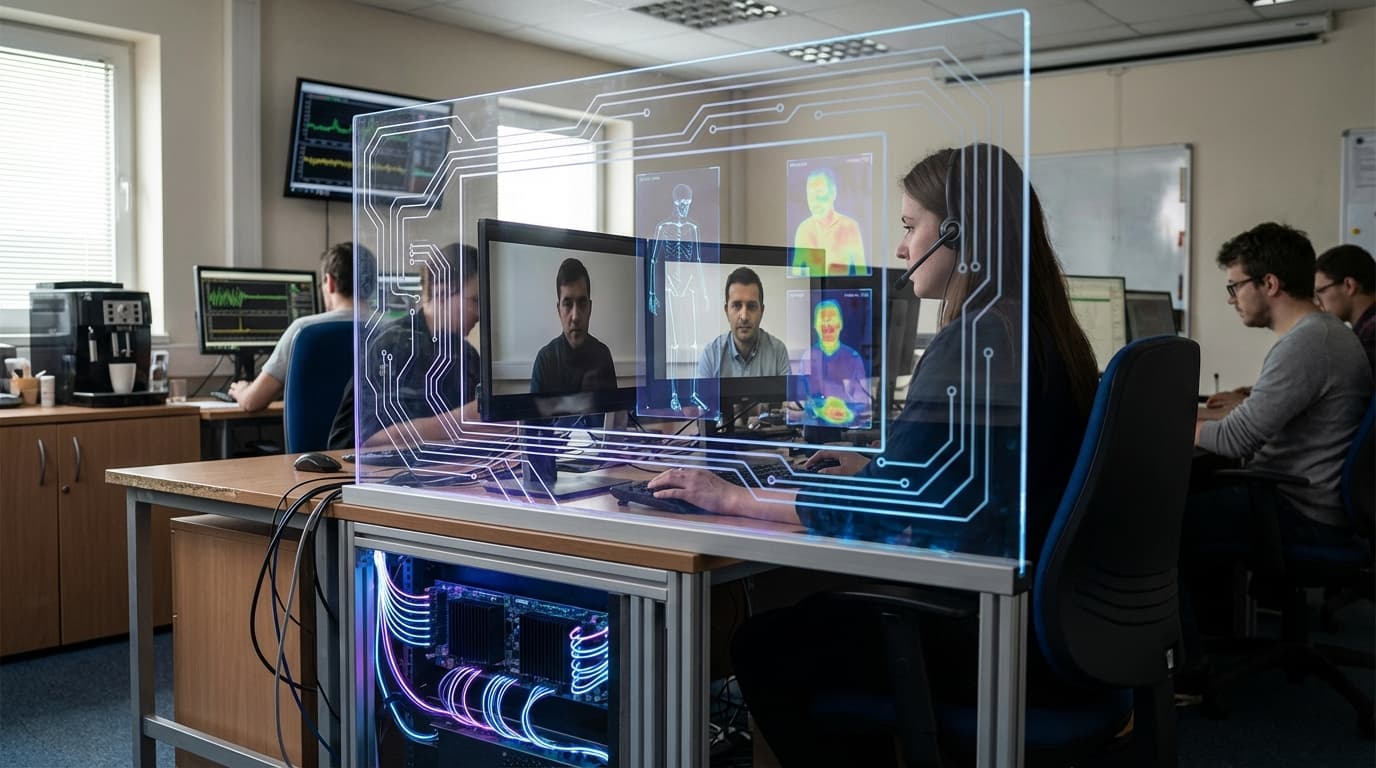
Emotion Recognition Systems
Emotion recognition systems use multimodal AI to analyze facial expressions, vocal patterns, body language, and physiological signals (like heart rate or skin conductance) to infer emotional states. These systems combine computer vision, audio analysis, and sensor data to detect emotions including happiness, sadness, anger, fear, and stress, enabling applications that respond to user emotional states.
This innovation enables new forms of human-computer interaction where systems can adapt to user emotions, providing personalized experiences, safety monitoring, or emotional support. Applications range from retail (personalizing shopping experiences) to automotive (detecting driver fatigue or distress) to healthcare (monitoring patient emotional well-being). China has deployed these systems extensively for public security and smart city applications, while other countries use them more selectively due to privacy concerns.
The technology raises significant ethical and privacy questions about emotional surveillance, consent, and the accuracy of emotion detection across different cultures and individuals. While the technology offers potential benefits for safety, personalization, and healthcare, it also creates new vectors for surveillance and manipulation. As deployment expands, establishing appropriate ethical guidelines, privacy protections, and accuracy standards will be crucial to ensure the technology is used responsibly and effectively.
Related Organizations

Developing an Empathic Voice Interface (EVI) that detects and responds to human emotion.

Home of the Affective Computing research group led by Rosalind Picard.

A spin-off from TU Munich specializing in audio analysis and speech emotion recognition.

A leader in driver monitoring systems that acquired Affectiva, the pioneer of Emotion AI.

Provides real-time emotional intelligence coaching for contact center agents.

Develops FaceReader, the standard software tool for automated analysis of facial expressions in scientific research.

Uses webcams to measure attention and emotion in response to video advertising.

An enterprise AI company specializing in conversational service automation, using tonal analysis to detect customer sentiment and emotion.

Provides a client-side JavaScript SDK for Emotion AI in the browser.

Analyzes vocal biomarkers to detect health conditions and mental states.
Supporting Evidence
Research this in Signals
Signals turns a topic into a sourced research record you can inspect and rerun. Your first scan is free, and this one starts with Emotion Recognition Systems already loaded, so edit it or scan as is.