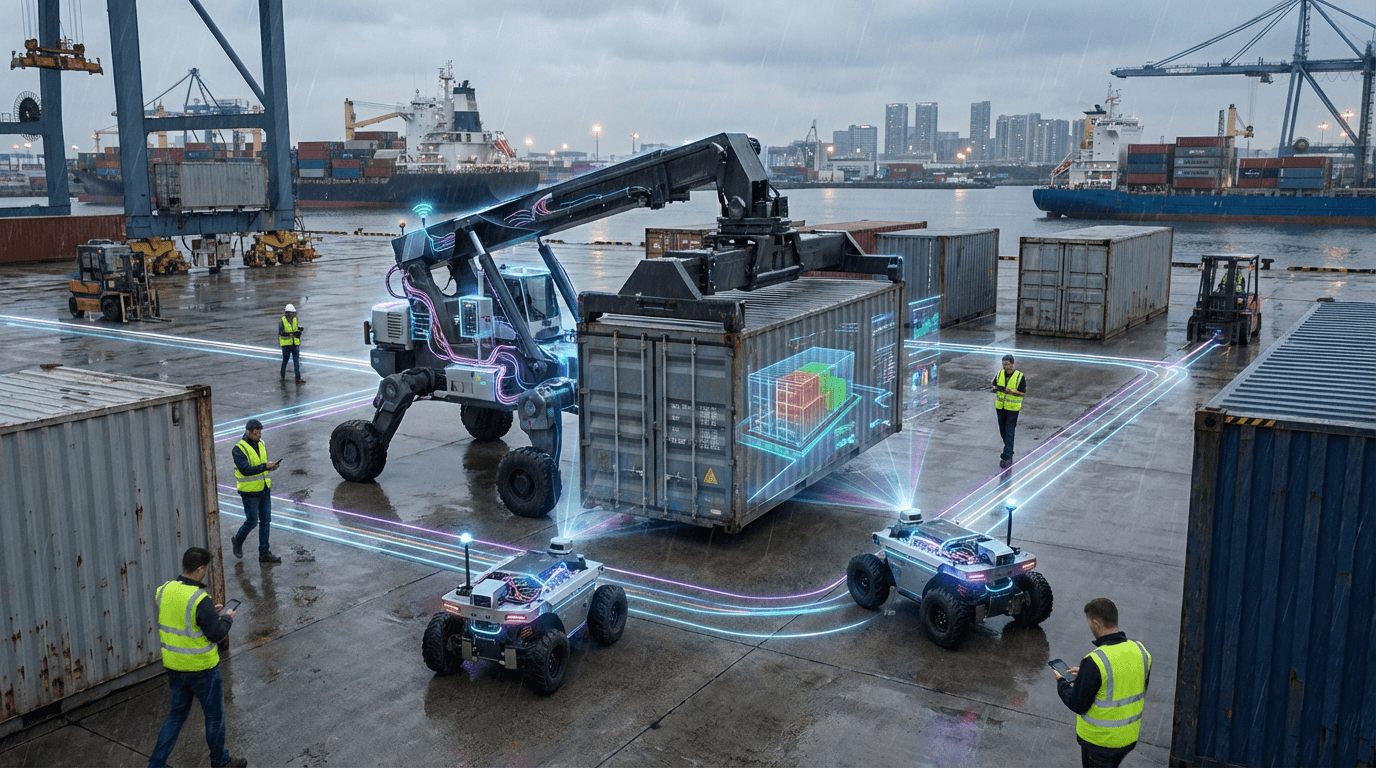
Agent Societies & World Models
Agent societies are frameworks for coordinating multiple AI agents that share world models, communicate, and collaborate to solve problems beyond individual capabilities. These systems enable agents to assume specialized roles, share information through belief propagation mechanisms, and coordinate actions through communication protocols, creating collective intelligence that emerges from agent interaction.
This innovation addresses the limitation of single-agent systems, which may struggle with complex problems requiring diverse expertise or parallel processing. By enabling multiple specialized agents to work together, agent societies can tackle problems that require different skills, perspectives, or computational resources. The technology enables new approaches to complex problem-solving, from scientific research to software development to business operations, where teams of AI agents can collaborate like human teams.
The technology is particularly significant for applications requiring diverse expertise or large-scale parallel problem-solving, such as research, software development, and complex business processes. As AI agents become more capable, coordinating multiple agents becomes a powerful approach to scaling AI capabilities. However, agent societies face challenges including communication overhead, ensuring coherent behavior, managing conflicts, and maintaining efficiency as the number of agents grows. Research continues to address these challenges and develop more sophisticated coordination mechanisms.
Related Organizations
United Kingdom · Nonprofit
A charitable foundation dedicated to supporting research that improves the cooperative capabilities of advanced AI systems.

Developers of the Gemini family of models, which are trained from the start to be multimodal across text, images, video, and audio.

Through Copilot and the 'Recall' feature in Windows, Microsoft is integrating persistent memory and agentic capabilities directly into the operating system.

An open-source community developing 'Communicative Agents for "Mind" Exploration of Large Scale Language Model Society'.

A platform for orchestrating role-playing autonomous AI agents that work together as a 'crew' to execute complex tasks.
Japan · Startup
Tokyo-based AI lab focusing on nature-inspired intelligence, specifically evolutionary model merges and collective intelligence (swarm) architectures.

Specialists in Multi-Agent Reinforcement Learning (MARL) for industrial decision-making, acquired by BioNTech.

Develops the leading open-source framework for orchestrating LLMs and retrieval systems.

Developing foundation models for robotics (Project GR00T) and vision-language models like VILA.

A metaverse technology company known for SpatialOS, enabling massive simulations with thousands of concurrent agents.
Supporting Evidence
Research this in Signals
Signals turns a topic into a sourced research record you can inspect and rerun. Your first scan is free, and this one starts with Agent Societies & World Models already loaded, so edit it or scan as is.