Mobile-First Education Technology Platforms
Geography: Emea · Africa · Africa
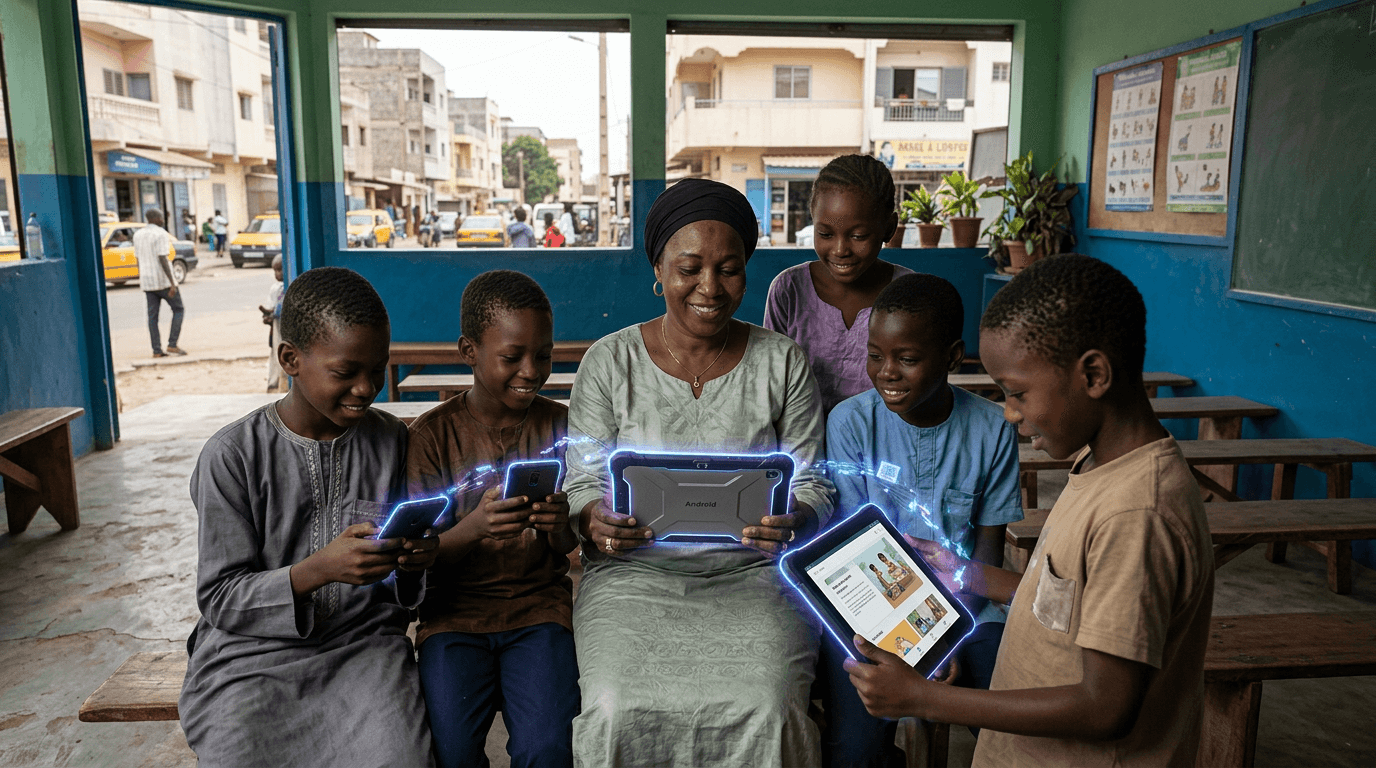
African education technology platforms like Eneza Education (Kenya, 10M+ users), uLesson (Nigeria), and Tutor AI (South Africa) deliver curriculum-aligned educational content through smartphones, feature phones, and offline-capable applications. Eneza's platform operates via USSD, allowing students with basic feature phones to access quizzes, lessons, and tutor interactions for as little as $0.01 per session. uLesson provides video lessons optimized for low-bandwidth delivery, downloadable for offline viewing.
The need is staggering: Sub-Saharan Africa has a learning crisis with 90% of 10-year-olds unable to read a simple story (UNESCO). Teacher-to-student ratios exceed 1:80 in many countries. These platforms supplement overwhelmed education systems by providing personalized, technology-delivered instruction. During COVID-19 school closures, mobile learning platforms saw enrollment increases of 200-400% across Africa.
The platforms are increasingly incorporating AI for adaptive learning — adjusting difficulty based on student performance, identifying knowledge gaps, and recommending remediation. This is significant because Africa's education challenge isn't just access, it's quality. A student in rural Kenya and a student in Nairobi may both attend school, but receive very different quality of instruction. Technology that delivers consistent, high-quality educational content regardless of location is a structural intervention in the continent's human capital development.
Research this in Signals
Signals turns a topic into a sourced research record you can inspect and rerun. Your first scan is free, and this one starts with Mobile-First Education Technology Platforms already loaded, so edit it or scan as is.