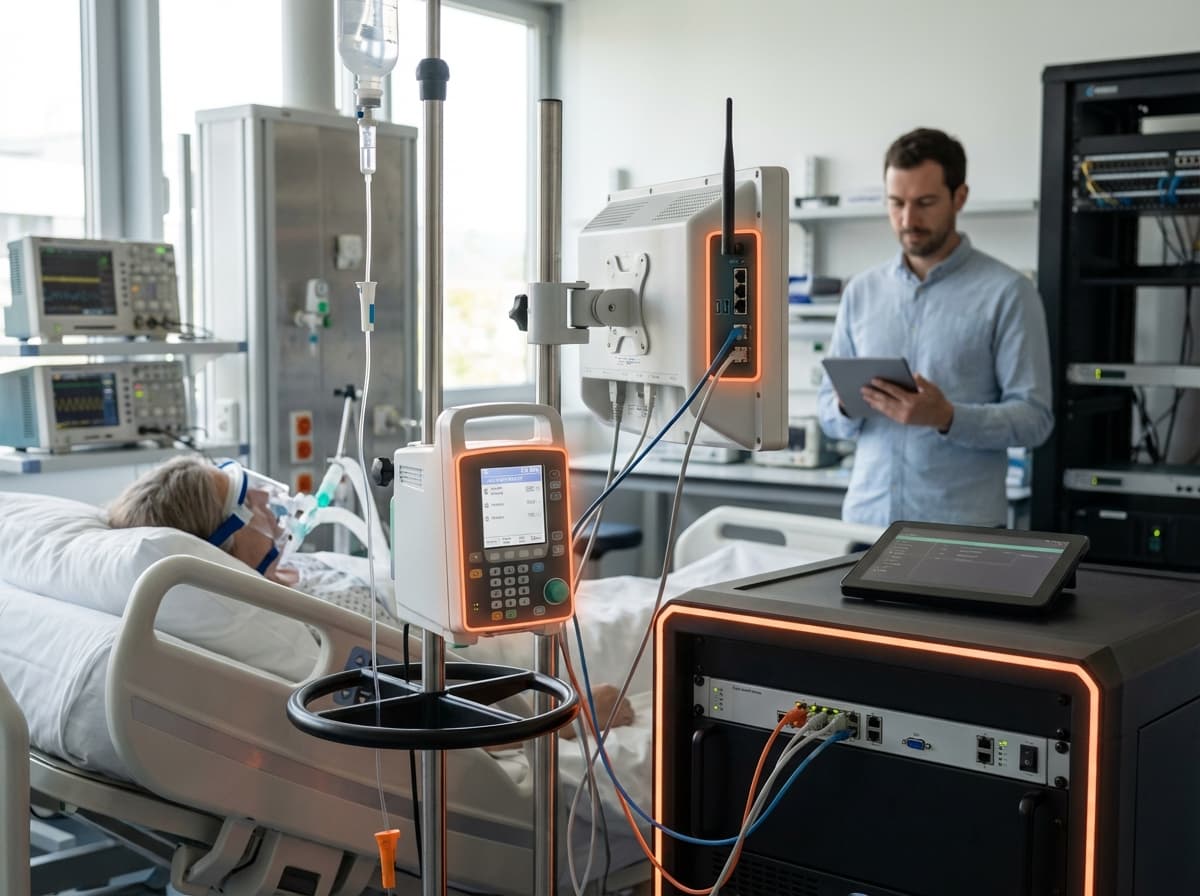
Zero-Trust IoMT Security
The healthcare sector faces an escalating cybersecurity crisis as medical devices become increasingly interconnected through the Internet of Medical Things (IoMT). Traditional security models, which operate on the assumption that devices within a hospital's network perimeter can be trusted, have proven dangerously inadequate in an era where infusion pumps, ventilators, imaging equipment, and patient monitors communicate continuously across networks. A single compromised device can serve as an entry point for malicious actors to access sensitive patient data, disrupt critical care operations, or deploy ransomware that can paralyze entire hospital systems. Zero-trust IoMT security frameworks address this vulnerability by fundamentally rejecting the concept of implicit trust, instead requiring continuous verification of every device, user, and transaction attempting to access medical systems, regardless of whether the request originates from inside or outside the network perimeter.
This security paradigm operates through several interconnected mechanisms that collectively create a robust defense against cyber threats. At its foundation, zero-trust architecture implements strict identity verification protocols that authenticate both the device and the user before granting access to any medical system or data. Each access request triggers a verification process that evaluates multiple factors, including device identity, user credentials, location, time of access, and the specific data or system being requested. The framework employs micro-segmentation to divide the hospital network into isolated zones, ensuring that even if an attacker compromises one device, they cannot move laterally across the network to reach other critical systems. Continuous monitoring and behavioral analysis detect anomalous activities, such as an infusion pump suddenly attempting to access patient records or a diagnostic device communicating with external servers. These security measures work in concert with encryption protocols and least-privilege access controls, which ensure that devices and users can only access the minimum resources necessary for their specific functions.
Healthcare institutions are increasingly recognizing the critical importance of zero-trust frameworks as cyberattacks on medical facilities intensify. Industry analysts note that hospitals implementing these security architectures have demonstrated significantly improved resilience against ransomware attacks and data breaches, with some early deployments reporting substantial reductions in security incidents. The technology addresses a particularly urgent need in healthcare, where the consequences of a security breach extend beyond financial losses to potentially life-threatening disruptions of patient care. As regulatory bodies strengthen cybersecurity requirements for medical devices and healthcare organizations face mounting pressure to protect patient data, zero-trust IoMT security is transitioning from an emerging concept to an essential component of healthcare infrastructure. The continued evolution of this framework, incorporating artificial intelligence for threat detection and automated response capabilities, positions it as a cornerstone of future healthcare delivery systems where safety and security are inseparable from clinical effectiveness.
Related Organizations

Specializes in securing the Extended Internet of Things (XIoT), bridging the gap between IT, OT, and IoT security.

IoMT risk management platform focused on inventory, vulnerability mitigation, and anomaly detection.

IoT and IoMT security platform delivering asset management and threat defense for hospitals.

Connected device security platform that automates zero trust policies for IoMT.

Provides automated cybersecurity across the digital terrain, including IT, OT, IoT, and IoMT.

Offers Cortex XSIAM, an autonomous security operations platform driven by AI.

Provides embedded security for IoT devices, allowing self-protection at the firmware level.

Develops ultrasound systems (Voluson) with AI features that assist in assessing fetal development and cervical length, key indicators for preterm risk.
Supporting Evidence
Research this in Signals
Signals turns a topic into a sourced research record you can inspect and rerun. Your first scan is free, and this one starts with Zero-Trust IoMT Security already loaded, so edit it or scan as is.