5G/6G-Connected Smart Ambulances
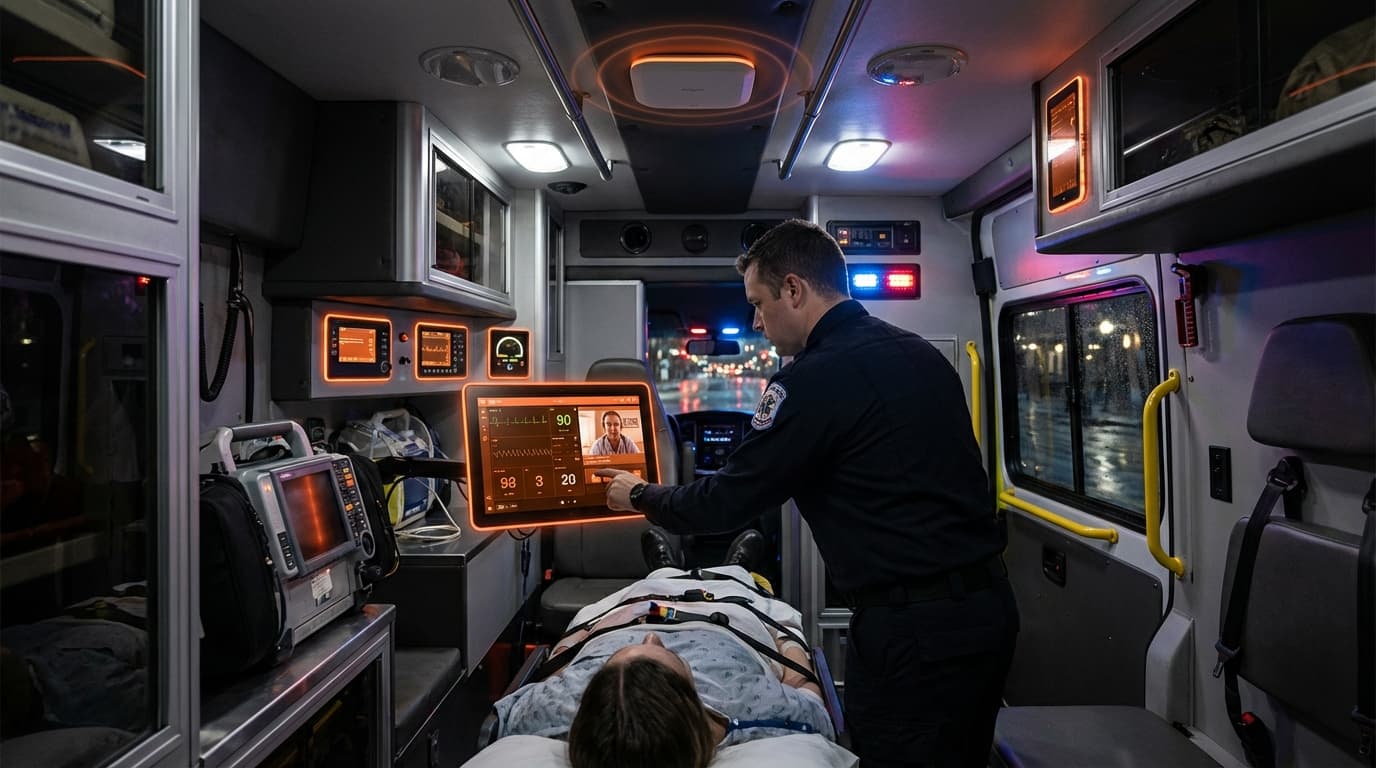
Emergency medical services have long faced a critical challenge: the "golden hour" window where rapid intervention can mean the difference between life and death. Traditional ambulances function largely as transport vehicles, with paramedics limited to basic stabilization procedures and one-way radio communication with hospitals. This creates a disconnect between the emergency scene and the specialized expertise waiting at medical centers, often resulting in delayed diagnoses, suboptimal pre-hospital care, and unprepared receiving teams. The problem intensifies in rural areas or during mass casualty events, where access to specialist knowledge is severely constrained. Next-generation connectivity infrastructure now enables a fundamental reimagining of pre-hospital emergency care through ambulances that function as mobile intensive care units with real-time hospital integration.
5G and emerging 6G-connected smart ambulances leverage ultra-high-bandwidth, low-latency wireless networks to create seamless data pipelines between the emergency scene and hospital command centers. These vehicles are equipped with advanced medical imaging devices—portable ultrasound, 12-lead ECG systems, and high-definition cameras—all transmitting continuous streams of diagnostic data with minimal delay. The technical architecture typically includes edge computing capabilities within the ambulance itself, processing and prioritizing data before transmission to reduce bandwidth demands while maintaining clinical quality. This connectivity enables emergency physicians to virtually "ride along" with paramedics, observing patient conditions through multiple video feeds, reviewing real-time vital signs, and even controlling certain diagnostic equipment remotely. The system transforms the ambulance into an extension of the emergency department, allowing specialists to make critical decisions—such as activating stroke protocols or preparing cardiac catheterization labs—while the patient is still en route, effectively extending hospital care backward into the field.
Early deployments in urban emergency medical systems have demonstrated measurable improvements in time-sensitive conditions. For stroke patients, remote neurologists can review ultrasound imaging of carotid arteries and assess symptoms via video consultation, enabling pre-arrival administration of clot-busting medications and immediate surgical team mobilization. In trauma cases, surgeons can guide paramedics through emergency procedures like chest decompression or advanced airway management that previously required hospital arrival. The technology also supports triage optimization during multiple-casualty incidents, with command physicians remotely assessing patient severity to direct ambulances to appropriate facilities. As 6G networks promise even lower latency and higher reliability, the vision extends toward AI-assisted diagnostics running in real-time during transport, augmented reality guidance systems for paramedics, and integration with smart city infrastructure for optimized routing. This evolution represents a fundamental shift from "scoop and run" emergency medicine toward "diagnose and treat" mobile care, compressing the critical timeline between symptom onset and definitive intervention that determines outcomes in life-threatening emergencies.
Related Organizations

Develops a video collaboration platform specifically for connected ambulances, enabling remote diagnostics and streaming of high-quality scans to hospitals.

Provides ubiquitous connectivity solutions for emergency responders, integrating satellite and 4G/5G cellular networks into ambulance fleets.

Provides wireless edge solutions and routers that enable enterprises to connect to public and private 5G networks.

Develops the e-Bridge mobile telemedicine app specifically for EMS, allowing live video and data streaming from the ambulance to the ER.
A leading South Korean hospital that has actively piloted 5G-connected ambulances for rapid stroke treatment and real-time patient monitoring.

Conducted the UK's first 5G connected ambulance demonstration, enabling remote clinicians to guide paramedics using haptic gloves and VR.


Offers a healthcare communication platform that connects EMS teams with hospitals in real-time, leveraging mobile connectivity for data exchange.

Partnered with Hamad Medical Corporation to launch 5G connected ambulances during the World Cup, enabling remote medical assistance.
Supporting Evidence
Research this in Signals
Signals turns a topic into a sourced research record you can inspect and rerun. Your first scan is free, and this one starts with 5G/6G-Connected Smart Ambulances already loaded, so edit it or scan as is.