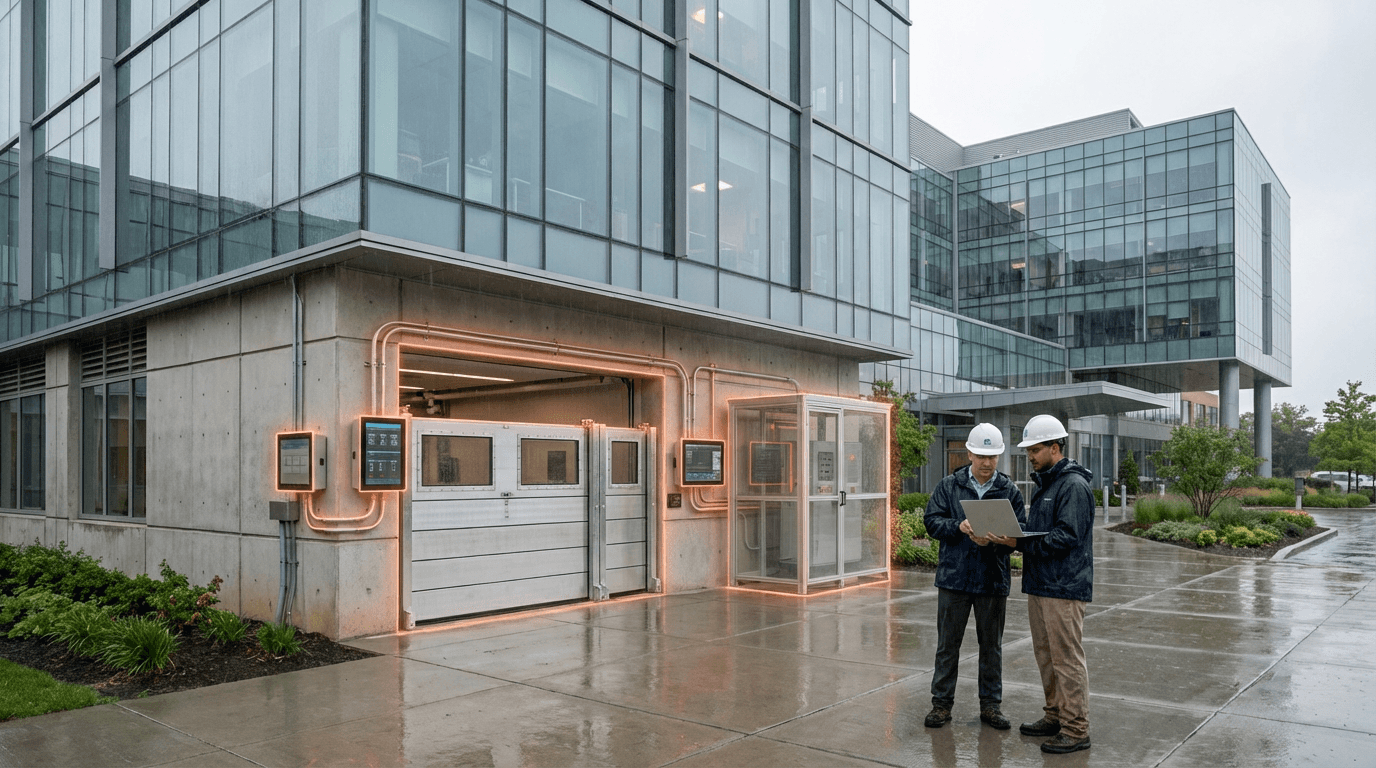
Climate-Resilient Hospital Infrastructure
Climate-resilient hospital infrastructure represents a comprehensive approach to healthcare facility design that addresses the growing vulnerability of medical institutions to extreme weather events and climate-related disruptions. These facilities incorporate multiple layers of engineering solutions, including elevated foundations and flood barriers to protect against rising waters, reinforced structural elements capable of withstanding hurricane-force winds, and advanced building envelope systems that maintain interior conditions during power outages. Key technical components include backup microgrid systems that can island from the main electrical grid during failures, on-site renewable energy generation through solar arrays and battery storage, passive cooling and ventilation systems that reduce dependence on mechanical HVAC, and water management infrastructure designed to handle both drought conditions and extreme precipitation events. The integration of these systems creates facilities that can maintain critical functions—operating rooms, intensive care units, emergency departments, and pharmaceutical storage—even when surrounding infrastructure fails.
The healthcare sector faces mounting pressure as climate change increases both the frequency and severity of weather-related disasters, creating a dual challenge: facilities themselves become damaged or inoperable precisely when patient demand surges. Traditional hospital infrastructure, often designed to minimum code requirements and dependent on continuous utility services, proves inadequate during extended power outages, flooding events, or extreme heat episodes that can compromise patient safety within hours. Climate-resilient design addresses these vulnerabilities by enabling hospitals to function autonomously for extended periods, protecting immunocompromised patients, maintaining temperature-sensitive medications and equipment, and ensuring that life-support systems remain operational. This approach also recognizes hospitals' expanding role as community anchor institutions during disasters, requiring capacity to shelter displaced populations, coordinate emergency response, and serve as distribution points for medical supplies and information when other community infrastructure fails.
Early implementations of climate-resilient hospital design have emerged in regions experiencing repeated climate impacts, with facilities incorporating lessons learned from hurricanes, wildfires, and flooding events that previously forced evacuations or closures. These projects demonstrate that resilience investments, while requiring higher upfront capital costs, reduce long-term operational risks and avoid the catastrophic expenses associated with facility damage, patient relocations, and service interruptions. Research in disaster medicine and healthcare infrastructure suggests that resilient design becomes increasingly cost-effective as extreme weather events intensify, with resilient facilities maintaining revenue streams and community trust while competitors struggle to recover. The integration of climate resilience into healthcare infrastructure planning represents a fundamental shift from reactive disaster response toward proactive adaptation, recognizing that the ability to deliver uninterrupted care during climate emergencies will become a defining characteristic of healthcare systems in the coming decades. As building codes and accreditation standards begin incorporating climate resilience requirements, these design principles are transitioning from optional enhancements to essential components of responsible healthcare infrastructure development.
Related Organizations

International NGO working to transform healthcare worldwide to reduce its environmental footprint and become a community anchor for resilience.
Established the Expert Advisory Committee on Developing Global Standards for Governance and Oversight of Human Genome Editing.

Arup
United Kingdom · Company
A multinational professional services firm dedicated to sustainable development, known for pioneering the use of BIM in complex engineering projects.

Employee-owned engineering design and consulting firm focused exclusively on healthcare.

Employee-owned design firm specializing in engineering, architecture, environmental and construction services.

Global architecture and design firm with a Human Experience (Hx) research lab.

Global specialist in energy management and automation that integrates cybersecurity into its industrial hardware and software.



Global electronics giant producing the Lumea series, one of the most widely sold at-home IPL devices.
Supporting Evidence
Research this in Signals
Signals turns a topic into a sourced research record you can inspect and rerun. Your first scan is free, and this one starts with Climate-Resilient Hospital Infrastructure already loaded, so edit it or scan as is.