Bio-Resorbable Electronics
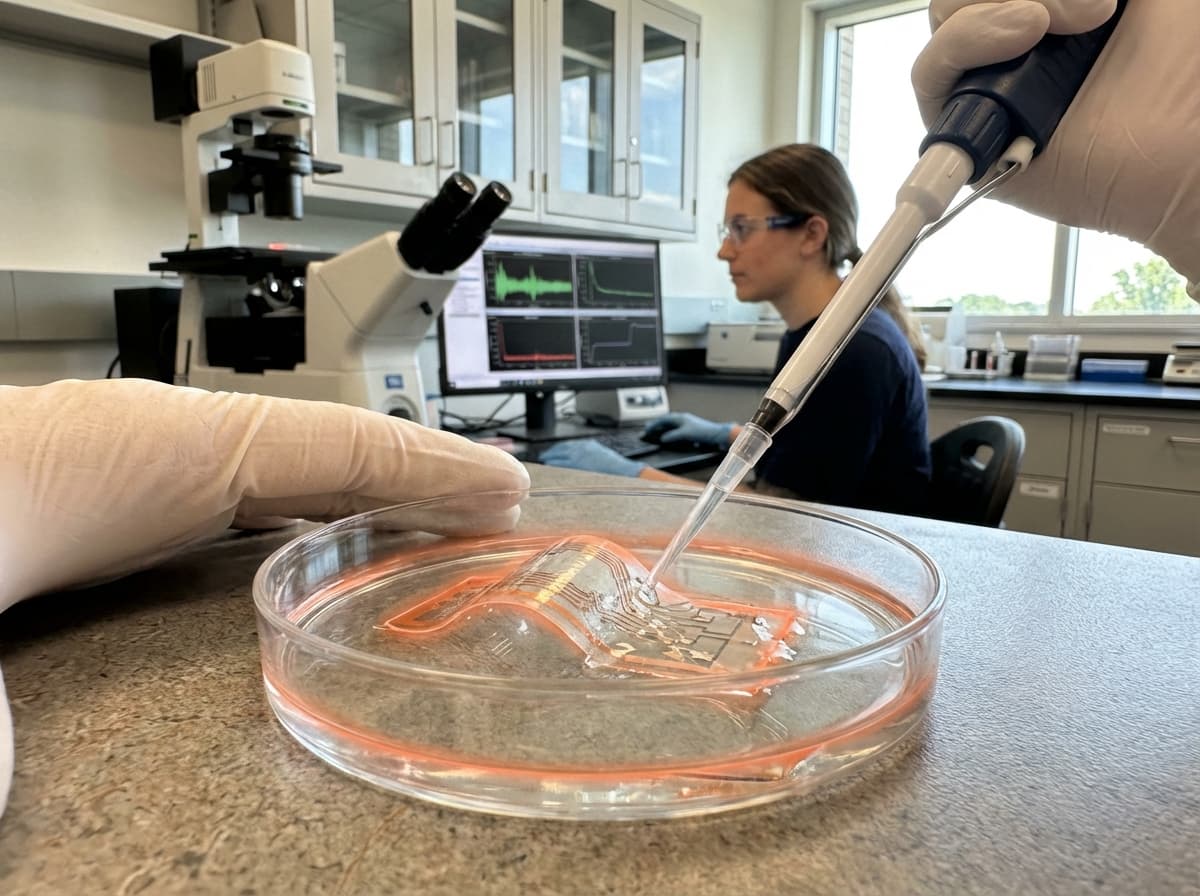
Bio-resorbable electronics represent a paradigm shift in medical device design, addressing a fundamental limitation of conventional implantable technologies: the need for secondary surgical procedures to remove devices once their clinical purpose has been fulfilled. These transient systems are engineered from carefully selected biocompatible materials—including ultra-thin silicon nanomembranes, magnesium alloys, zinc oxide, molybdenum, tungsten, and natural polymers such as silk fibroin—that dissolve predictably when exposed to bodily fluids. The dissolution process is governed by controlled hydrolysis, where the device components break down into benign byproducts that the body can safely metabolize or excrete. By precisely tuning material composition, thickness, and encapsulation strategies, researchers can program these devices to function for specific durations ranging from days to months before gradually disappearing, leaving no physical trace behind.
The clinical imperative for this technology stems from the significant complications associated with permanent implants and the risks inherent in retrieval surgeries. Traditional medical implants, even temporary ones, can trigger chronic inflammation, serve as sites for bacterial colonization leading to infection, or cause tissue damage during extraction procedures. Bio-resorbable electronics eliminate these concerns entirely while enabling new therapeutic approaches that were previously impractical. For post-surgical monitoring, these devices can track vital parameters like temperature, pressure, or pH at the surgical site during the critical healing window, then vanish precisely when surveillance is no longer needed. This capability is particularly valuable in neurosurgery, where intracranial pressure monitoring following traumatic brain injury or tumor resection has traditionally required externalized sensors with infection-prone transcutaneous connections. Similarly, temporary cardiac pacing following open-heart surgery could be achieved without the complications of lead extraction, and orthopedic implants could provide real-time data on bone healing progress before resorbing completely.
Early clinical investigations have demonstrated the feasibility of bio-resorbable sensors in human patients, with research institutions exploring applications ranging from wireless brain monitors to drug-delivery platforms that release therapeutics in response to physiological triggers before dissolving. The technology shows particular promise in pediatric medicine, where growing bodies make permanent implants problematic, and in resource-limited settings where follow-up surgical care may be inaccessible. As materials science advances and regulatory pathways for these novel devices become established, bio-resorbable electronics are positioned to become standard components of minimally invasive surgical protocols. This convergence of materials engineering, microelectronics, and biomedical science represents a broader trend toward precision medicine—where therapeutic interventions are not only personalized but also temporally optimized, providing exactly the right intervention for exactly the right duration before gracefully exiting the body.
Related Organizations

Home to the Cognitive Neuroscience Lab (Ken Paller), which pioneered two-way communication with lucid dreamers and memory reactivation during sleep.

Runs the Semantic Forensics (SemaFor) program to develop technologies for automatically detecting, attributing, and characterizing falsified media.

Developing wearable and implantable flow sensors for hydrocephalus monitoring, leveraging bio-resorbable technologies from Northwestern.

A company providing battery-free, wireless optogenetics systems for neuroscience research.

Researchers here have developed biodegradable electronic stents and sensors in collaboration with US institutions.

Active research groups developing transient zinc-based batteries and sensors for medical implants.

Home to the Computational Memory Lab led by Michael Kahana.

Spun out of Northwestern University, developing soft, flexible sensors for ICU-grade monitoring in the home.
Supporting Evidence
Research this in Signals
Signals turns a topic into a sourced research record you can inspect and rerun. Your first scan is free, and this one starts with Bio-Resorbable Electronics already loaded, so edit it or scan as is.