Wind-Assisted Ship Propulsion (WASP)
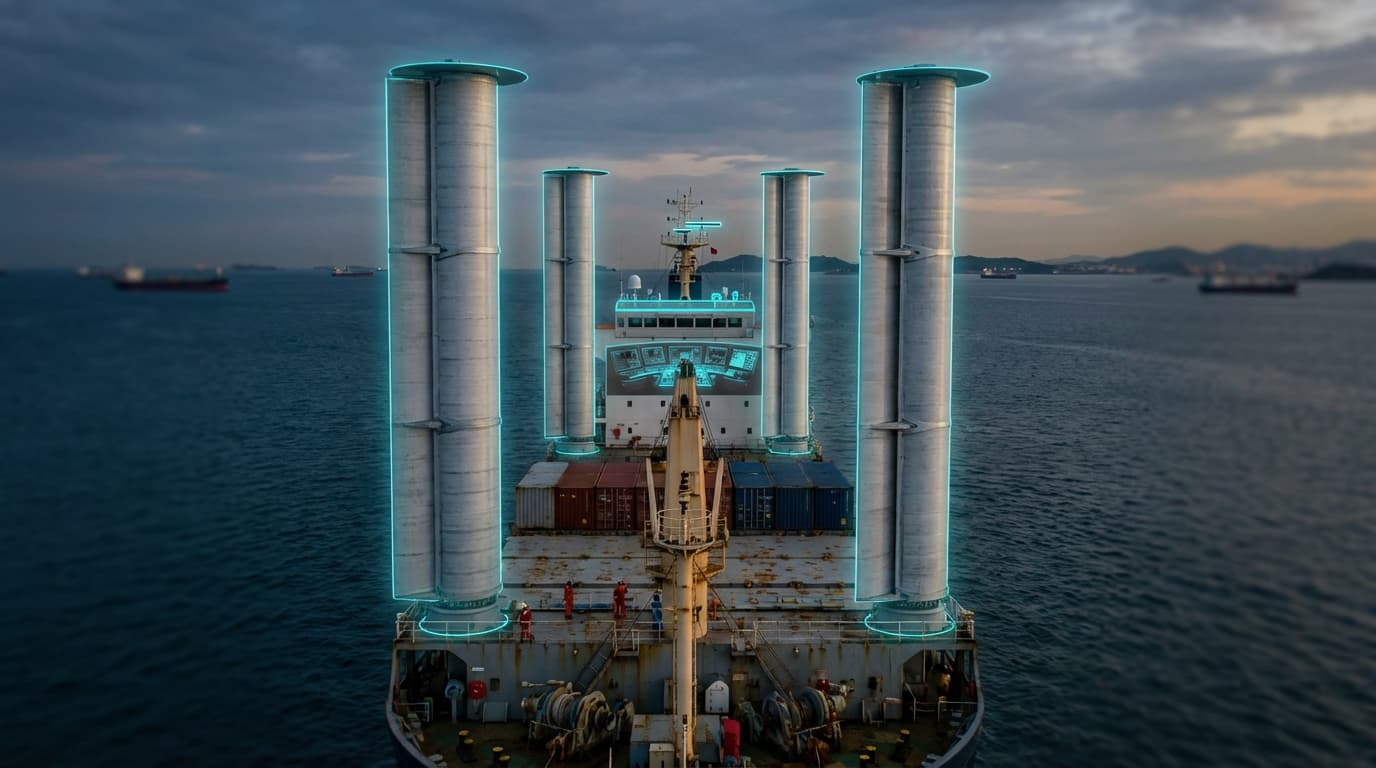
The maritime shipping industry faces mounting pressure to reduce its substantial carbon footprint, which accounts for approximately 3% of global greenhouse gas emissions. Traditional diesel-powered vessels consume vast quantities of heavy fuel oil, contributing to both climate change and air pollution in coastal regions. Wind-Assisted Ship Propulsion (WASP) technologies represent a return to maritime tradition with modern engineering, combining centuries-old sailing principles with contemporary aerodynamics, materials science, and automation systems. These solutions employ various mechanisms to harness wind energy: Flettner rotors use the Magnus effect, where spinning vertical cylinders create aerodynamic lift perpendicular to the wind direction; rigid wing sails function like aircraft wings positioned vertically, automatically adjusting their angle to optimise thrust; and suction wing systems enhance airflow over sail surfaces to maximise propulsive force. Advanced sensors, weather routing software, and automated control systems enable these installations to operate without manual intervention, continuously adjusting to wind conditions and vessel course to extract maximum benefit from available wind resources.
The shipping industry's challenge extends beyond environmental concerns to economic pressures from volatile fuel prices and increasingly stringent emissions regulations from bodies like the International Maritime Organization. WASP technologies address these challenges by providing auxiliary propulsion that directly reduces main engine load and fuel consumption. Unlike purely experimental alternatives such as hydrogen or ammonia propulsion, wind-assisted systems can be retrofitted to existing vessels or integrated into new builds without requiring complete redesigns of propulsion systems or port infrastructure. This compatibility makes them particularly attractive for operators seeking incremental improvements while maintaining operational flexibility. The fuel savings potential varies significantly based on vessel type, route, and prevailing wind conditions, with research suggesting reductions ranging from modest single-digit percentages on less favourable routes to substantial savings exceeding 20% on wind-rich passages. Beyond fuel cost savings, these systems help shipping companies meet emerging carbon pricing mechanisms and environmental compliance requirements, potentially avoiding penalties while enhancing corporate sustainability credentials in an era of increasing stakeholder scrutiny.
Early commercial deployments have demonstrated the viability of WASP technologies across various vessel classes, from bulk carriers to tankers and car carriers. Several European and Asian shipping companies have begun installing Flettner rotors and rigid wing sails on operational vessels, with monitoring data validating projected fuel savings under real-world conditions. The technology aligns with broader maritime decarbonisation trends, including slow steaming practices, hull optimisation, and alternative fuels, forming part of a comprehensive approach to reducing shipping's environmental impact. As wind forecasting models improve and installation costs decrease through manufacturing scale, industry analysts anticipate wider adoption across global fleets. The modular nature of many WASP systems allows operators to start with one or two units and expand installations based on demonstrated performance, reducing investment risk. Looking forward, the integration of WASP with emerging digital twin technologies and artificial intelligence-driven route optimisation promises to further enhance performance, potentially establishing wind assistance as a standard feature of next-generation merchant vessels rather than a niche solution for environmentally conscious operators.
Related Organizations

Marine engineering consultancy that developed 'WindWings', large solid wing sails for bulk carriers.

A member-driven non-profit organization facilitating and promoting wind propulsion for commercial shipping.
Develops and installs Rotor Sails (Flettner rotors), a modernized version of the Flettner rotor for auxiliary wind propulsion.

Spun out of Airbus, they develop 'Seawing', a giant automated kite system to tow commercial ships.

Designs and manufactures Flettner Rotor systems, including rail deployment systems for bulk carriers.

Ayro
France · Startup
Designs 'Oceanwings', automated wingsails derived from America's Cup technology for cargo and yachting.

Develops the eSAIL, a suction sail system that produces lift to reduce fuel consumption.

Produces the VentiFoil, a non-rotating wing with vents and an internal fan for boundary layer suction.

Michelin
France · Company
Offers Michelin Connected Fleet and MEMS (Michelin Earthmover Management System) for smart tire monitoring.

Major shipping line that developed and deployed the 'Wind Challenger' hard sail system.
Supporting Evidence
Research this in Signals
Signals turns a topic into a sourced research record you can inspect and rerun. Your first scan is free, and this one starts with Wind-Assisted Ship Propulsion (WASP) already loaded, so edit it or scan as is.