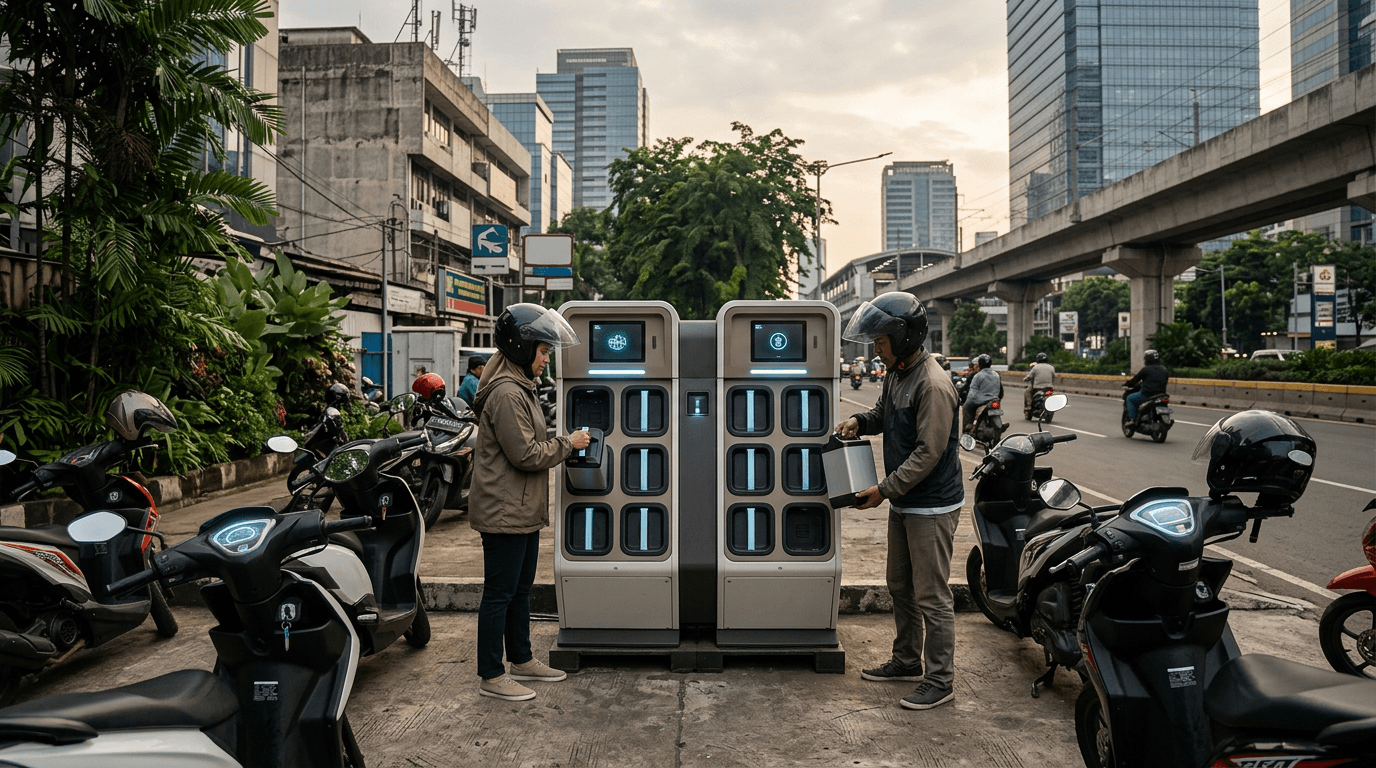
Electric Motorcycle Battery Swap Ecosystem
Geography: Asia Pacific · Southeast Asia · Southeast Asia
Indonesia's 90-million-motorbike market — the world's third largest — is transitioning to electric through battery swap networks rather than conventional charging. Taiwan's Gogoro partnered with Gojek (ride-hailing) and local manufacturers to deploy swap stations across Jakarta and Java, while Indonesian startup Swap Energy and others are building competing networks. The government's 2025 electric motorcycle subsidy program and battery swap standardization initiative aim to make swapping as ubiquitous as gas stations.
Battery swapping solves the core barrier to EV adoption in Southeast Asia: most motorcycle owners live in dense urban apartments without home charging access. A 30-second battery swap eliminates range anxiety and charging time entirely. The approach also enables battery-as-a-service models where riders buy the motorcycle cheaply and subscribe to battery access — lowering the upfront cost barrier in a market where average monthly income is $300-400. Indonesia's push for interoperable swap standards could create the world's largest standardized battery ecosystem.
The global significance is the creation of a developing-world EV transition model. While wealthy nations focus on passenger car charging infrastructure, Indonesia is demonstrating that two-wheeler battery swapping may be the dominant electrification pathway for the 1+ billion motorcycle riders across Southeast Asia, India, and Africa. If Indonesia's swap ecosystem reaches scale, it becomes an exportable infrastructure template — and Indonesian companies become suppliers of swap station technology across the Global South.
Research this in Signals
Signals turns a topic into a sourced research record you can inspect and rerun. Your first scan is free, and this one starts with Electric Motorcycle Battery Swap Ecosystem already loaded, so edit it or scan as is.